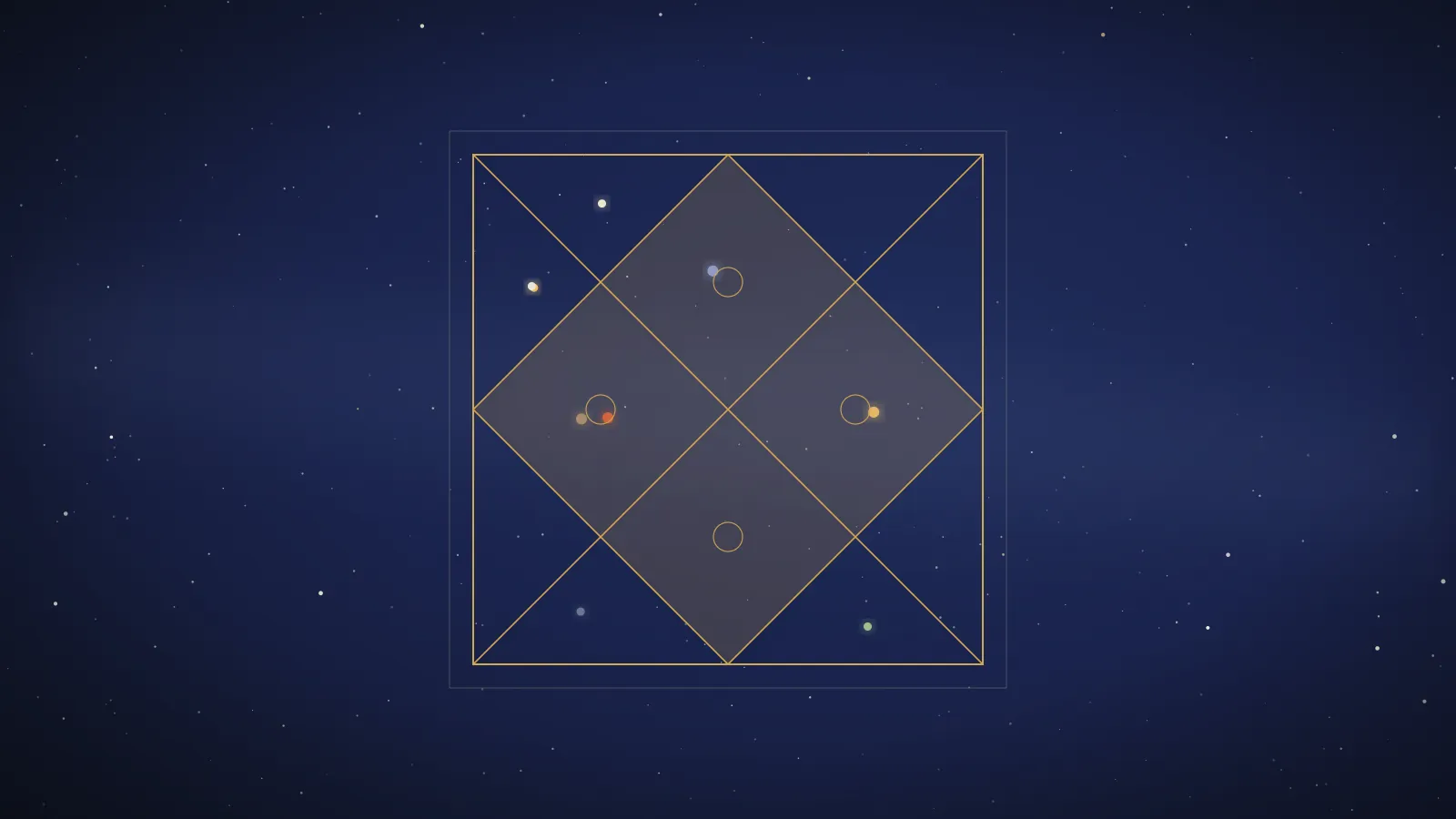
The five Mahapurusha yogas form when Mars, Mercury, Jupiter, Venus or Saturn sits in its own sign or its sign of exaltation, and also in an angle (1st, 4th, 7th or 10th house) from the Ascendant. Unlike many popular yogas, this rule has three checked classical sources.
The rule in one line
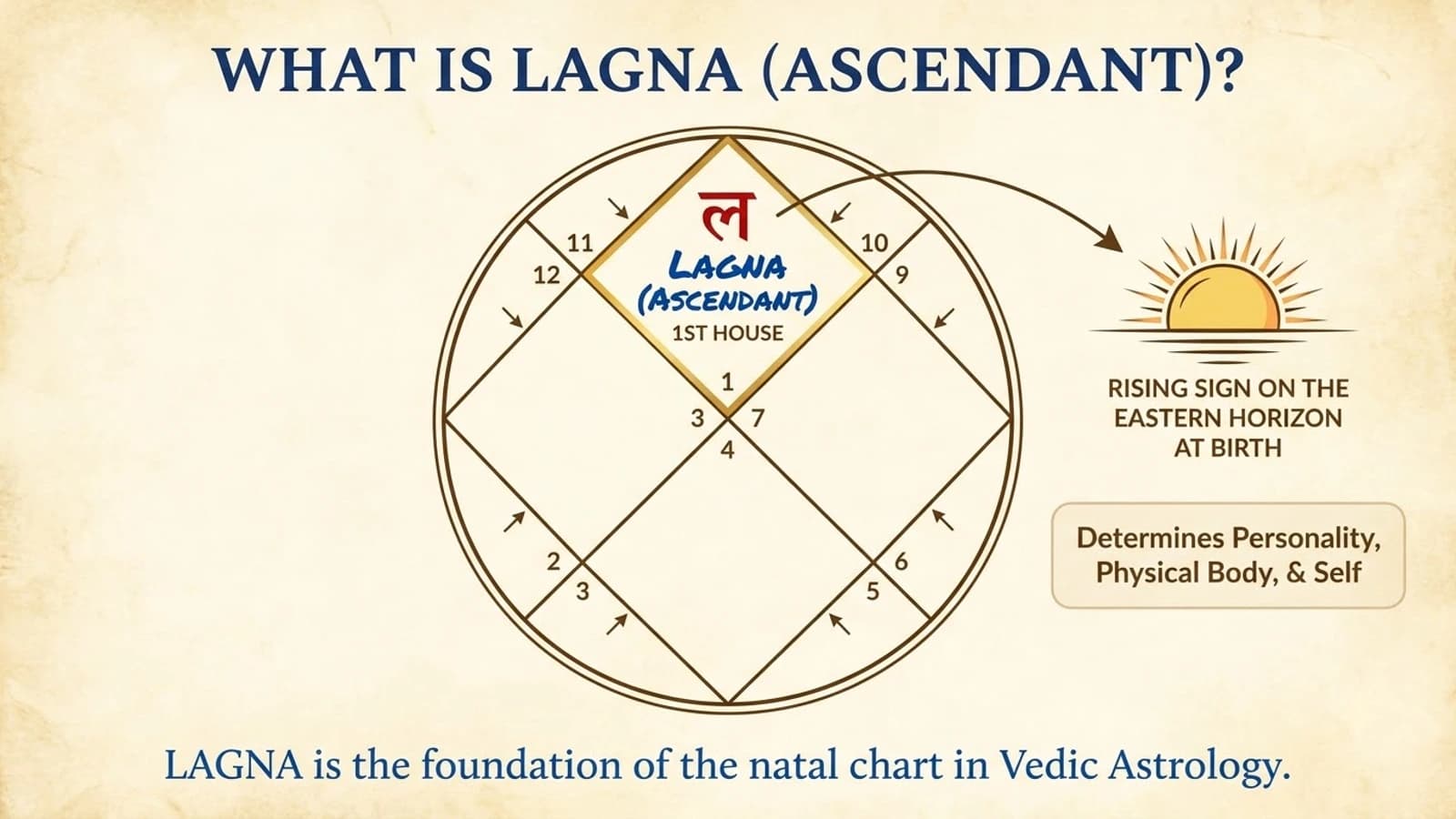
A Mahapurusha yoga needs two things at once. The planet must be in its own sign or exalted sign, and it must be in a kendra house counted from the Ascendant. Aroha checks both and lists the yoga when both hold. The Lagna guide explains the Ascendant that everything is counted from.
The word Mahapurusha means great person. Five planets can form it, which is why the group is called Panch, or five.
The five yogas, signs and houses
| Yoga | Planet | Own signs | Exalted sign |
|---|---|---|---|
| Ruchaka | Mars | Aries, Scorpio | Capricorn |
| Bhadra | Mercury | Gemini, Virgo | Virgo |
| Hamsa | Jupiter | Sagittarius, Pisces | Cancer |
| Malavya | Venus | Taurus, Libra | Pisces |
| Shasha | Saturn | Capricorn, Aquarius | Libra |
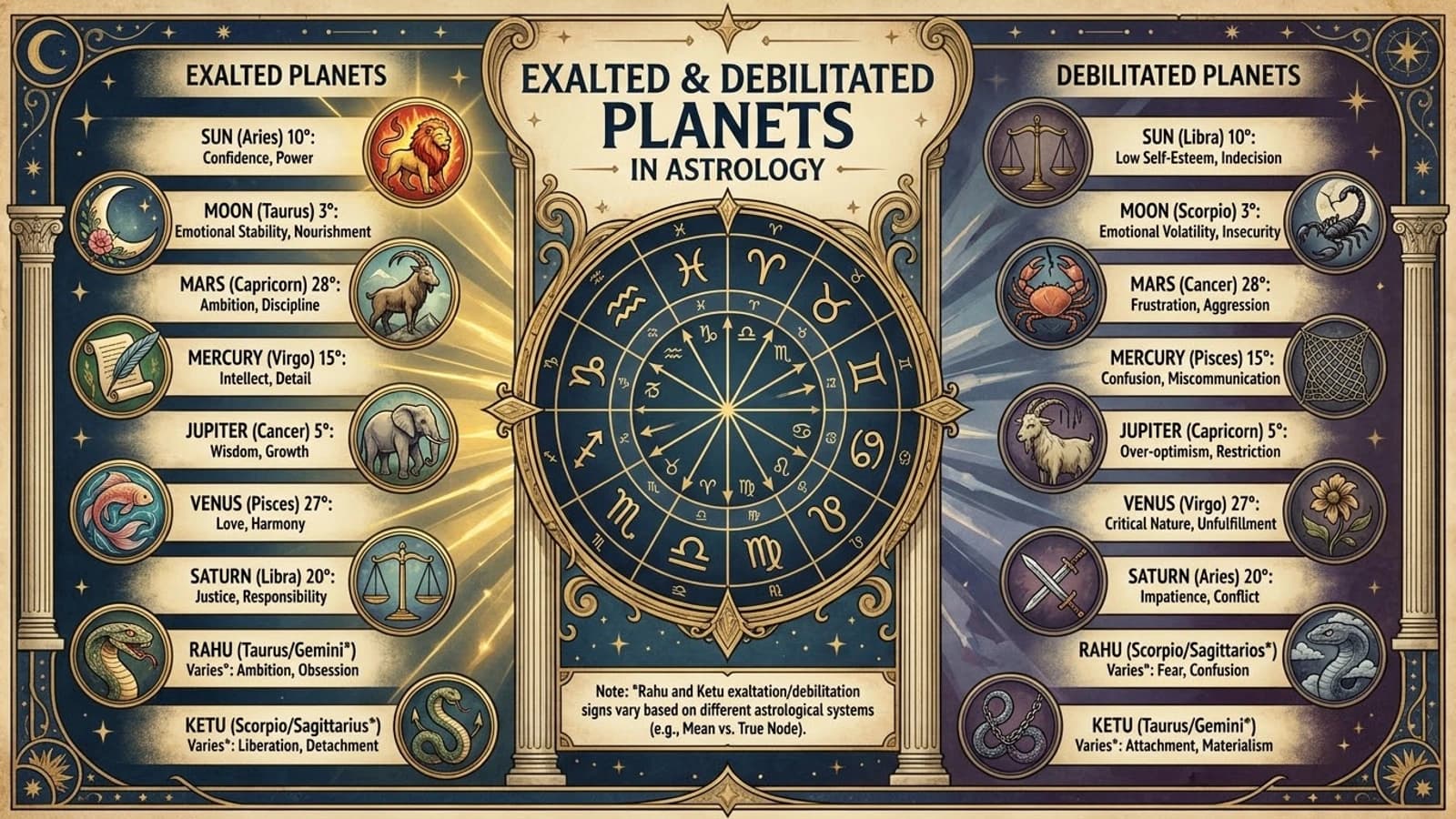
In every case the planet must be in the 1st, 4th, 7th or 10th house. For the signs of exaltation and fall, see the exalted and debilitated guide.
What each yoga is said to give
Tradition ties each yoga to its planet's character, so Ruchaka is linked with courage and leadership, Bhadra with intellect and speech, Hamsa with wisdom and good standing, Malavya with comfort and the arts, and Shasha with discipline and authority. Aroha's one-line descriptions follow these traditional summaries.
The register notes that the result sentences shown to users are not taken from the texts. Treat them as traditional summaries, and weigh them with the rest of the chart.
What the classical texts say
The conditions come from Brihat Samhita chapter 68, which Aroha's source register read in Sanskrit: a planet in its own or exalted sign, in an angle. That chapter adds no Navamsa test, avastha test or combustion filter, and it describes each man's body and bearing rather than wealth or status.
One translator reads the Samhita conditions as alternatives rather than as a pair. The common reading, and Aroha's, requires both.
How Aroha adds strength
Aroha adds a strength figure to each yoga from the planet's overall strength, with a small boost for exaltation. The register marks the combustion deduction in that figure as Aroha's own addition, not a rule from the texts. The yoga itself is listed whenever the sign and house conditions hold.
How it relates to other yogas
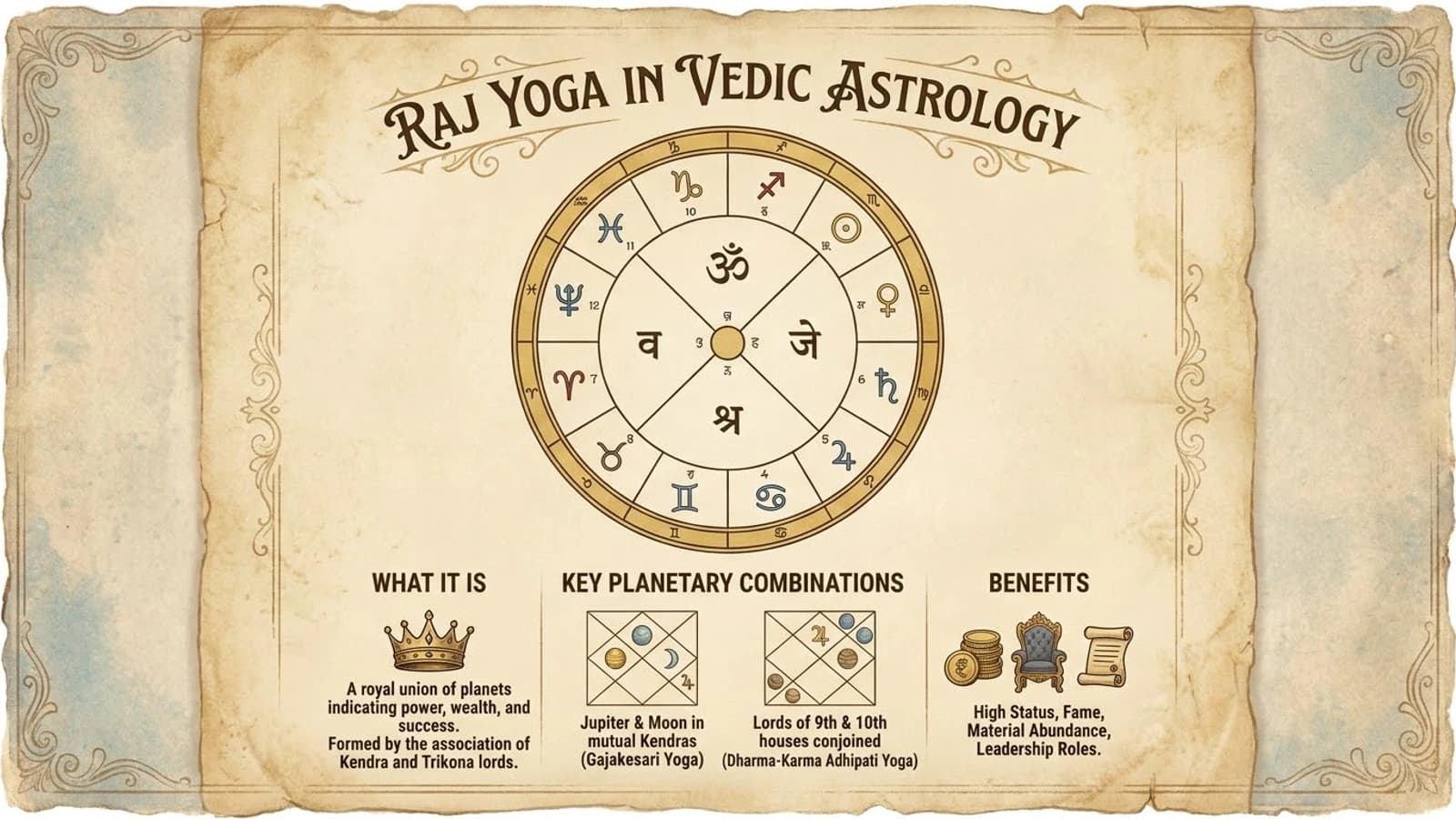
Mahapurusha yogas are one family within a wider set that includes Raj Yogas, which join angle and trine lords. The Raj Yoga guide covers that family, and the yogas guide shows how the families fit together. The house meanings are in the 12 houses guide.
Check your own chart
Generate your free Kundli to see whether Aroha finds any of the five yogas in your chart, with the planet, house and strength.