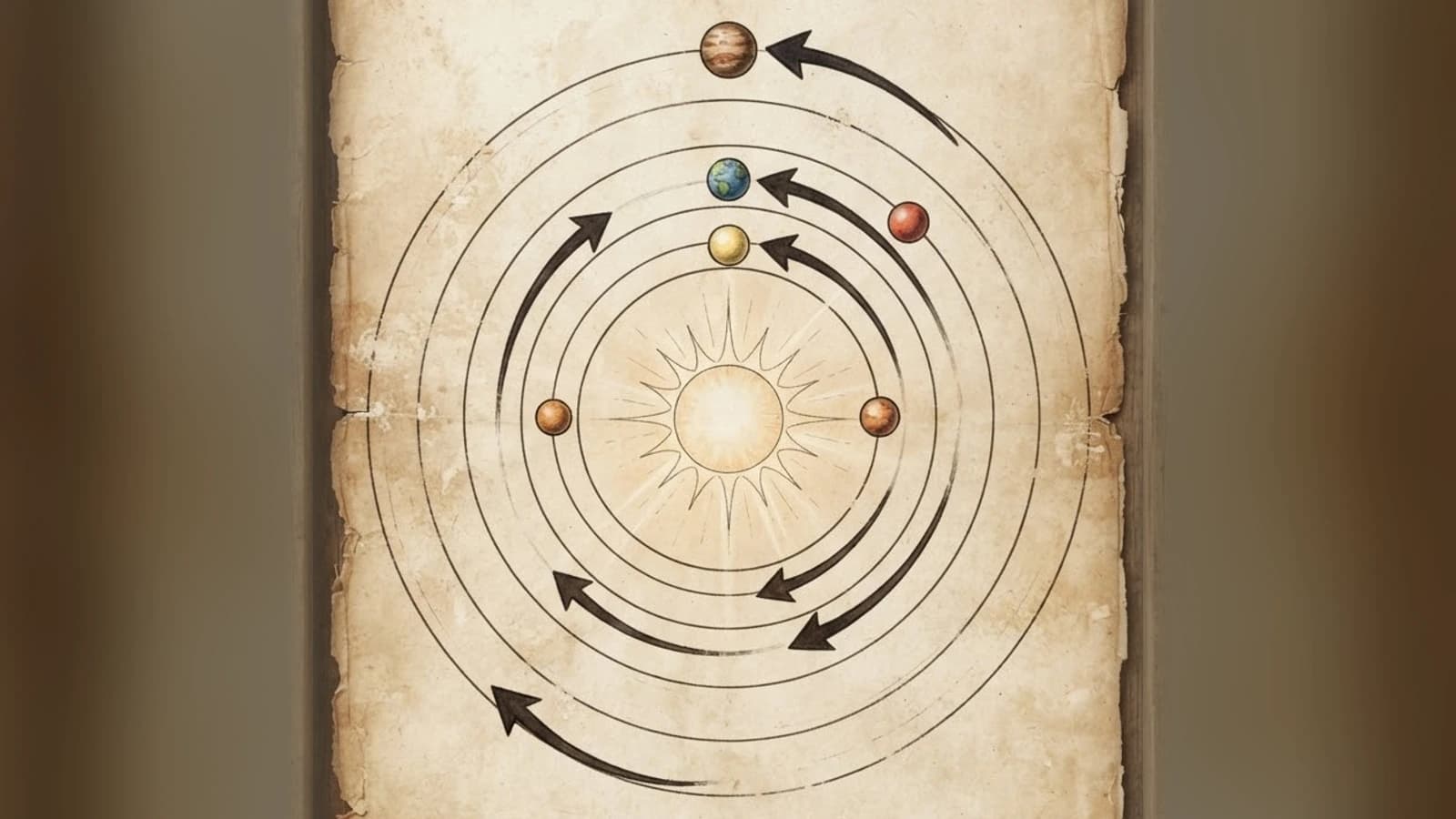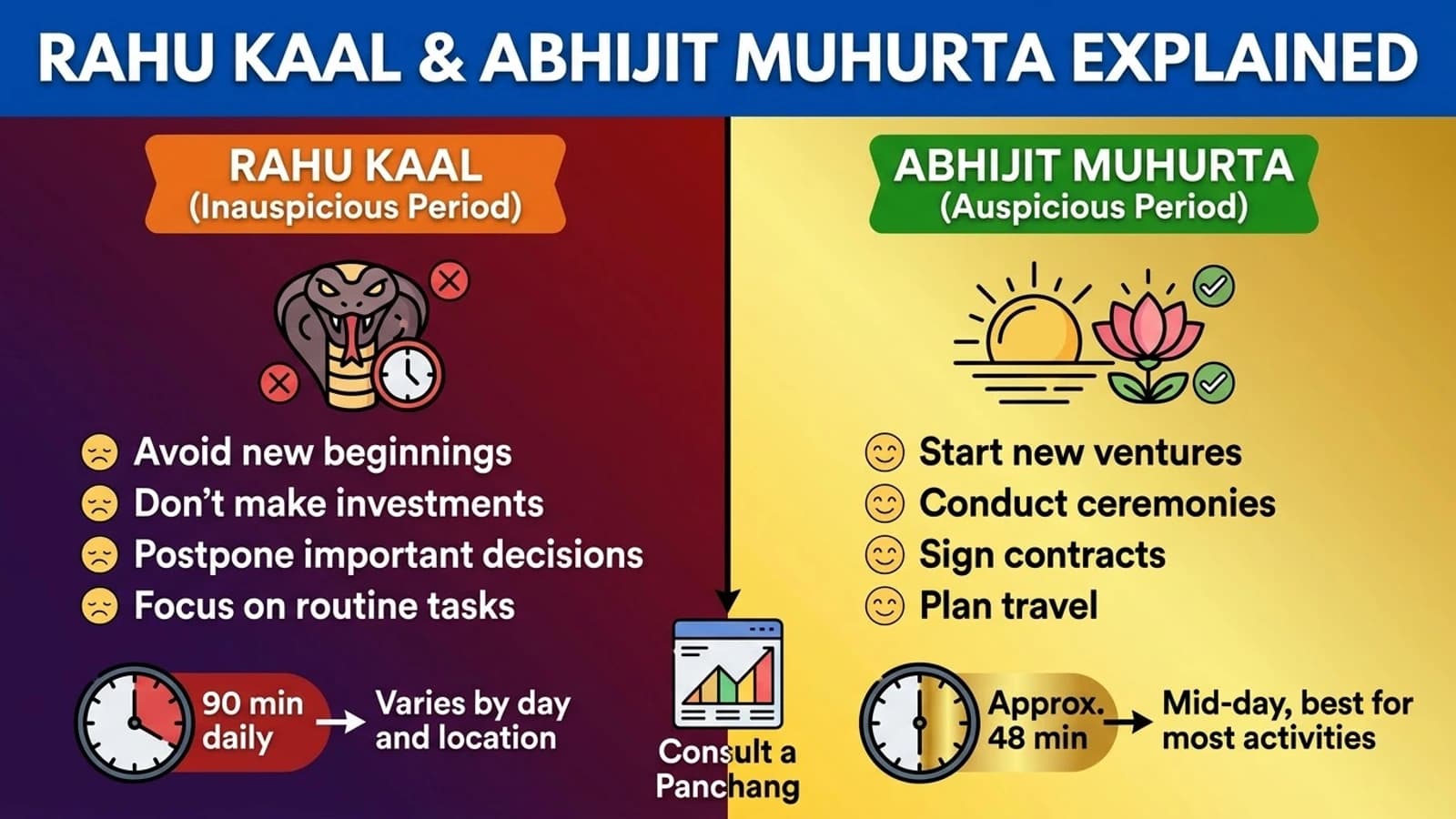
Rahu Kaal and Abhijit Muhurta aren't fixed clock times — both are fractions of the interval between sunrise and sunset, which is why they fall at a different hour in every city, every day.
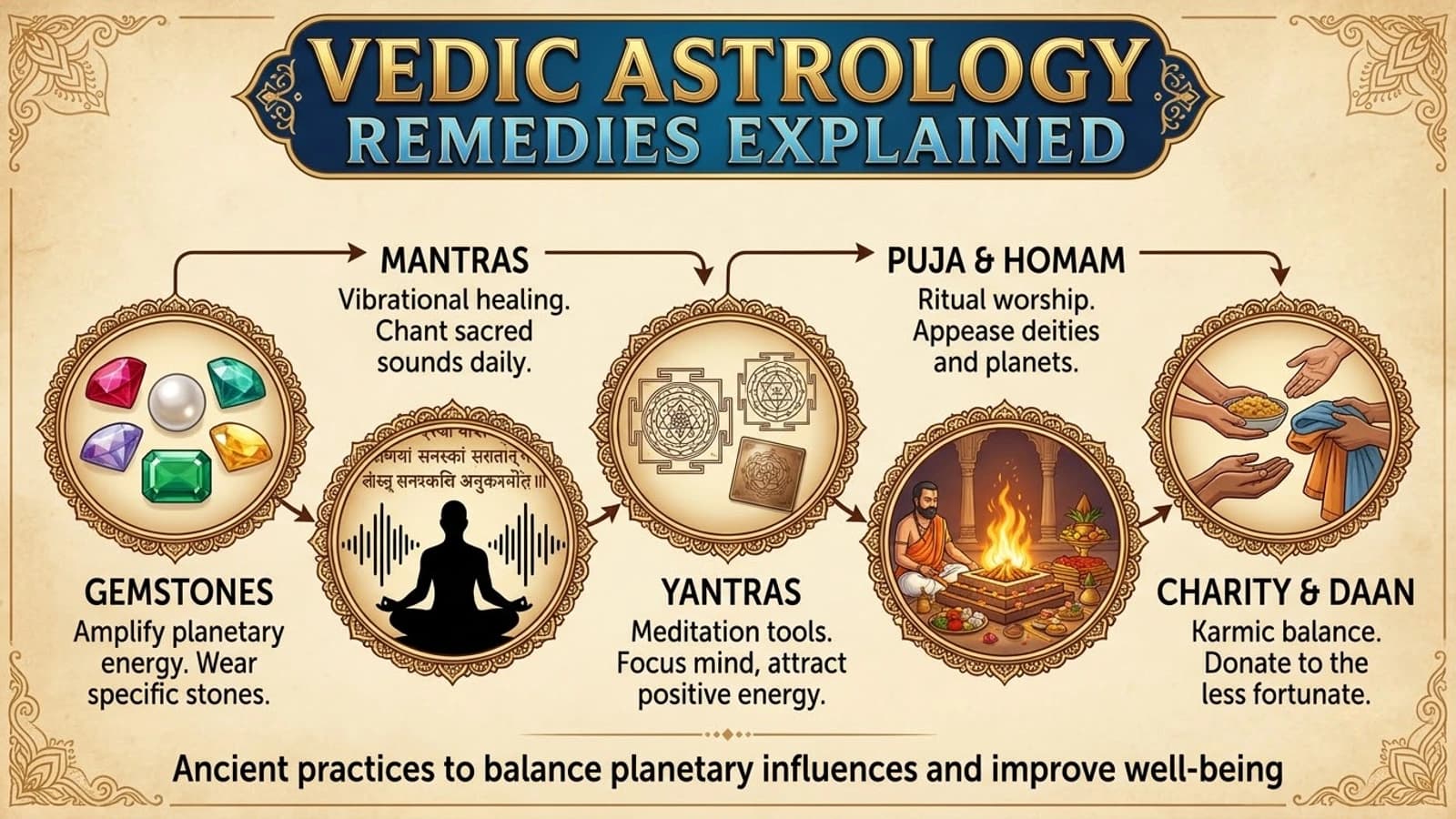
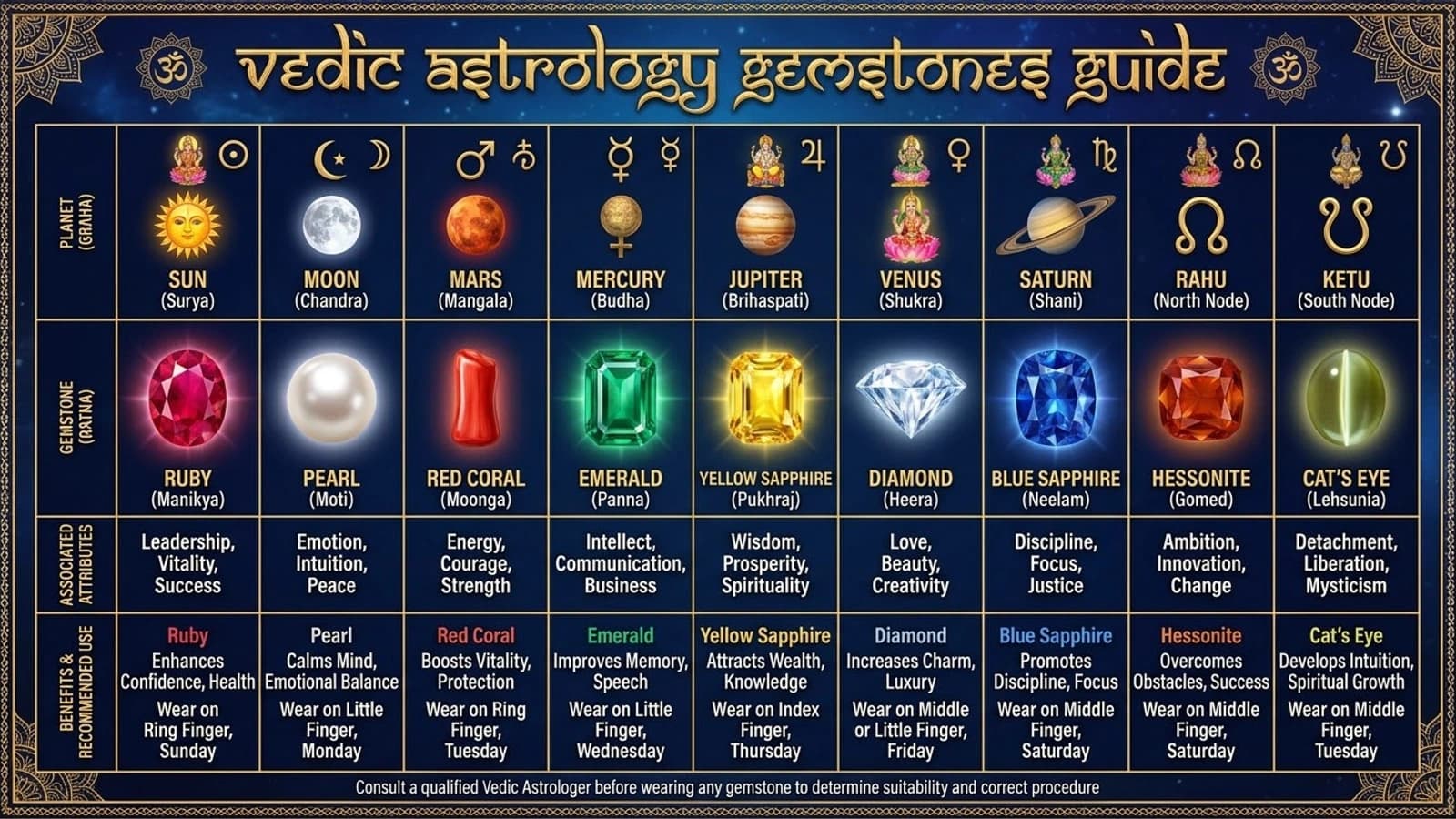
Vedic gemstone recommendations aren't based on your birth month — they're matched to specific planets in your own chart. Here's how the Navaratna system works, and why authenticity matters more than most guides mention.
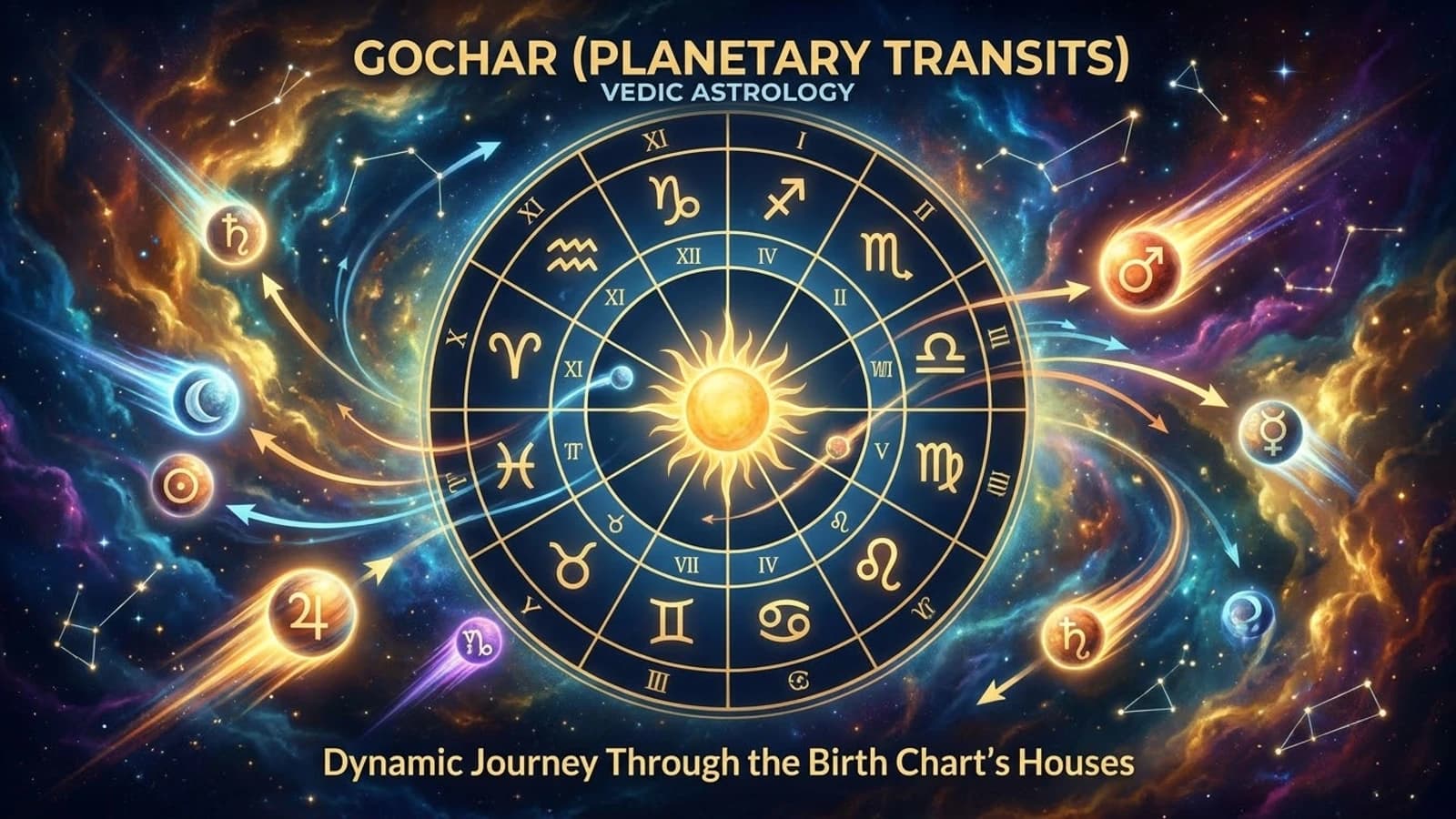
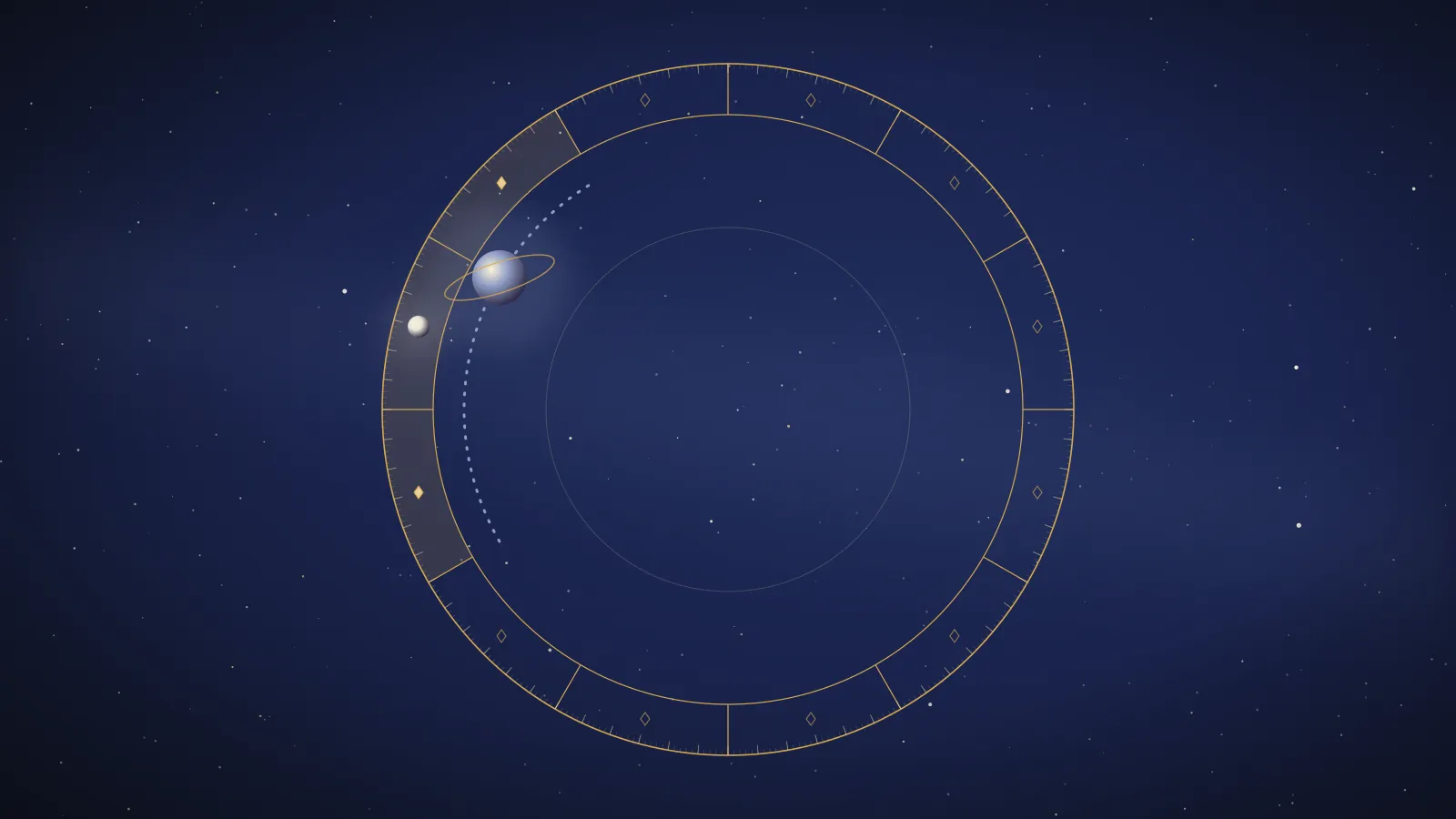
Sade Sati is the roughly 7.5-year period when transiting Saturn moves through the signs before, on, and after your natal Moon. Here's how the three phases work, and why the effects aren't the same for everyone.
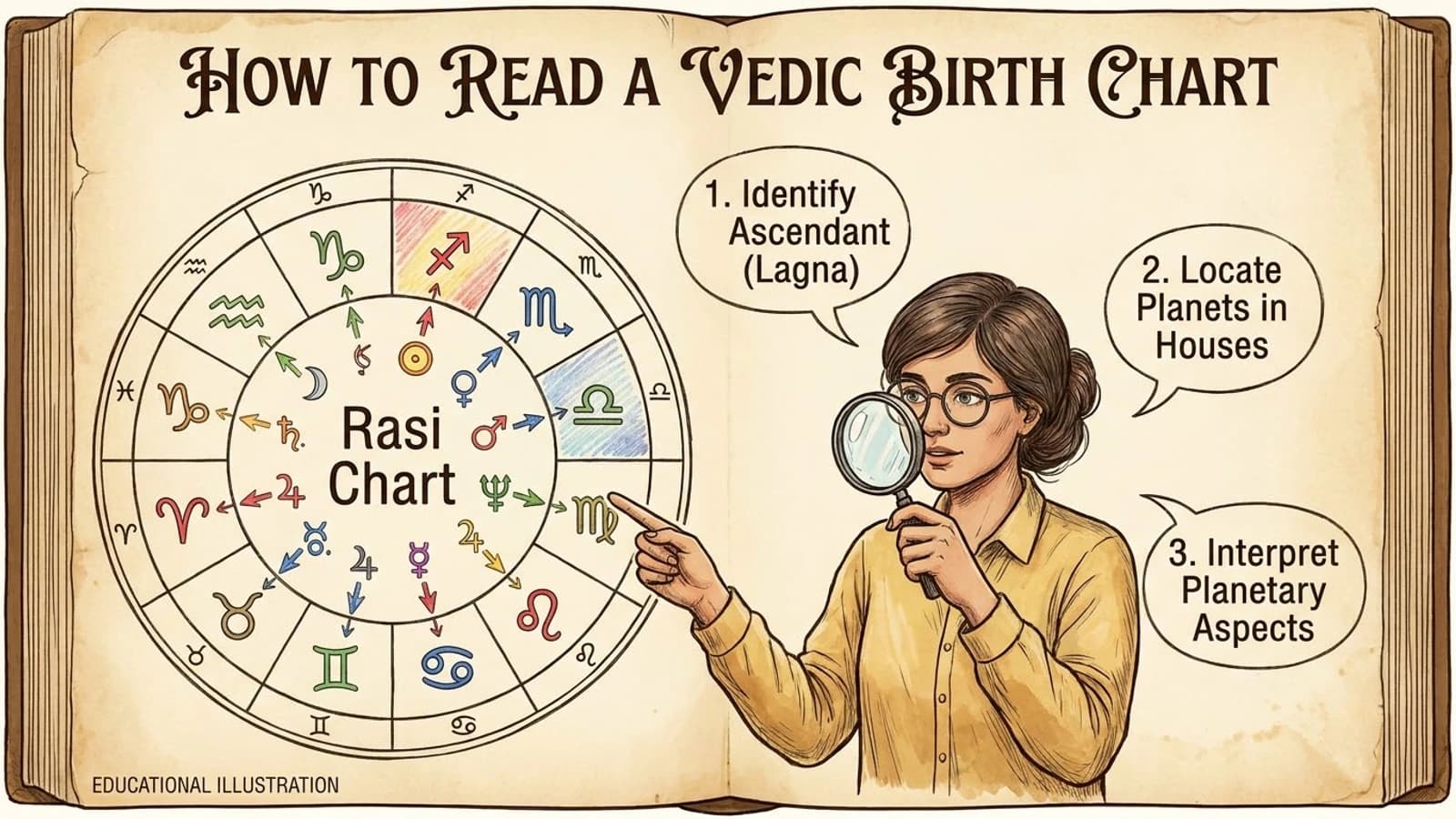
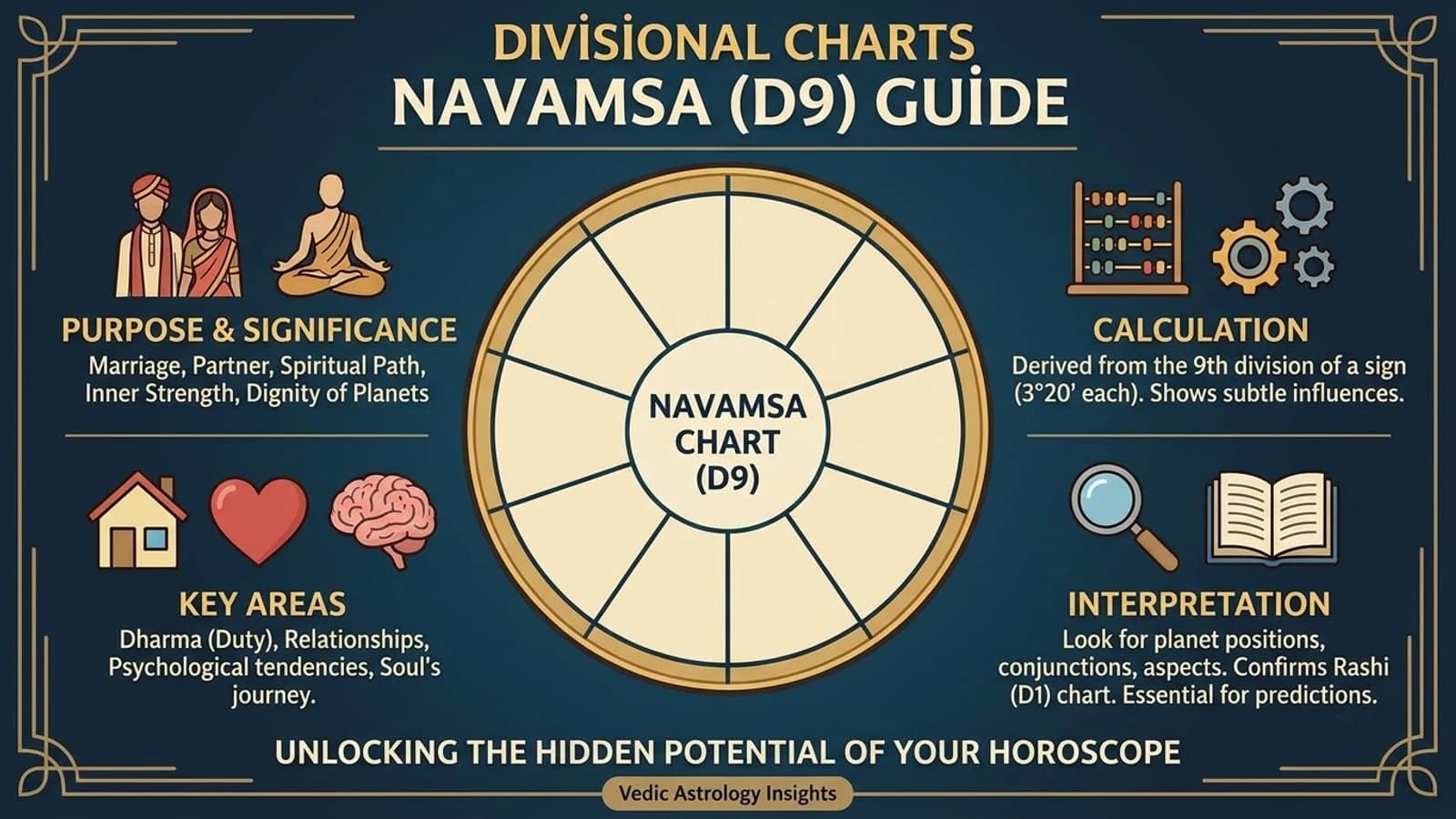
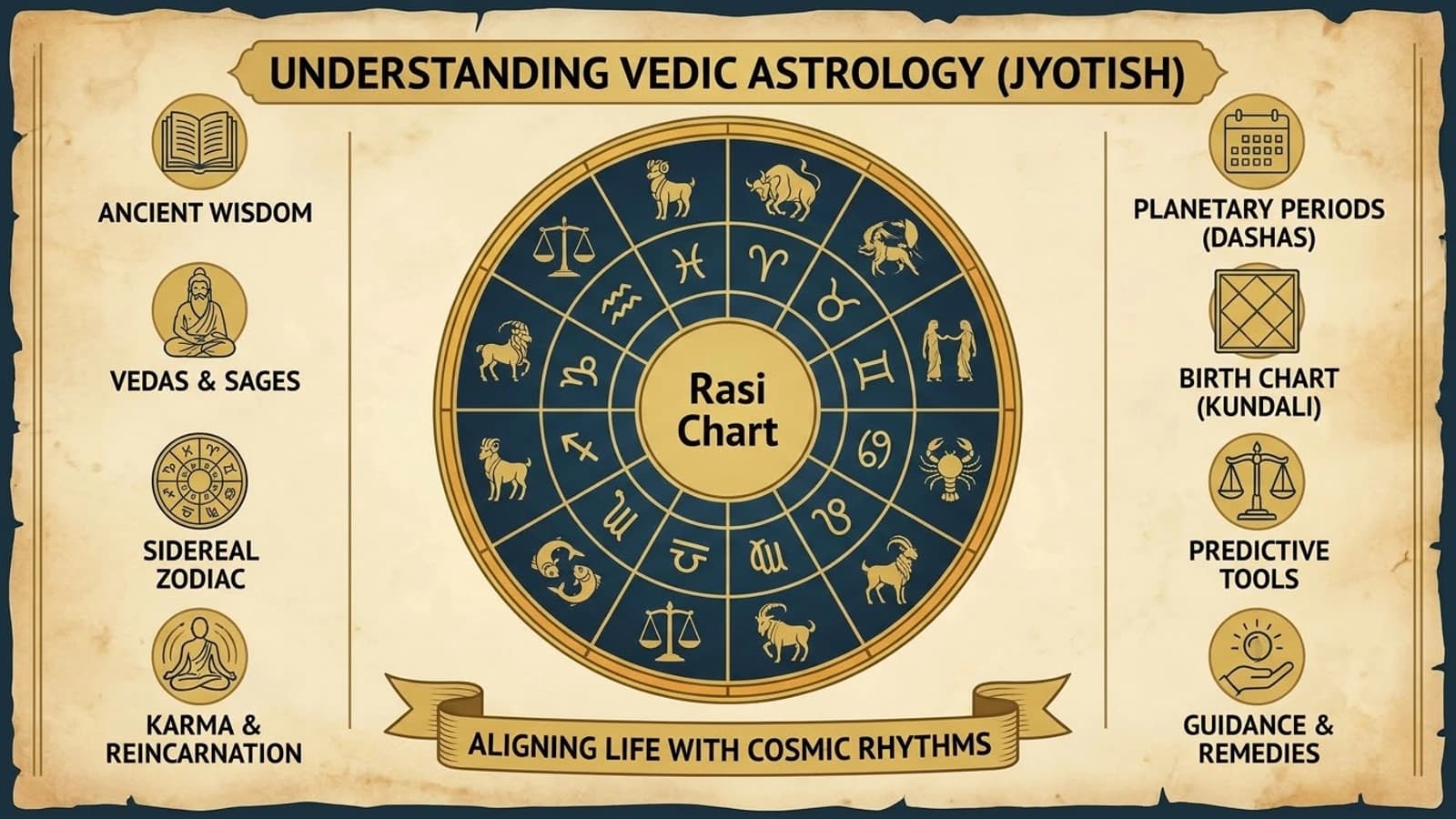
Your main birth chart (D1) is only the start — Vedic astrology reads a planet's true strength across divisional charts called Vargas, especially the Navamsa (D9). Here's how the system works.
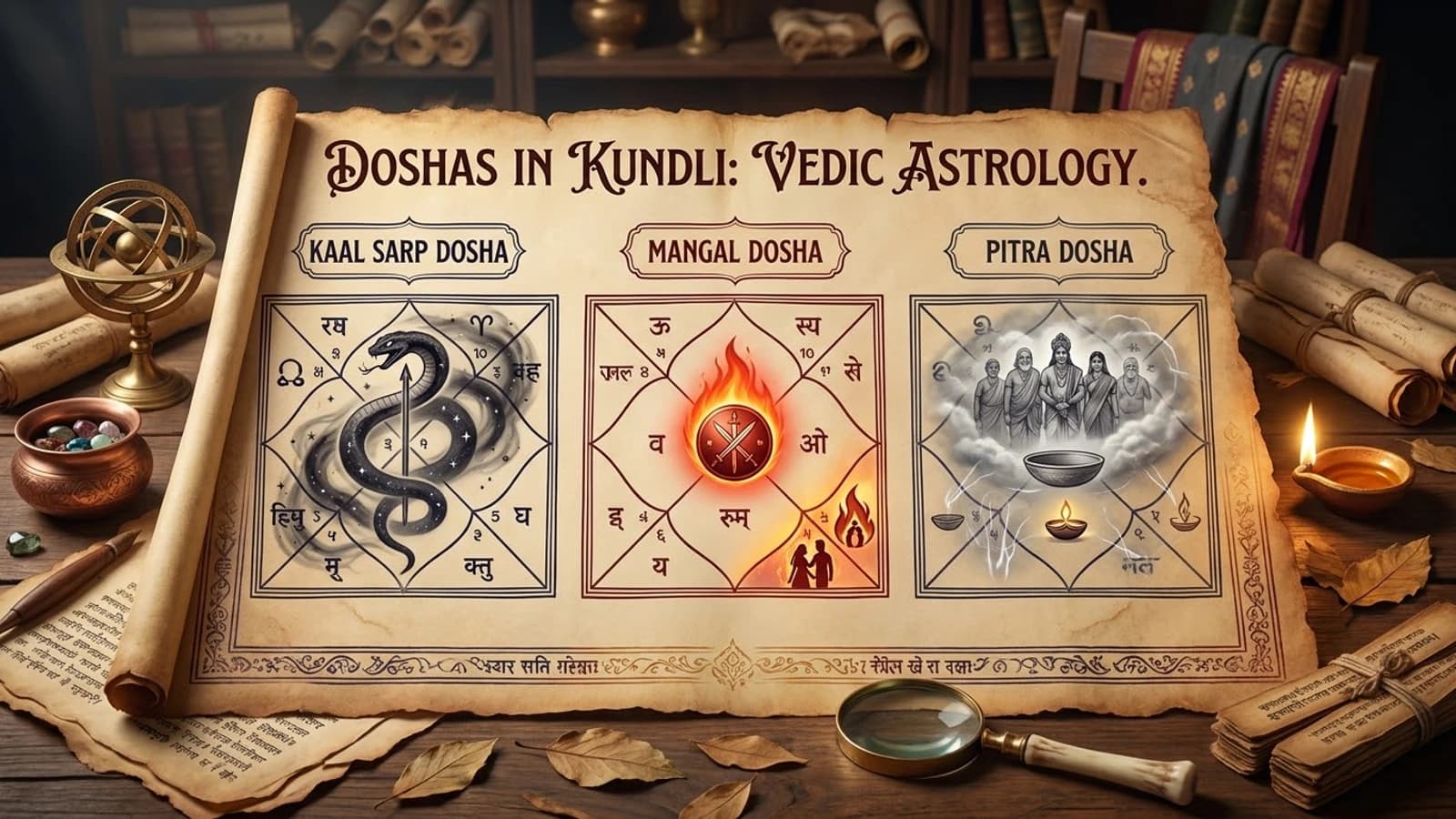
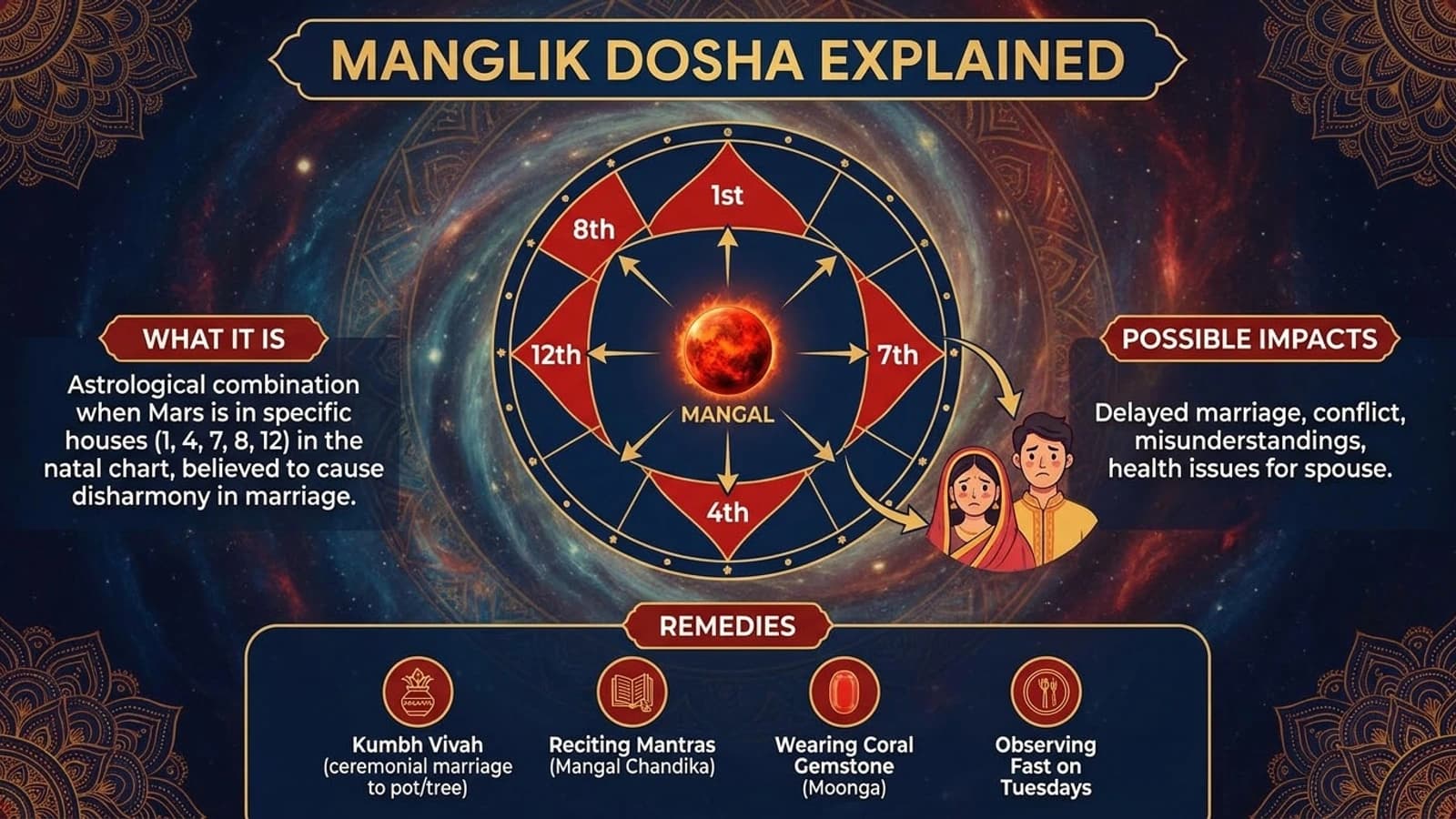
Manglik Dosha forms when Mars sits in specific houses of a birth chart, traditionally linked to friction in marriage. Here's how it's identified, and the classical conditions under which it's considered cancelled.
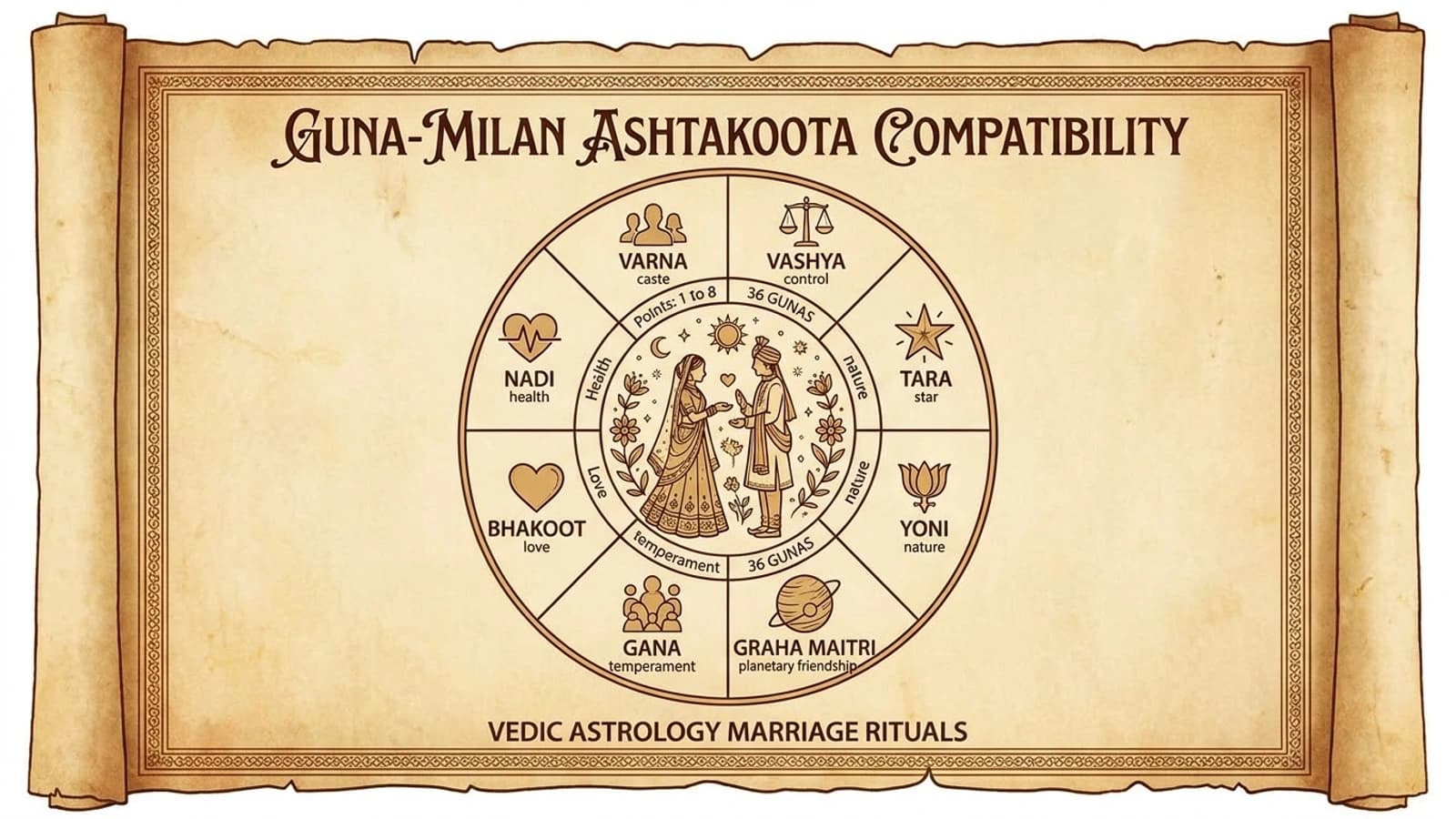
Guna Milan, or Ashtakoota matching, scores two birth charts against each other across eight factors out of 36 points — here's what each koota measures, and why the total score isn't the whole story.
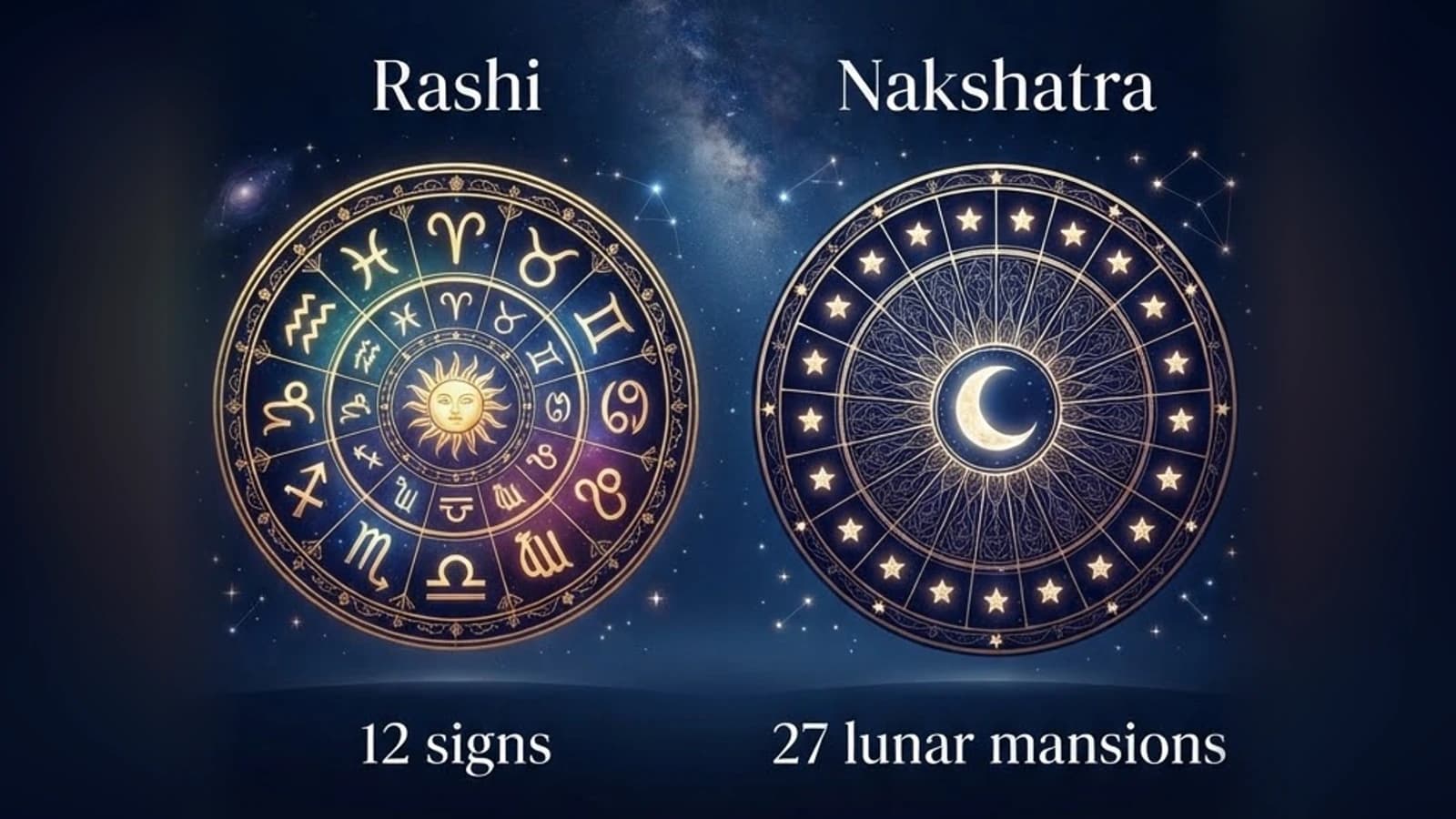
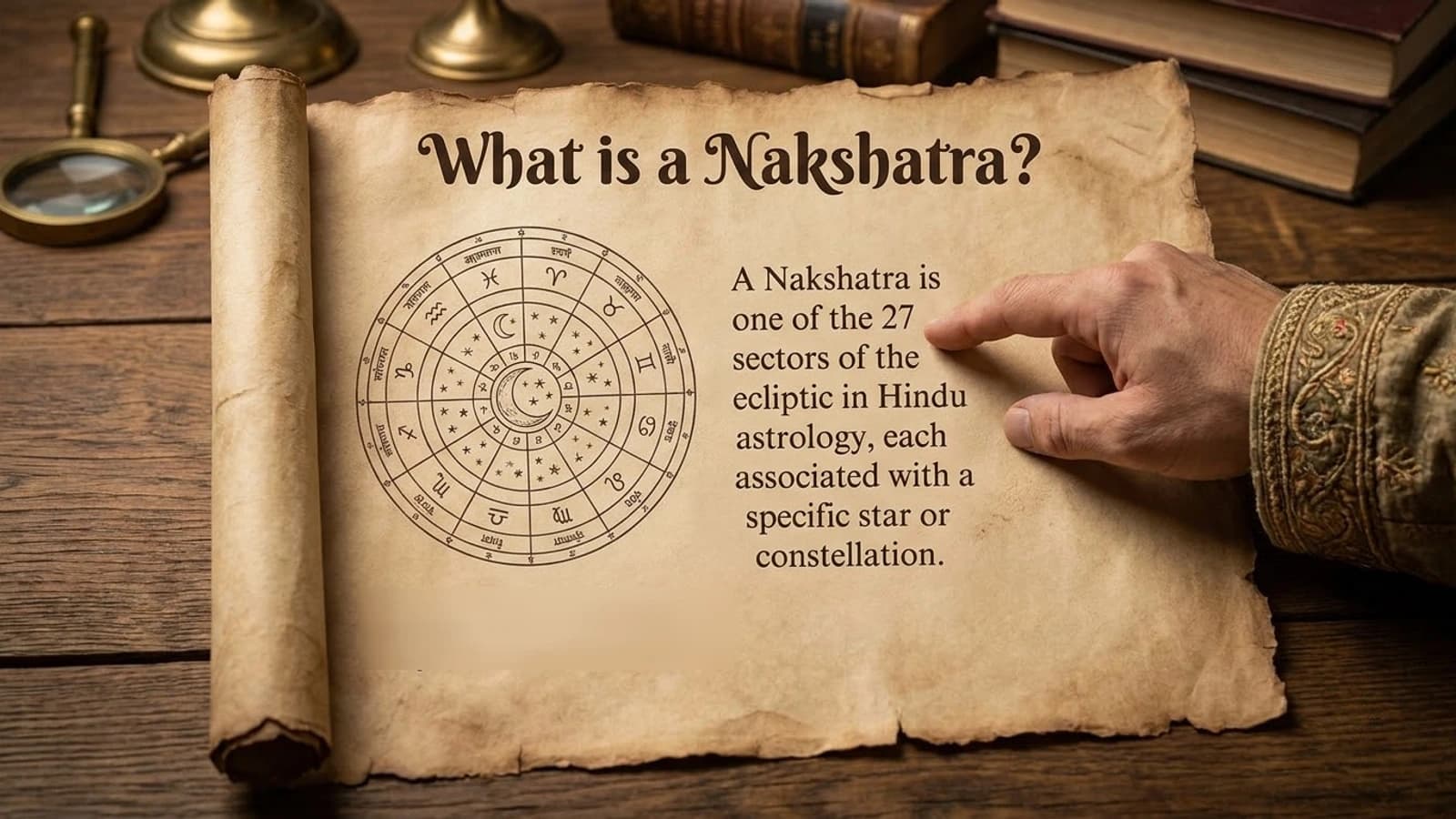
Nakshatras are the 27 lunar mansions Vedic astrology divides the zodiac into — finer than your Moon sign, and the basis for your Vimshottari Dasha, your naming syllable, and Guna Milan compatibility.
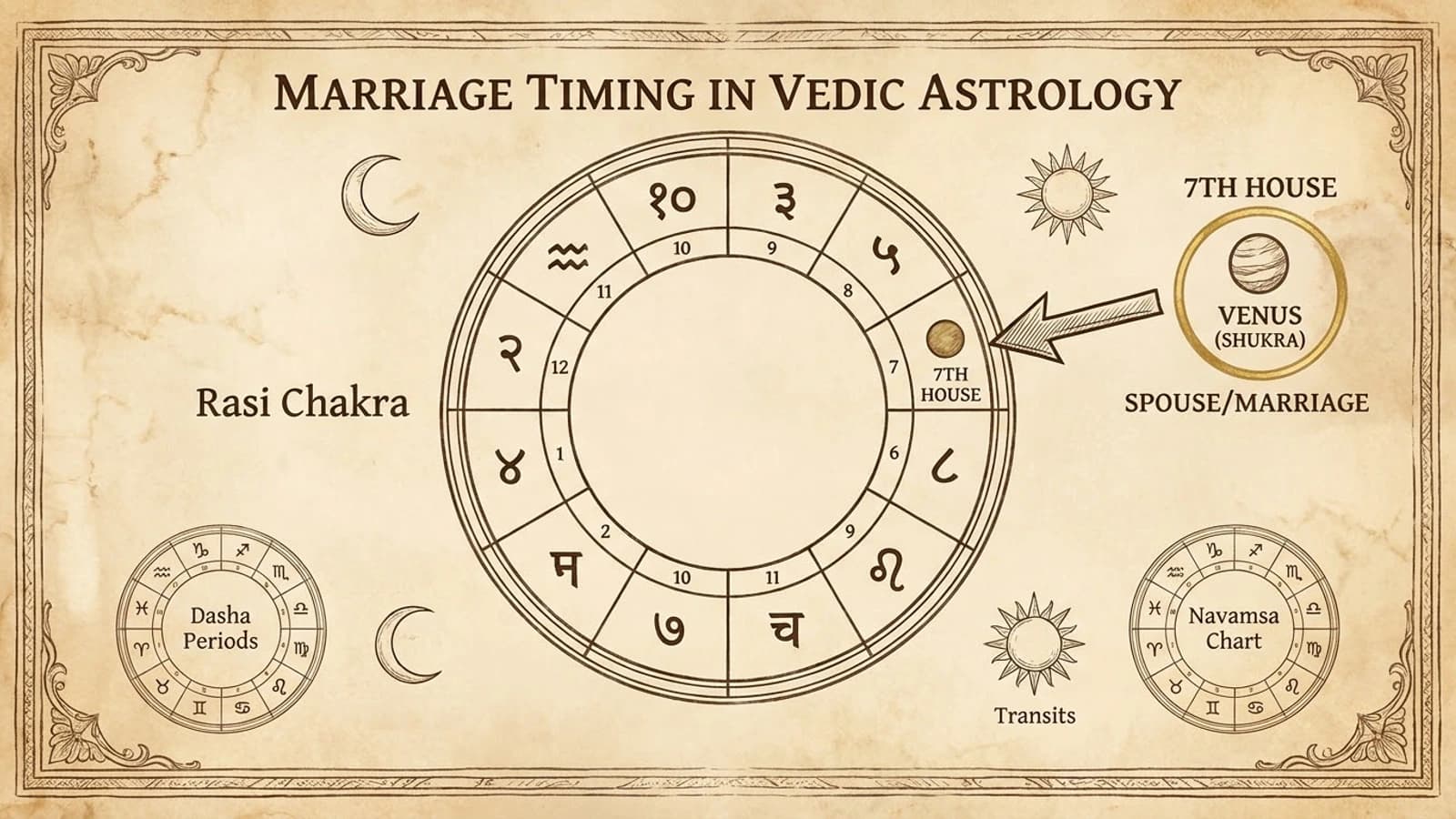
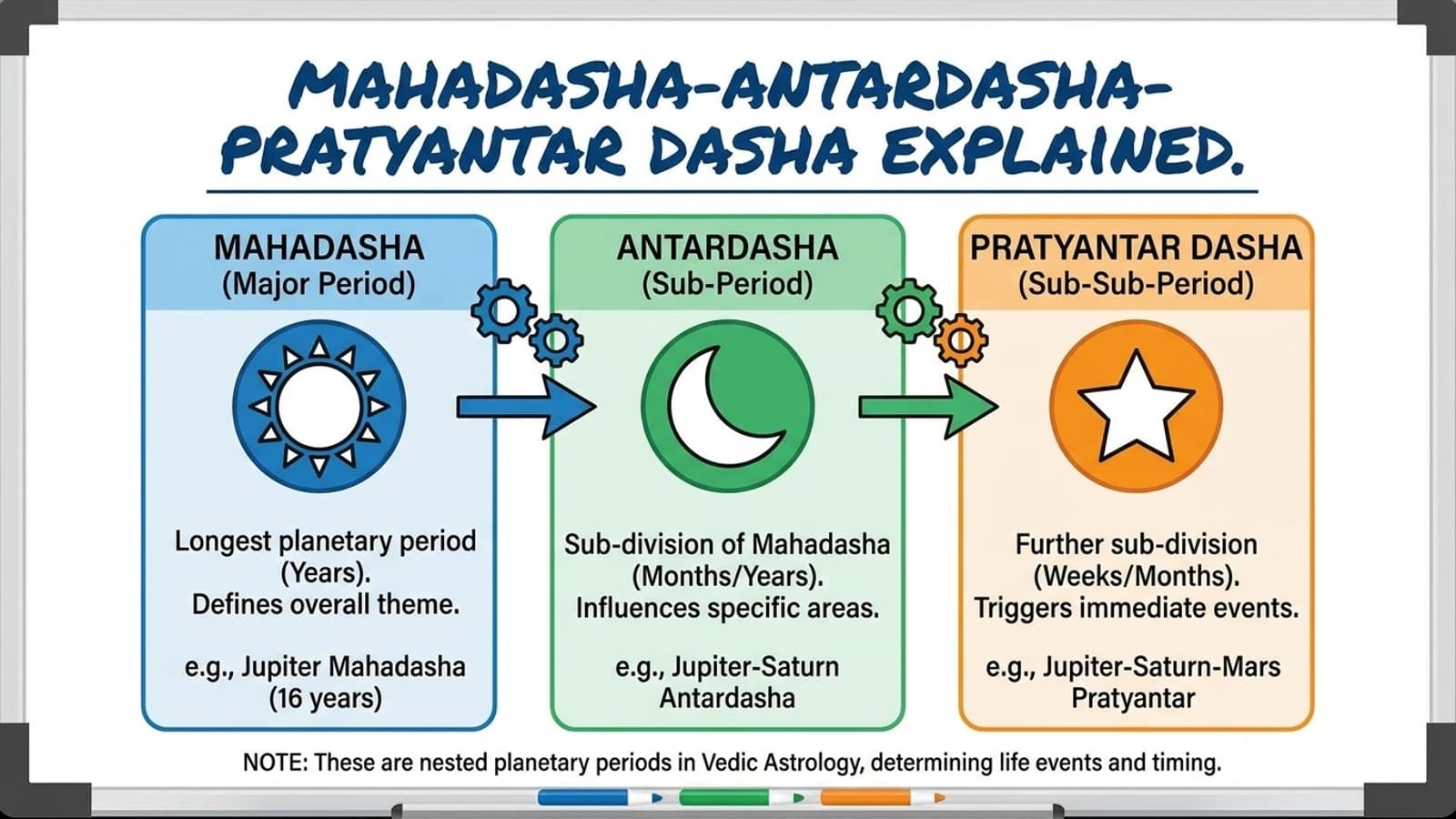
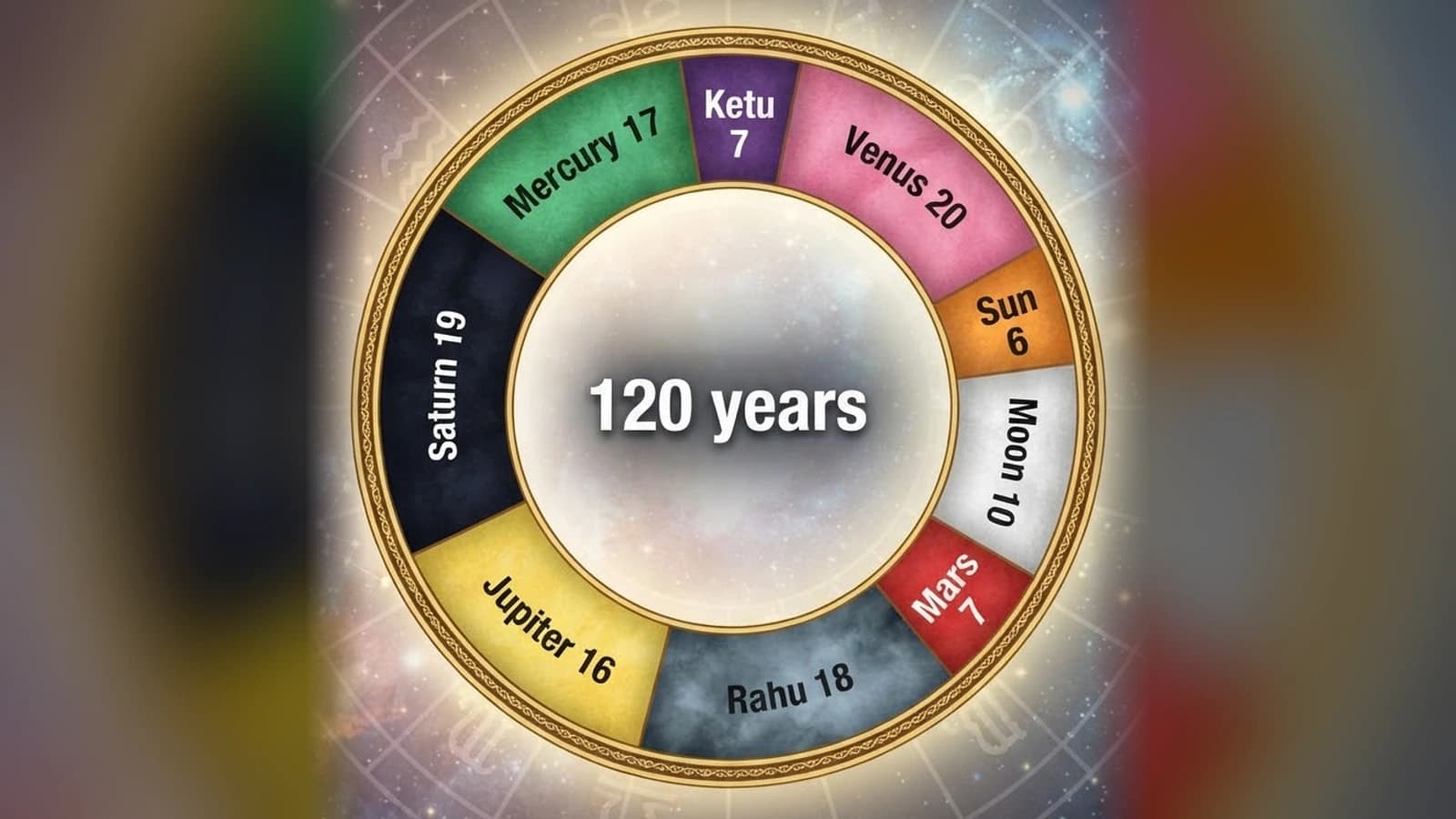
The Vimshottari Dasha is a 120-year planetary timeline used in Vedic astrology to time life events. Here's how the nine Mahadashas and their Antardasha sub-periods work, and why your birth Moon position decides where your timeline starts.
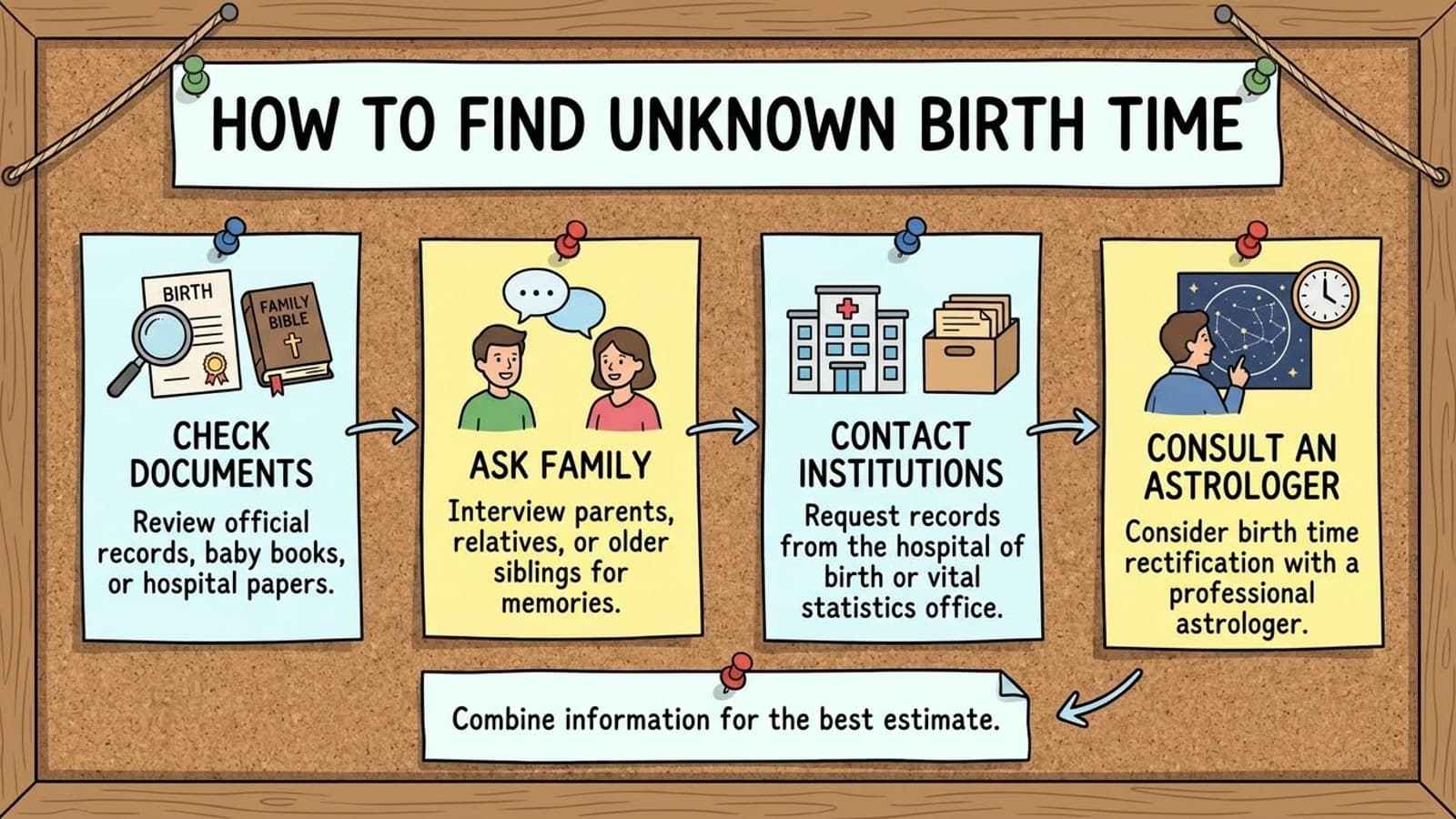
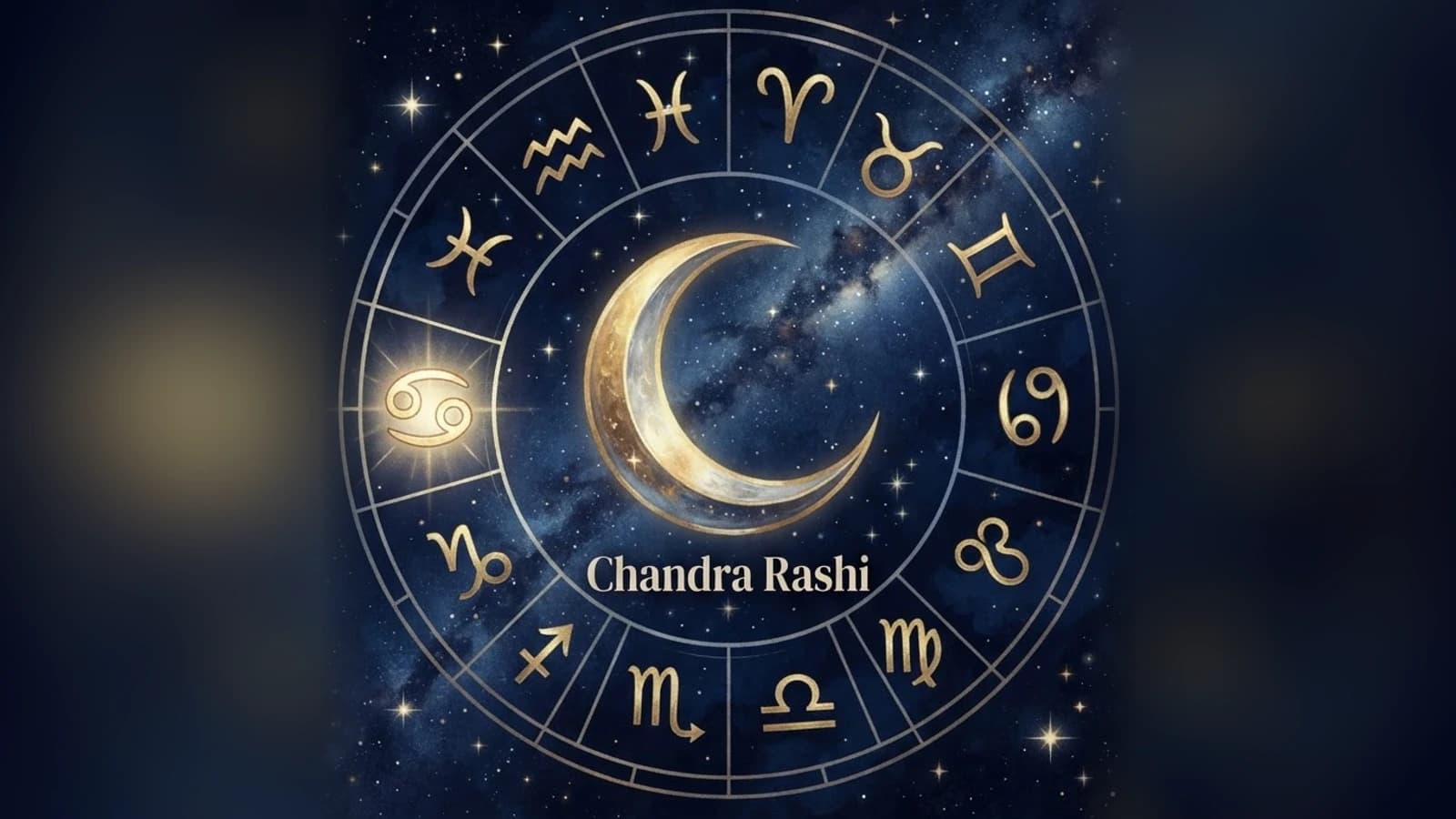
Your Moon sign (Chandra Rashi) governs your mind and emotions in Vedic astrology, and it changes every 2-3 days — here's why it matters more than your Sun sign, and why you need your exact birth time to know it.
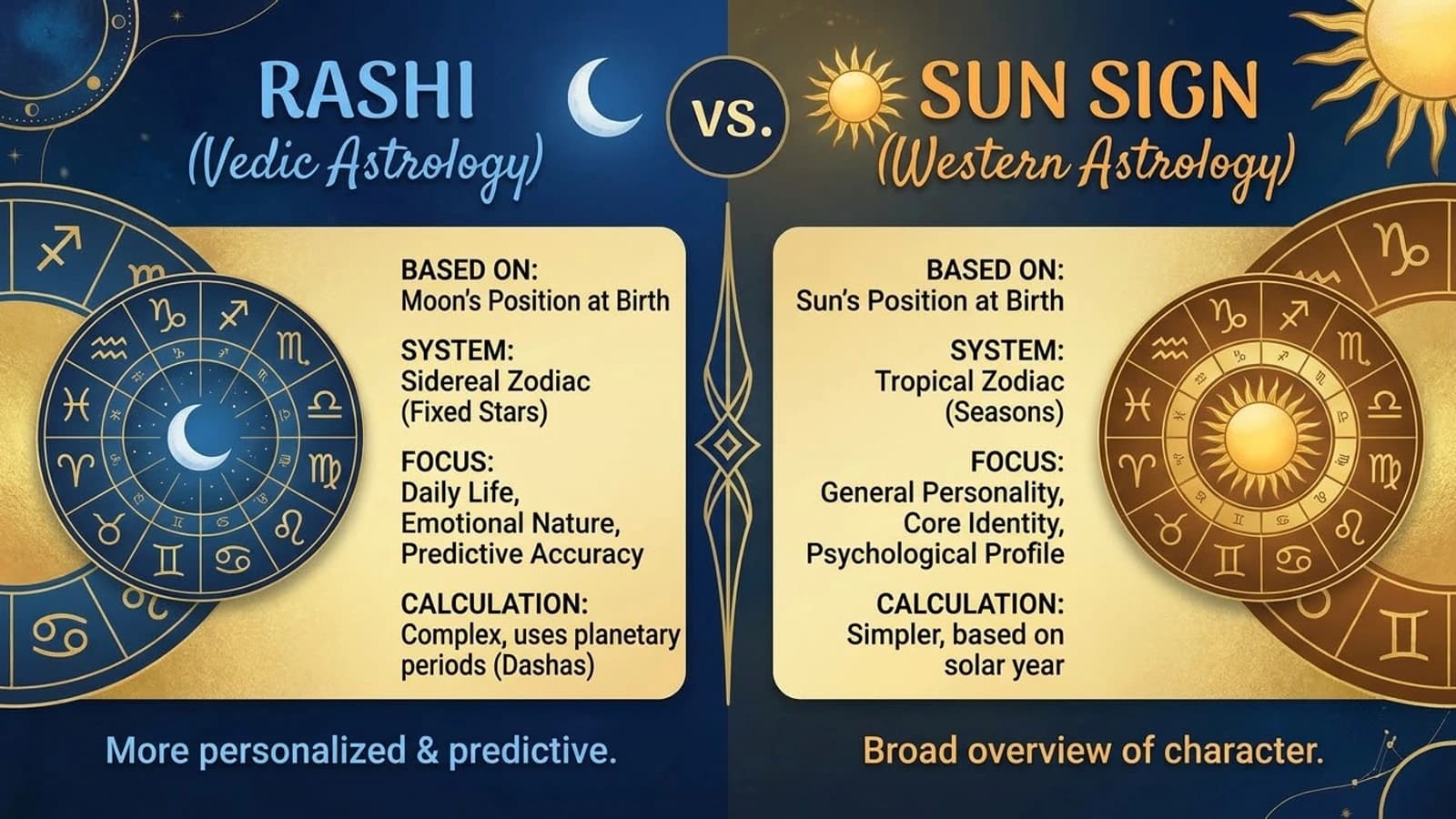
Western astrology uses the tropical zodiac anchored to the seasons; Vedic astrology uses the sidereal zodiac anchored to the visible constellations. Here's why the two systems can place you in different signs — and why neither one is 'wrong'.