The bedroom is where Vastu guidance is most personal: it's about where you rest, which way you lie and what surrounds you while you sleep. The core of it is short. The main bedroom belongs in the south-west, the bed's headboard goes against a solid wall, and you sleep with your head towards the south or east.
Which room should be the bedroom?
Vastu assigns rooms by zone. For bedrooms, the common guidance is:
| Bedroom | Traditionally recommended zone | Why, in Vastu terms |
|---|---|---|
| Master bedroom | South-west | The earth zone: stability, weight, the head of the household |
| Children's bedroom | West or north-west | Growth, movement; also good for study |
| Guest bedroom | North-west | The air zone, associated with movement and temporary stays |
| Avoided for the master bedroom | North-east and south-east | North-east kept light and sacred; south-east is the fire zone |
If the rooms are already fixed, as in most flats, don't worry about this table. The placement guidance below applies to whichever room you sleep in.
Sleeping direction
This is the most asked question in bedroom Vastu.
| Head towards | Traditional view |
|---|---|
| South | Most recommended |
| East | Recommended; often suggested for students and children |
| West | Acceptable in some guidance, less favoured |
| North | Traditionally avoided |
The avoidance of the north is older than Vastu manuals and appears in wider Hindu custom. You'll often read that it's "because of the Earth's magnetic field". That explanation is popular but has no scientific basis. If you follow this guidance, follow it as tradition.
Placing the bed
Much of the placement advice is about feeling settled and secure, which is sensible anyway:
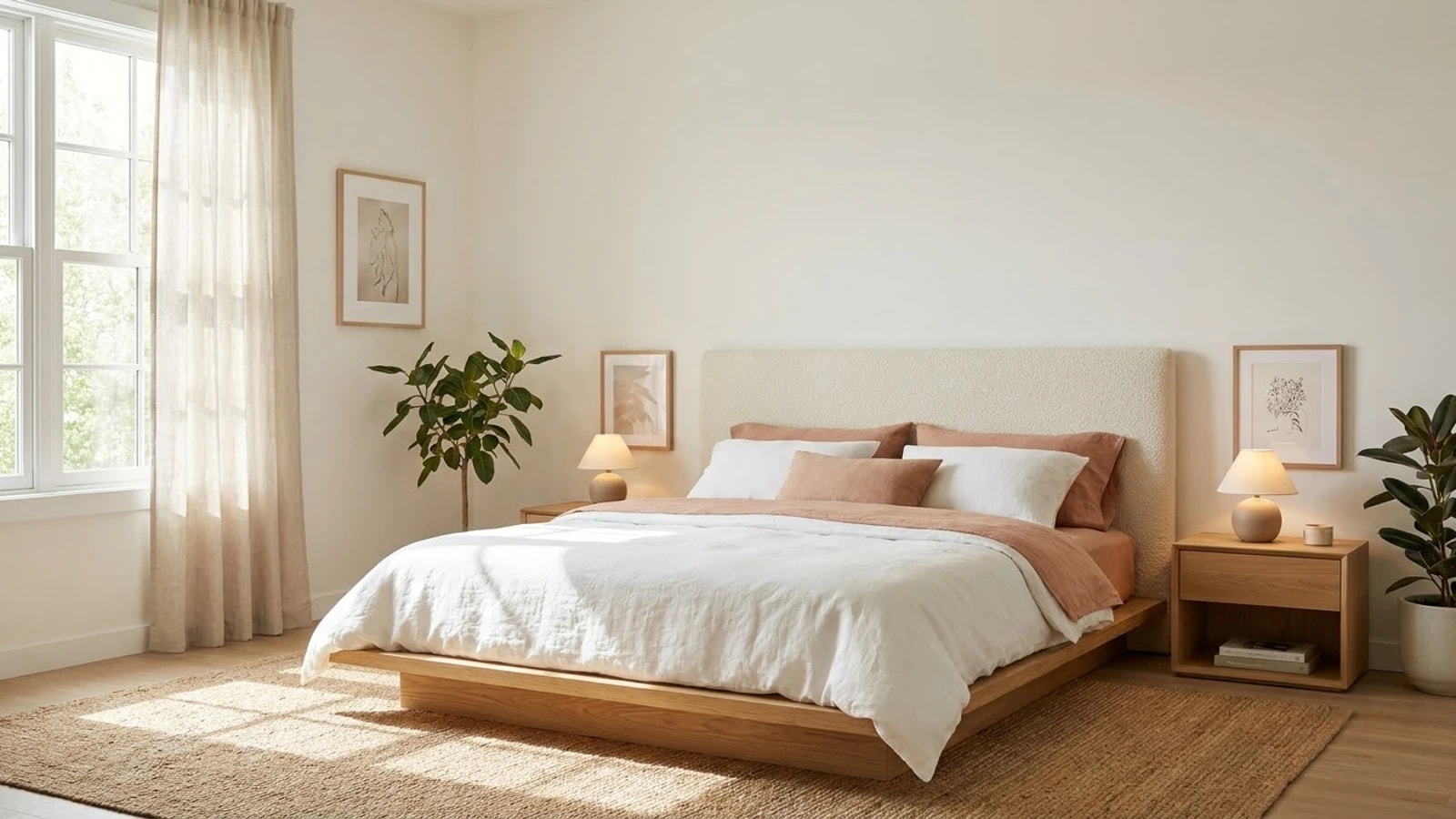
- Headboard against a solid wall, not under a window.
- In the south-west part of the room if you can, so you're lying towards the "heavy" zone.
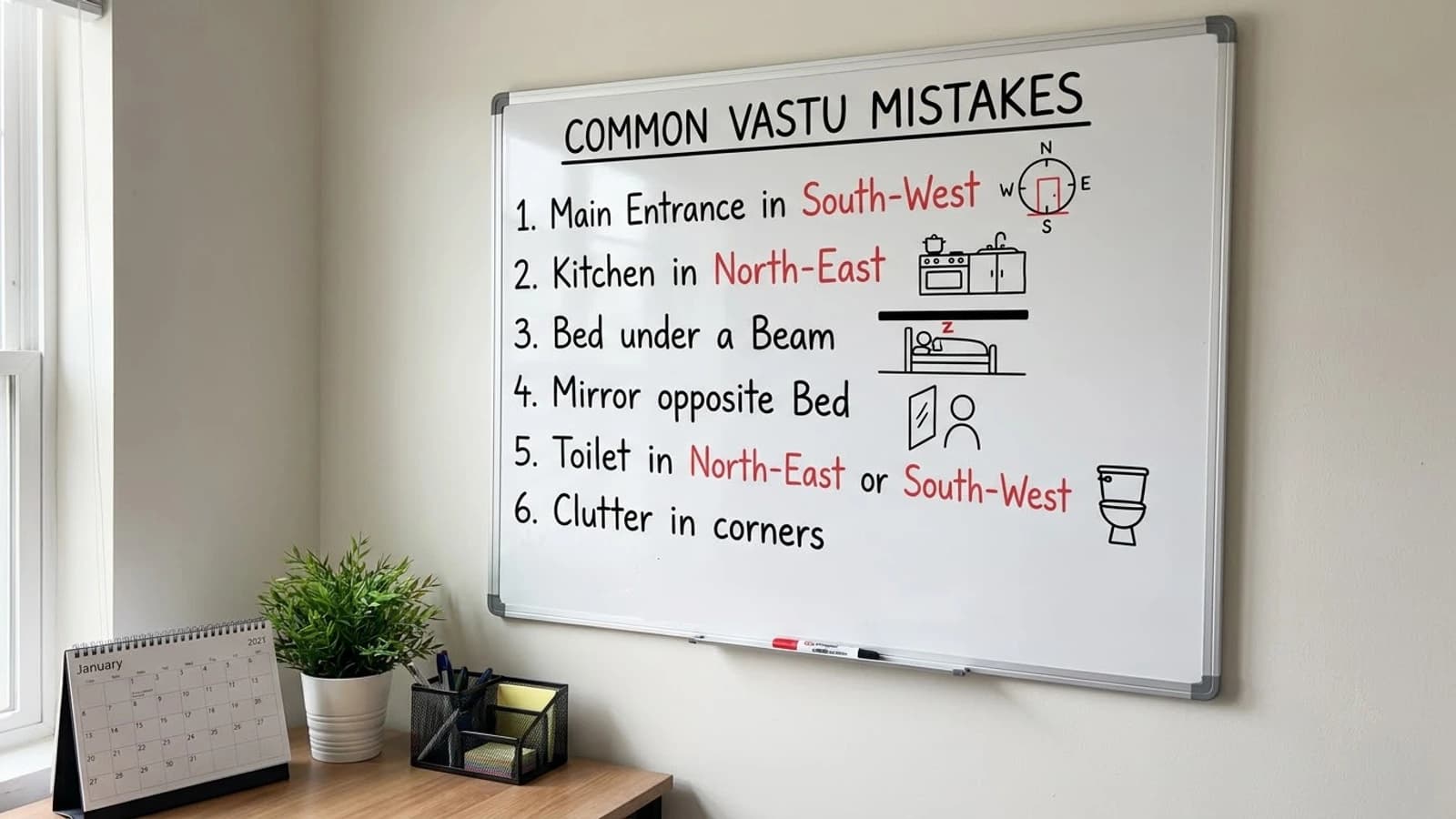
- Not under an exposed beam, a very common piece of advice.
- Accessible from both sides for a couple.
- Nothing stored under the bed except, if necessary, bedding. Practitioners discourage piling clutter there.
- Not directly facing the door where possible. You should be able to see the door from the bed without lying in line with it.
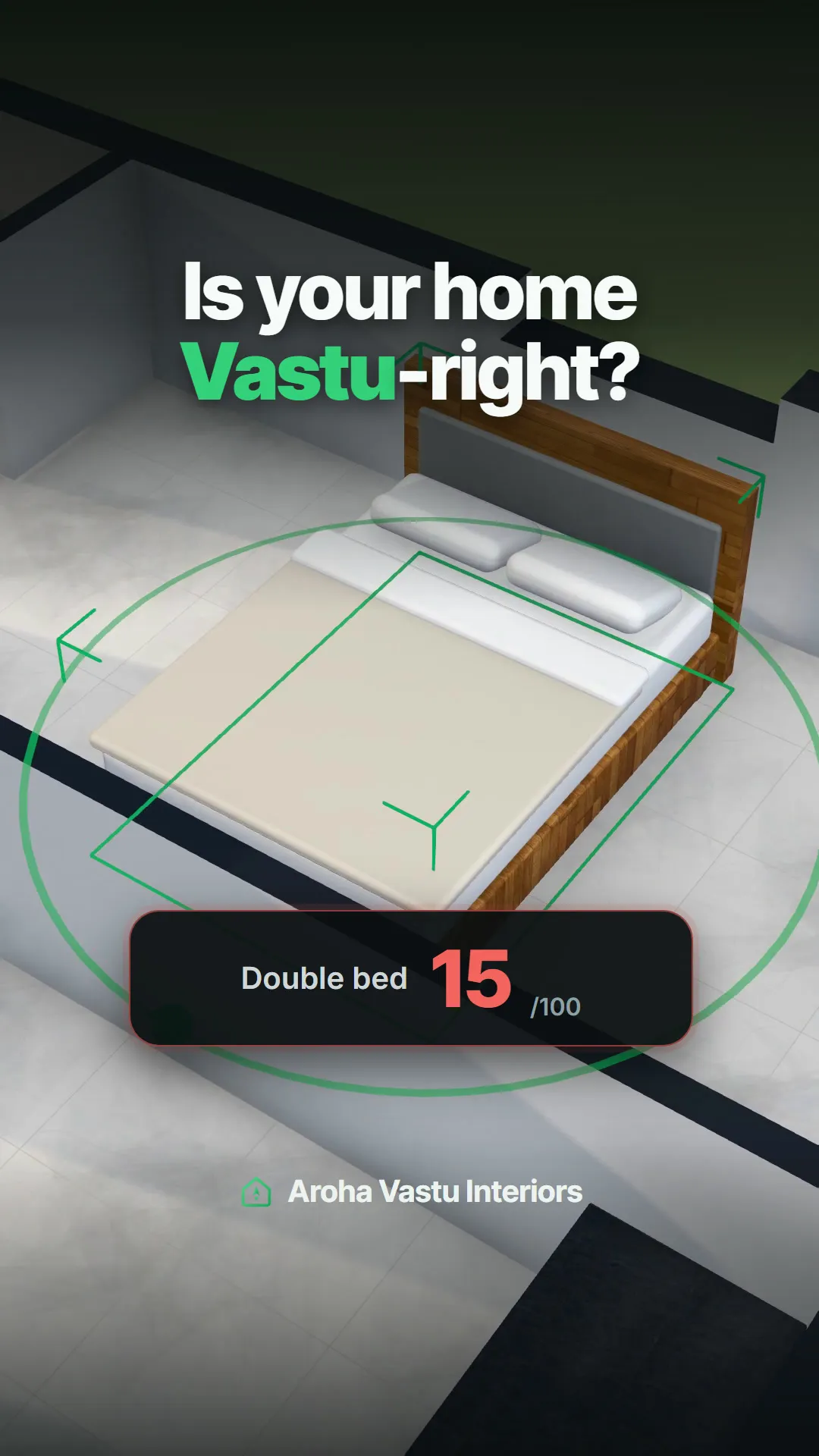
The 3D version of Aroha Vastu, coming soon, is being built to check placements like this one piece of furniture at a time.
Wardrobes, mirrors and the rest
- Wardrobes and heavy storage on the south or west walls, keeping the north and east lighter.
- Mirrors not facing the bed, in popular guidance. A wardrobe mirror can be curtained or kept behind a closed door at night.
- Electronics kept to a minimum near the bed. A television facing the bed is commonly discouraged.
- Attached bathroom ideally in the west or north-west part of the bedroom, door kept closed.
- Colours: soft, warm neutrals and earth tones are the usual suggestion; very dark or very bright colours are discouraged.
- A study desk, if there is one, facing east or north.
Where Vastu and good sleep agree
Several bedroom recommendations overlap with well-established advice on sleep: a dark, quiet, uncluttered room, few screens, a bed that feels secure, and a room used mainly for rest. Those benefits don't depend on Vastu. They're a good reason to follow the practical parts of this guidance even if you don't share the tradition's beliefs about direction.
If your bedroom is in the "wrong" zone
Most people can't choose which corner of the flat their bedroom sits in. Traditional practitioners typically suggest working within the room: move the bed to its south-west part, turn it so your head points south or east, and keep the room uncluttered. That's usually enough. There's no need for costly "corrections" or for moving house because of a bedroom's zone.
Aroha Vastu, available on Android and the web in the Aroha Astrology app, shows which zone each of your rooms falls in and what traditional guidance says about it, room by room.