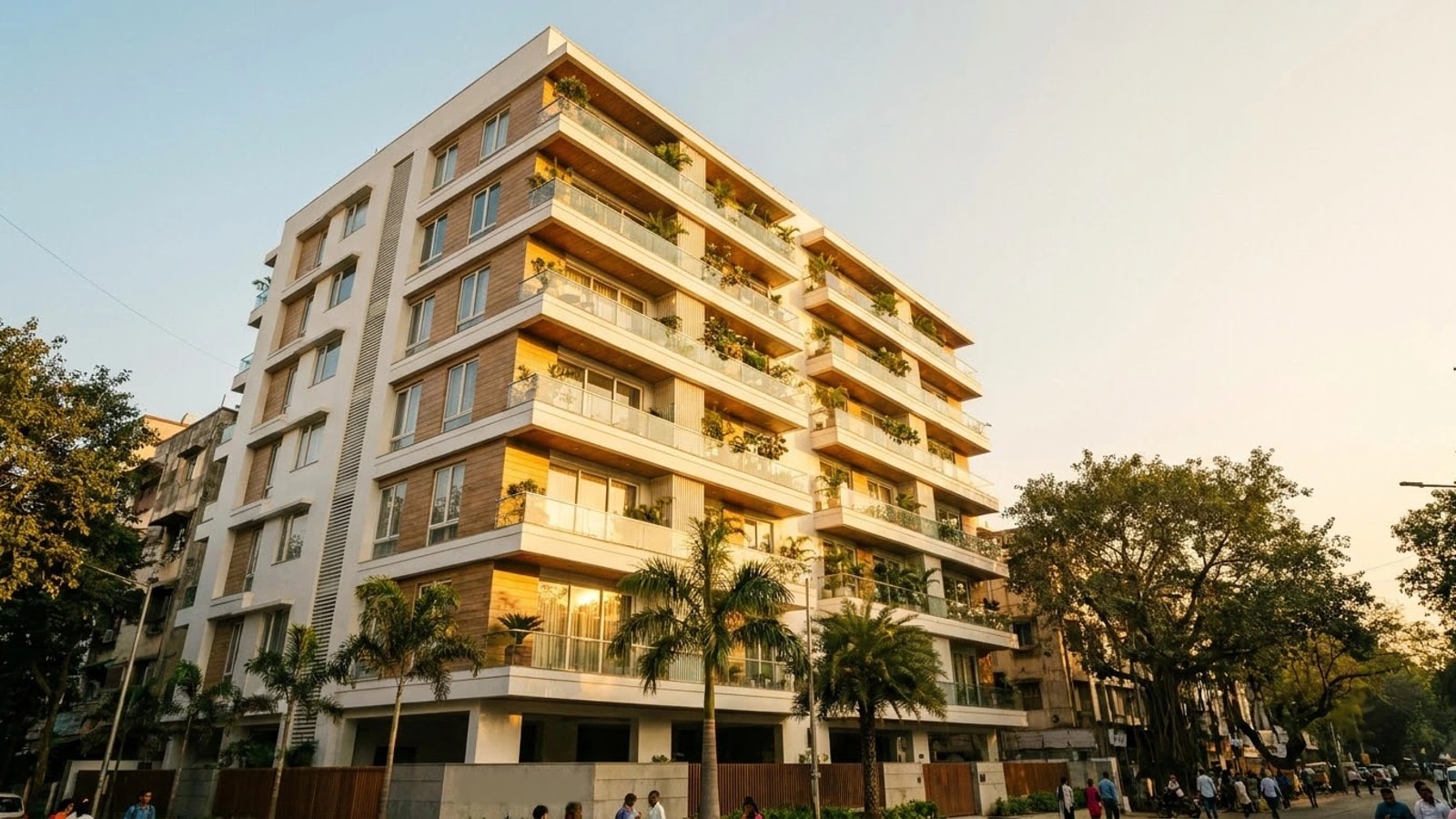
Vastu Shastra was written for houses on their own plots, with courtyards and open land around them. Most people today buy a flat: a set of rooms stacked among many others, with a fixed plan and a shared entrance. So how do you apply a tradition written for one to the other?
The practical answer is to focus on your own flat's layout, check the handful of features that are hard to change, and not lose a good home over details you can adjust after moving in.
Start with the plan, not the brochure
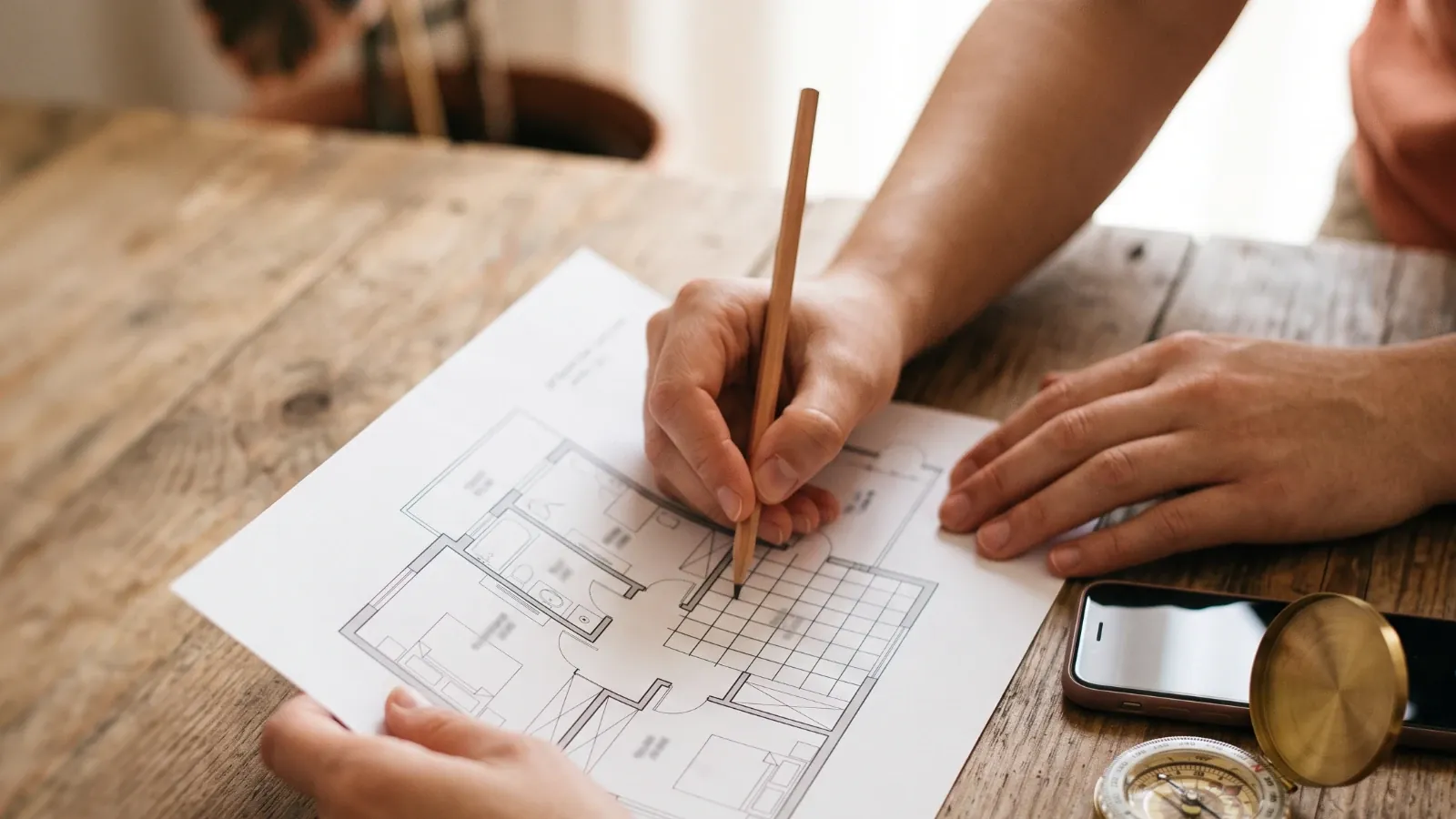
Before visiting, ask for the flat's floor plan with a north arrow. With it you can do most of the Vastu evaluation at your desk:
- Confirm north (the brochure's arrow isn't always exact; check on site with a compass; see how to find directions).
- Lay a 3 × 3 grid over the flat's own plan to find its eight zones and centre. Our guide on reading a floor plan with Vastu shows how.
- Note which room falls in which zone.
The five things worth checking
These are the features that are genuinely hard to change once you've bought.
1. The entrance
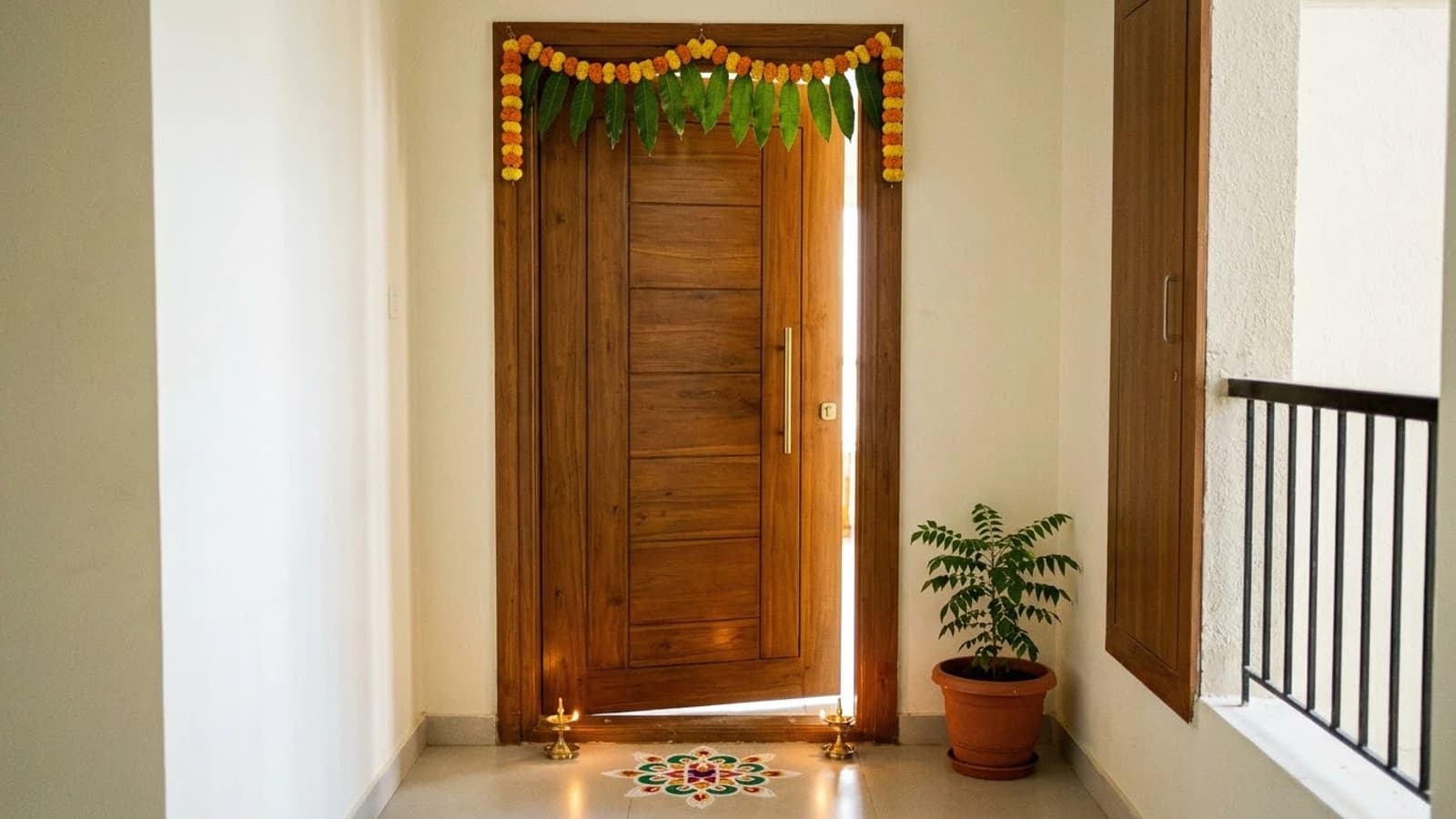
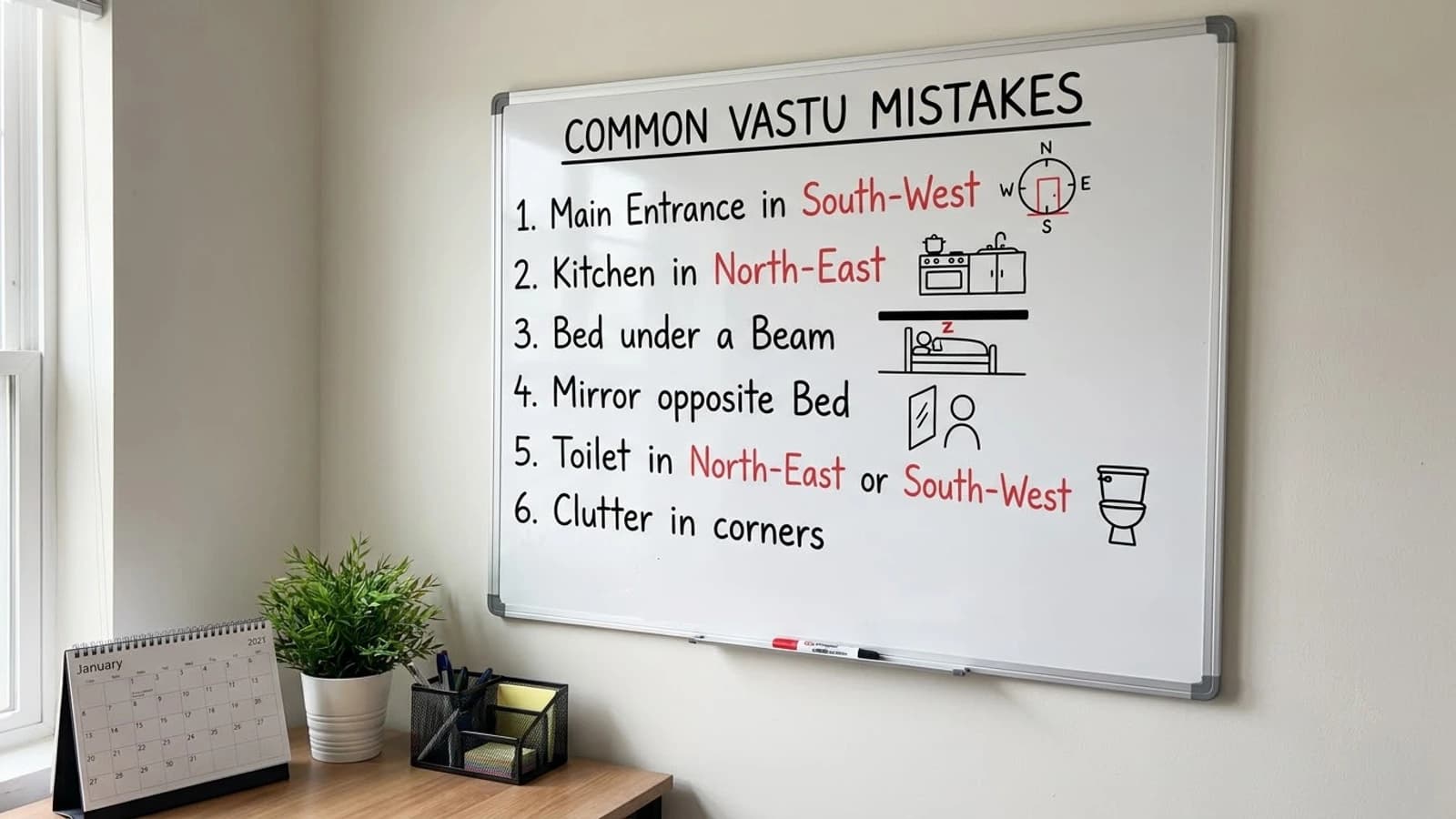
Traditional preference is for the flat's own door to open in the north, east or north-east, with its position along the wall also mattering. The building's main gate matters less to most practitioners. See main entrance Vastu.
2. The kitchen
The kitchen traditionally belongs in the south-east, with the north-west as the accepted alternative. A kitchen in the north-east or at the centre of the flat is the most commonly discouraged arrangement. Check where the gas line and platform are; see kitchen Vastu.
3. The master bedroom
Ideally in the south-west. If the largest bedroom is elsewhere, the bed can still be placed in that room's south-west part; see bedroom Vastu.
4. The toilets
This is one of the few areas where practitioners are fairly consistent: toilets in the north-east or at the centre of the home are discouraged. North-west and west are the usual preferred positions.
5. The centre
Is the middle of the flat open (a passage, a living area), or is it a toilet, a staircase or a heavy store? An open centre is preferred.
What matters less than you might think
- The building's facing. For a flat, your own entrance and rooms carry more weight.
- Floor number. Traditional Vastu doesn't address floors in a tower. Beliefs about "lucky" floors are modern.
- A slightly cut or extended corner. Irregular plans are the norm in apartments. Practitioners differ on how much a missing corner matters, and it's rarely a reason to walk away.
- Colours, mirrors and furniture. All can be changed after you move in.
Be wary of anyone who tells you a flat will bring illness or financial ruin because of its direction. That isn't what the classical texts say, and it's often a prelude to selling you an expensive "correction".
A buyer's checklist
The last two items are Vastu recommendations that are also simply good advice for any home.
After you move in
Once you've bought or rented, Vastu becomes about use, not construction:
- Choose which bedroom is the "master" based on zone, not just size.
- Place beds, the sofa and heavy wardrobes following the south-west-heavy, north-east-light principle.
- Keep the north-east corner and the centre clear.
- Set up the shrine in the north-east; see pooja room Vastu.
- Many families mark the move with a Griha Pravesh, and some with a Vastu Shanti puja.
When a flat doesn't "pass"
Almost no flat meets every guideline, and practitioners disagree on which ones are essential. If a home works for your family in every practical way (light, space, location, budget) and has a couple of Vastu imperfections, most sensible practitioners would tell you to buy it and arrange it well.
Aroha Vastu makes this evaluation easier: draw a flat's floor plan and see its zones and scores, room by room, before you commit. It is available on Android and the web in the Aroha Astrology app; a 3D version is coming soon.