Most Vastu problems come from how the house was read, what got blamed on it, and what was bought to fix it. This guide covers the mistakes people make most often, in three groups: misreading the home, mis-ranking its features, and mistaking fear for guidance.
Mistakes in reading the home
1. Getting north wrong
A compass read next to a steel almirah, a fridge or the wiring behind a TV can be off by tens of degrees, enough to put every zone in the wrong place. Take readings from the centre of the home, away from metal, and cross-check with a satellite map. See Vastu directions explained.
2. Confusing facing with entrance position
"East-facing" describes the home. The door's position along that east wall is a separate question, and many practitioners care more about it. Two east-facing flats can be read quite differently.
3. Reading the building instead of your flat
In an apartment, the building's gate may face one way and your flat's door another. Most practitioners give more weight to your own flat's layout.
4. Forgetting the centre
People check the corners and forget the middle. The Brahmasthan is one of the few things nearly every practitioner agrees on: keep it open.
5. Trusting the brochure
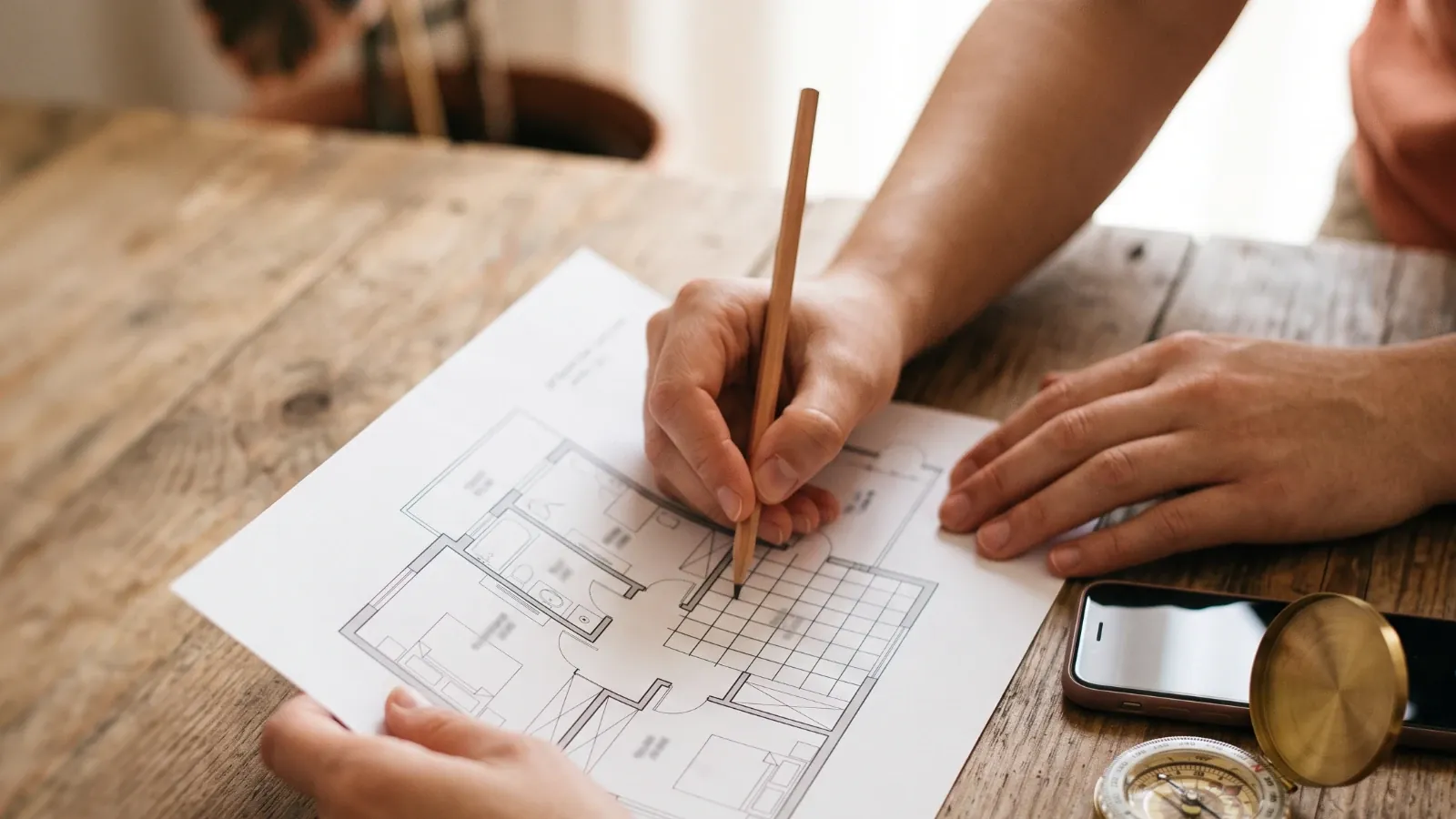
Builder plans are sometimes rotated, simplified or given an approximate north arrow. Check on site. Our floor plan guide has the full method.
Layout issues, ranked
Not every guideline carries equal weight. This table sorts common issues by how consistently Vastu practitioners flag them.
| Issue | How consistently flagged | Usually adjustable? |
|---|---|---|
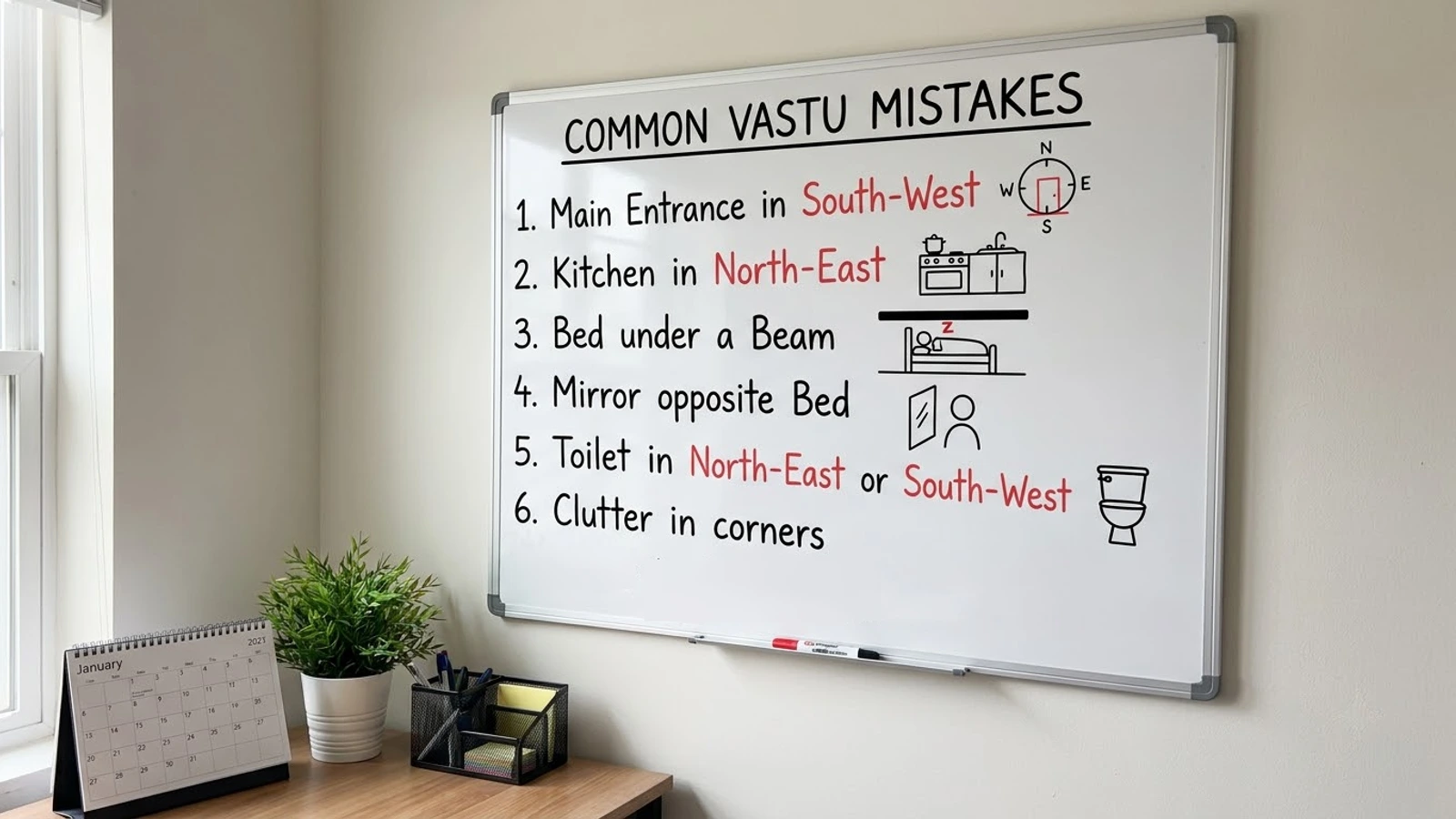
| Toilet in the north-east | Very consistently | Rarely; structural |
| Toilet or staircase at the centre | Very consistently | Rarely; structural |
| Kitchen in the north-east | Very consistently | Partly (arrange within the room) |
| Heavy clutter or storage in the north-east | Consistently | Yes, easily |
| Centre used as a store room or cluttered | Consistently | Yes, easily |
| Main entrance in the south-west | Consistently | Rarely |
| Obstruction directly in front of the main door | Commonly | Sometimes |
| Master bedroom in the north-east | Commonly | Yes (swap rooms or reposition the bed) |
| Underground water tank in the south-west | Commonly | Rarely |
| Sleeping with head to the north | Commonly | Yes, easily |
| Mirror facing the bed | Popular advice | Yes, easily |
| Specific colours for specific rooms | Popular advice, varies | Yes, easily |
The pattern is worth noticing. The issues that are hardest to change are a small group. Most of what fills Vastu articles is arrangement, and arrangement is free to change.
Mistakes of approach
6. Treating a "dosh" as a curse
A Vastu dosh is a traditional mismatch between a layout and the ideal. It is not a diagnosis. The classical texts describe ideals for builders; they don't threaten households. If a reading leaves you frightened of your own home, the reading is the problem.
7. Buying "remedies" the tradition never mentions
Pyramids, crystals, special strips, "energy" gadgets: these are modern products. They aren't described in classical Vastu texts, and there's no evidence they change anything. If someone insists you need them, especially from their own shop, walk away.
8. Demolishing for Vastu
Breaking a wall or moving a toilet is expensive and sometimes structurally risky. That decision should rest on practical reasons and a qualified architect or engineer, not on a consultation.
9. Mixing in Feng Shui
Wind chimes, laughing Buddhas, "money frogs" and similar objects come from Feng Shui, a separate Chinese tradition with its own principles and often opposite direction rules. There's nothing wrong with liking them, but they aren't Vastu.
10. Following contradictory internet advice
Search any Vastu question and you'll find confident, conflicting answers. The tradition genuinely varies, and the texts themselves differ. When advice conflicts, prefer what is consistent across sources, what's practical, and what doesn't cost much.
Fixes that cost nothing
The mistake behind the mistakes
The underlying error is treating Vastu as a set of commands rather than a tradition of design. Read that way, every imperfect home becomes a problem. Read as its authors intended, as guidance for arranging space with care, it's much gentler: do what's practical, leave what isn't, and don't let it make you anxious about where you live.
Aroha Vastu is designed around that idea: draw your floor plan and it shows where each room sits and what the tradition says about it, with a score for each one. It is available on Android and the web in the Aroha Astrology app, and a 3D version is coming soon.