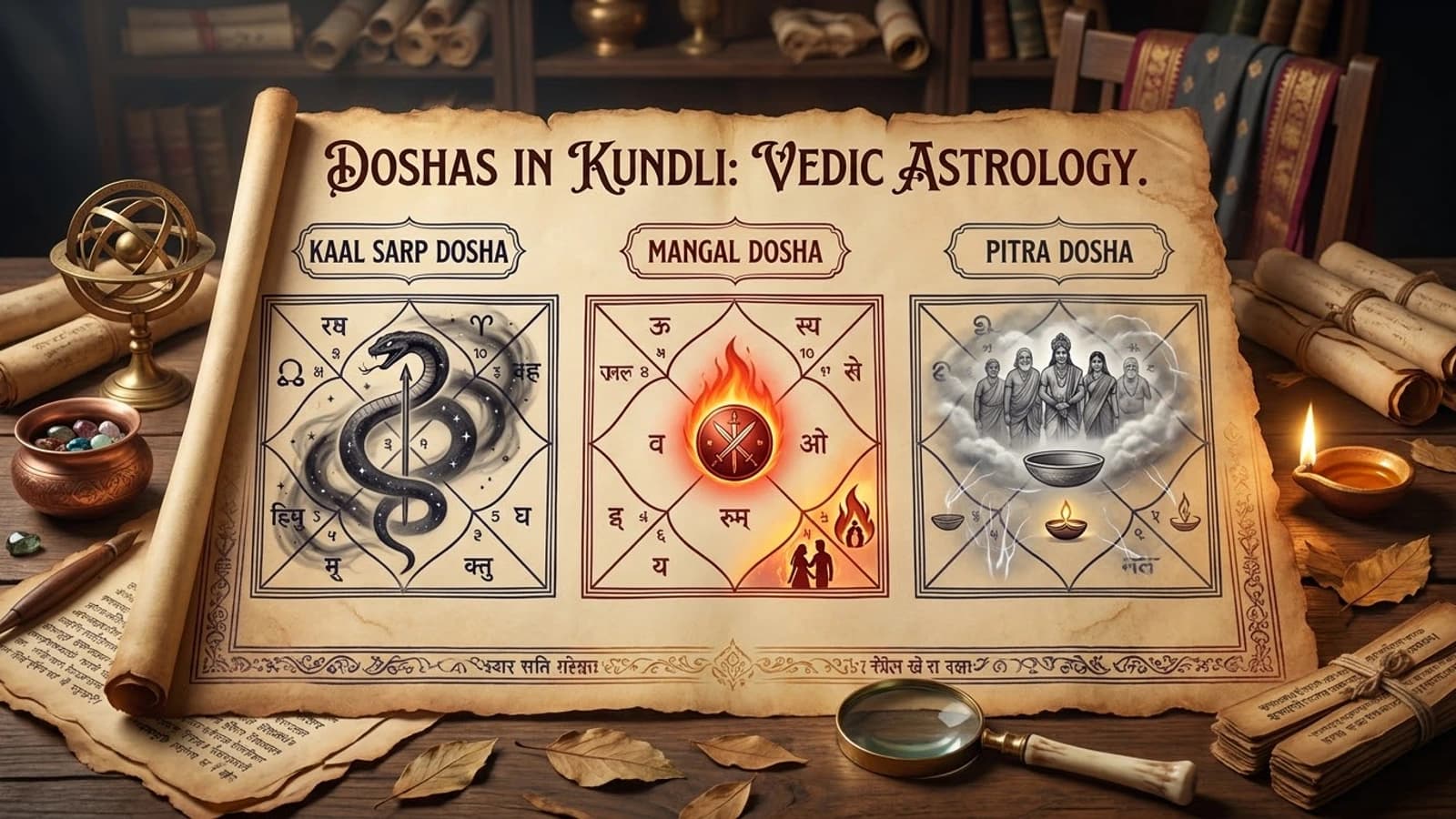
Kaal Sarp Dosha is said to form when all seven planets, the Sun to Saturn, lie on one side of the line joining Rahu and Ketu. It is a later tradition, not a rule found in the old Parashari texts, and its effects are read with the rest of the chart.
How Kaal Sarp Dosha forms
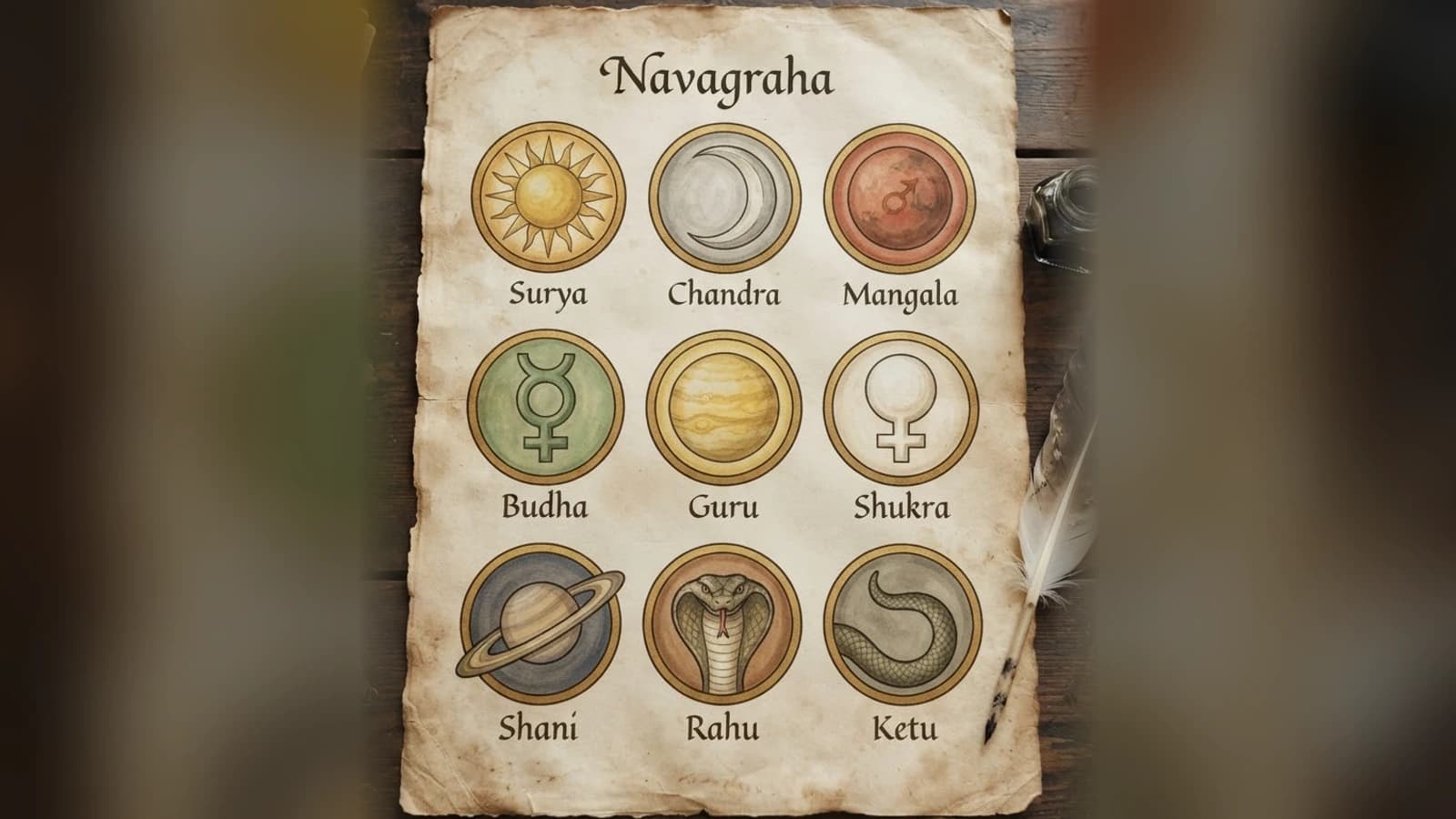
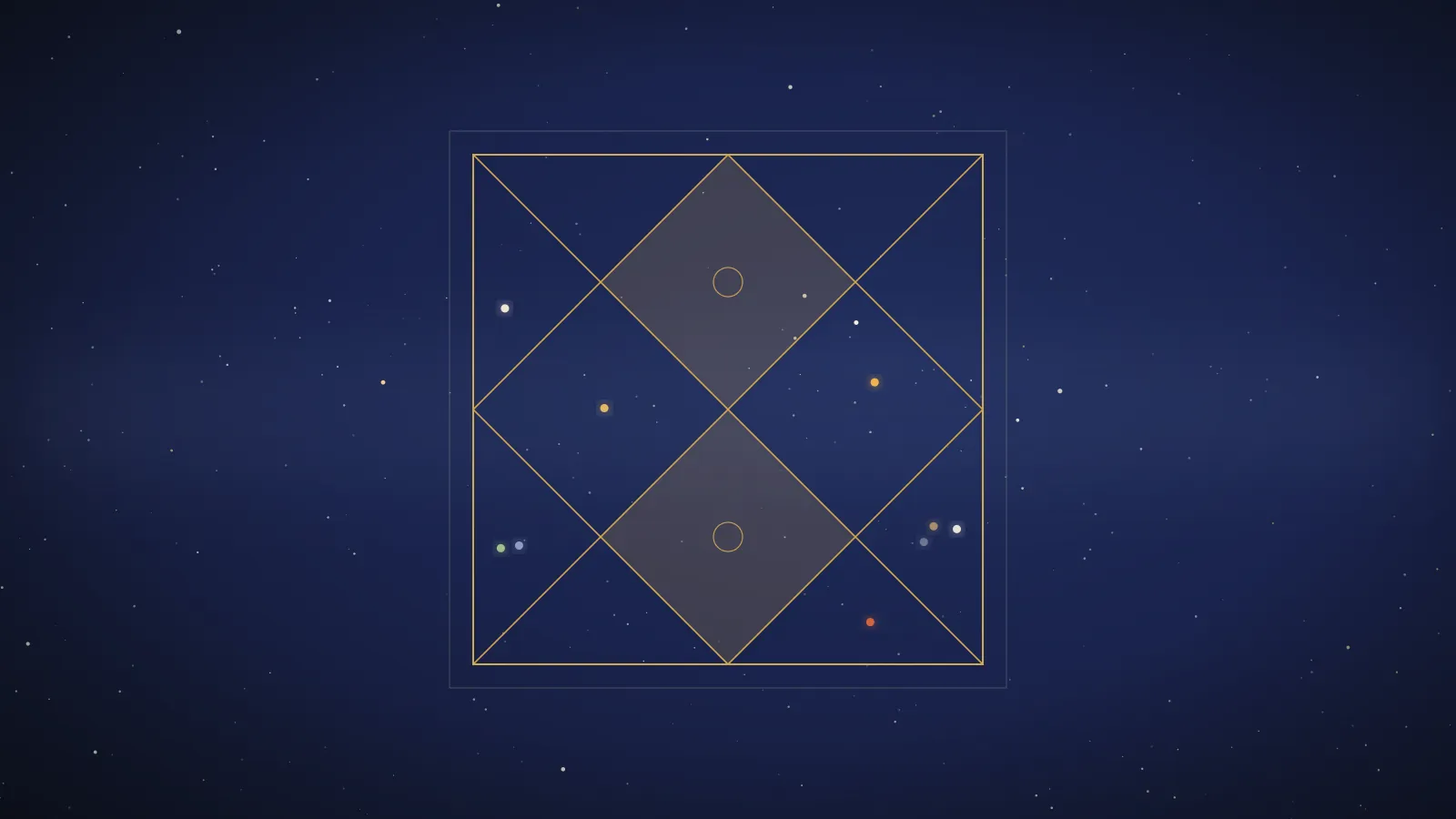
The dosha forms when every planet from the Sun to Saturn lies on one side of the Rahu-Ketu axis. Rahu and Ketu are always 180 degrees apart, so the zodiac splits into two halves. If all seven planets sit in one half, the chart has the full dosha. Aroha reads this on longitude, not on whole houses.
Reading by longitude matters at the edges. A planet that shares a sign with Rahu but has not yet reached Rahu's degree is outside the arc, even though a house-only count would call it inside.
Kaal Sarp and Kaal Amrit
Aroha follows one naming convention. Planets between Rahu and Ketu, going forward from Rahu, make Kaal Sarp. Planets between Ketu and Rahu make what is commonly called Kaal Amrit. Both mean all seven planets are on one side, and the engine shows which side applies to your chart.
Naming varies between astrologers, so you may see the two swapped elsewhere. The geometry is the same either way.
The 12 types
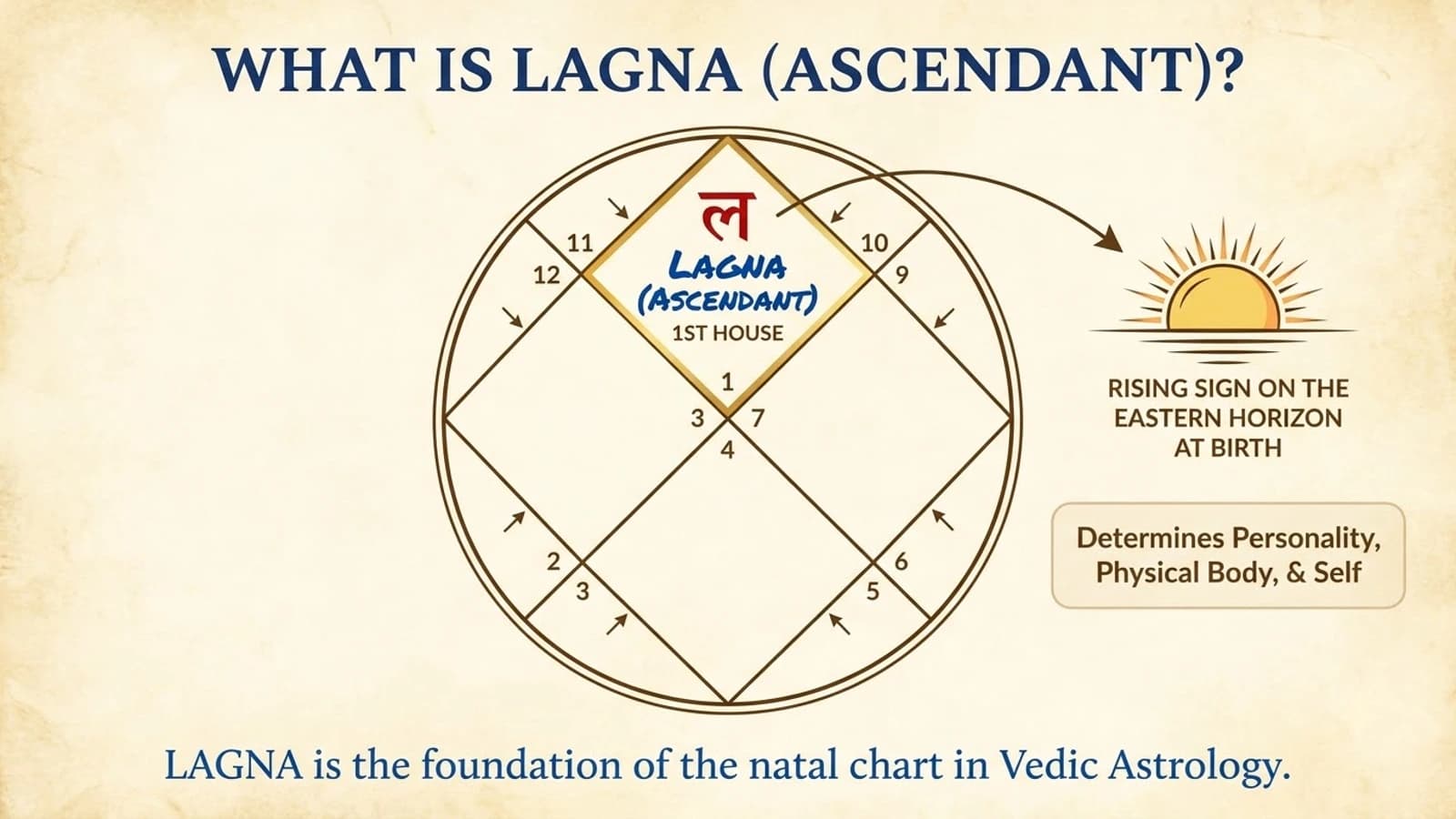
The twelve named types depend on where Rahu sits, counted in houses from the Ascendant. Ketu is in the opposite house.
| Rahu in house | Ketu in house | Type |
|---|---|---|
| 1 | 7 | Anant |
| 2 | 8 | Kulik |
| 3 | 9 | Vasuki |
| 4 | 10 | Shankhpal |
| 5 | 11 | Padma |
| 6 | 12 | MahaPadma |
| 7 | 1 | Takshak |
| 8 | 2 | Karkotak |
| 9 | 3 | Shankhnaad |
| 10 | 4 | Ghatak |
| 11 | 5 | Vishdhar |
| 12 | 6 | Sheshnaag |
The twelve names are a modern classification. They tell you which houses the axis sits on, so they point to the life areas the tradition associates with those houses. The 12 houses guide explains what each house covers.
Partial Kaal Sarp
Partial Kaal Sarp is when exactly one planet falls outside the arc and the other six sit inside. Aroha marks the full form as severe and the partial form as mild, and names the planet that escapes. Many astrologers treat a partial form as much softer than a full one, because the escaping planet breaks the hemming.
If two or more planets are outside the arc, the chart does not have Kaal Sarp Dosha by this definition.
What the classical texts say
No text in Aroha's source register names Kaal Sarp Dosha. The register marks it as a modern astrological idea, and the twelve names as a modern classification. The Brihat Parashara Hora Shastra does describe a serpent curse, but that is a different rule, about having no children, with its own combinations.
This does not mean the dosha is meaningless to the people who use it. It means you should treat it as one tradition's lens, not as a classical certainty, and weigh it against the rest of the chart. For the wider picture of doshas, see the doshas guide.
What to do if your chart has it
Read it in context. Look at the Dasha running, the strength of the planets, and where Rahu and Ketu are today. The nodes also move through the signs every 18 months or so; the Rahu and Ketu 2027 guide has the dates. For an honest account of remedies, read the remedies guide.
Check your own chart
Generate your free Kundli to see whether Aroha finds Kaal Sarp, partial Kaal Sarp or neither, and which type your Rahu house gives.