In Vastu the main entrance is often called the mouth of the home: the point through which people, light and, in traditional language, energy enter. Of all the rooms and features Vastu discusses, it's the one people ask about most, usually when choosing a flat.
Why the entrance matters so much in Vastu
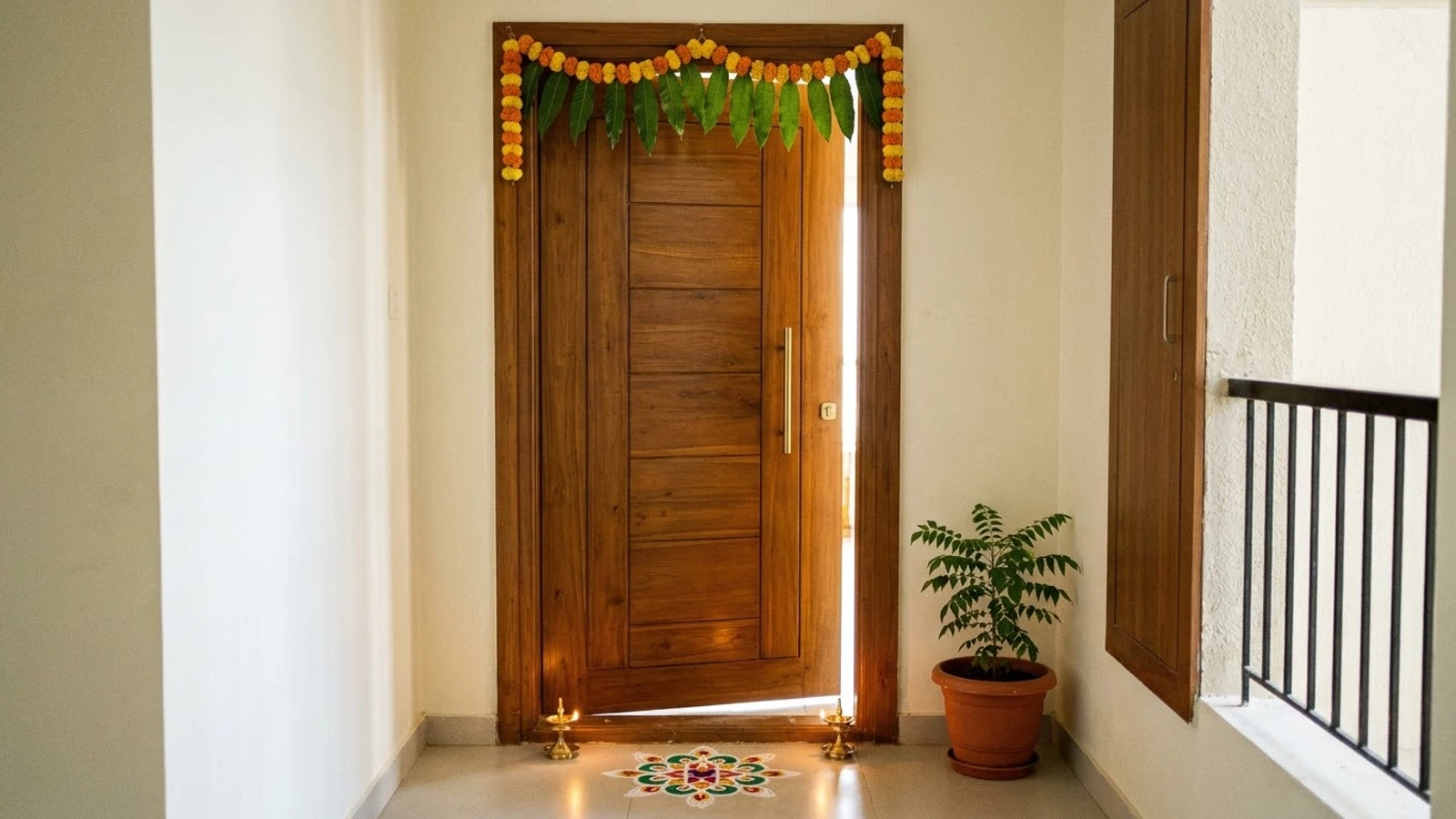
Traditional texts treat the threshold as the boundary between the outside world and the household. The entrance decides how you arrive, what you see first, and how light and air enter. It's also the one feature every visitor encounters, which is why so many customs gather there: the toran of mango leaves, the rangoli, the threshold where shoes are left.
Entrance directions at a glance
| Entrance on the | Traditional view | Nuance many practitioners add |
|---|---|---|
| North | Favoured; associated with Kubera, guardian of wealth | Position along the wall still matters |
| North-east | Widely considered the most auspicious | Some caution against placing the door exactly in the corner |
| East | Favoured; faces the rising sun | Morning light is a practical benefit |
| North-west | Mixed; acceptable in many readings | Depends on the exact segment |
| South-east | Mixed | Often acceptable towards the east end of the wall |
| West | Acceptable in many readings | Depends on the exact segment |
| South | Commonly discouraged in popular advice | Many practitioners consider some positions fine |
| South-west | Widely discouraged | Usually the one position practitioners agree to avoid |
Position along the wall: the part people miss
Many Vastu systems divide each side of a home into segments, often eight or nine, each associated with a deity from the Vastu Purusha Mandala. Some segments are considered good places for an entrance and some are not, on every side.
This has two practical consequences:
- Two homes facing the same direction can be read differently, because their doors sit in different segments.
- Blanket rules like "south-facing is bad" are too crude. A south-facing home with its door in a favourable segment may be read more positively than a north-facing home with its door in a poor one.
Different schools use different segment systems, so if someone advises you on this, it's fair to ask which system they're using.
Guidance for the door itself
Most of the remaining guidance is about the door and its surroundings, and much of it is simply good design:
- Make it the main door in fact. Traditionally it should be the largest and best-made door in the home.
- Open inwards, smoothly and fully, ideally swinging clockwise, without hitting furniture.
- Solid and well kept. Traditional preference is for sturdy wood; a creaking or damaged door is a common thing practitioners suggest fixing.
- A defined threshold. Many homes keep a raised threshold (dehli) or a clear step marking the boundary.
- Nothing blocking the doorway. Vastu calls an obstruction directly in front of the door, such as a pillar, pole, tree or lift shaft, a dwara vedha. Where it can't be moved, good lighting and a clear approach are the usual suggestions.
- Good light. A dark entrance is discouraged; a light over the door is an easy fix.
- Keep it clear. Piles of shoes, bins and clutter at the entrance are among the first things practitioners point out.
In a flat
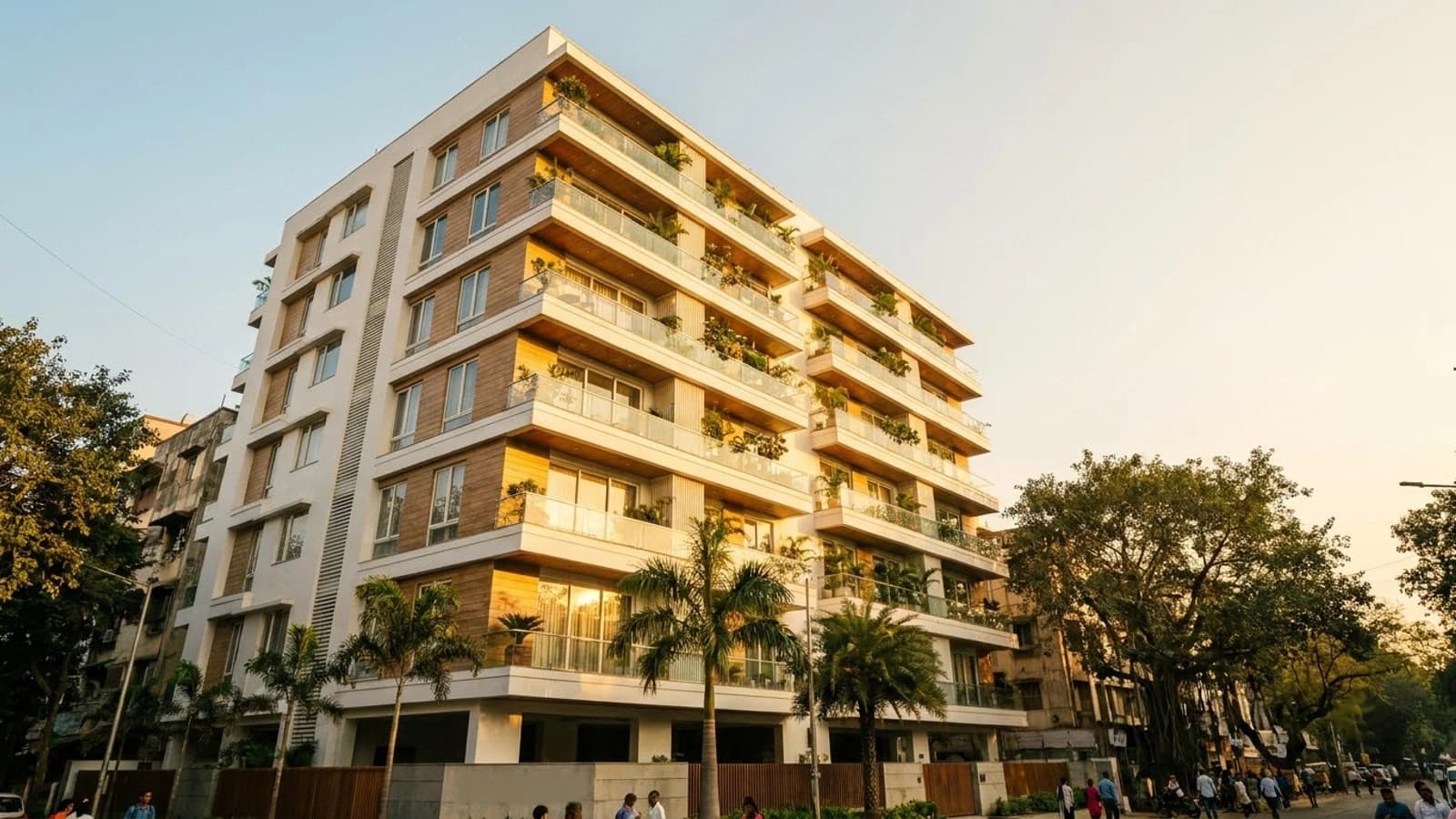
In an apartment, "the main entrance" can mean two things: the building's gate and your own flat's door. Vastu consultants usually give more weight to your own door, since that's the threshold of your home. The building gate matters to some practitioners as well, but it's rarely something a resident can influence.
You almost certainly can't move your door. What you can do is the list above, plus deciding how the space just inside the door is used. Our guide to Vastu for flats and apartments covers what to check before you buy.
Customs at the threshold
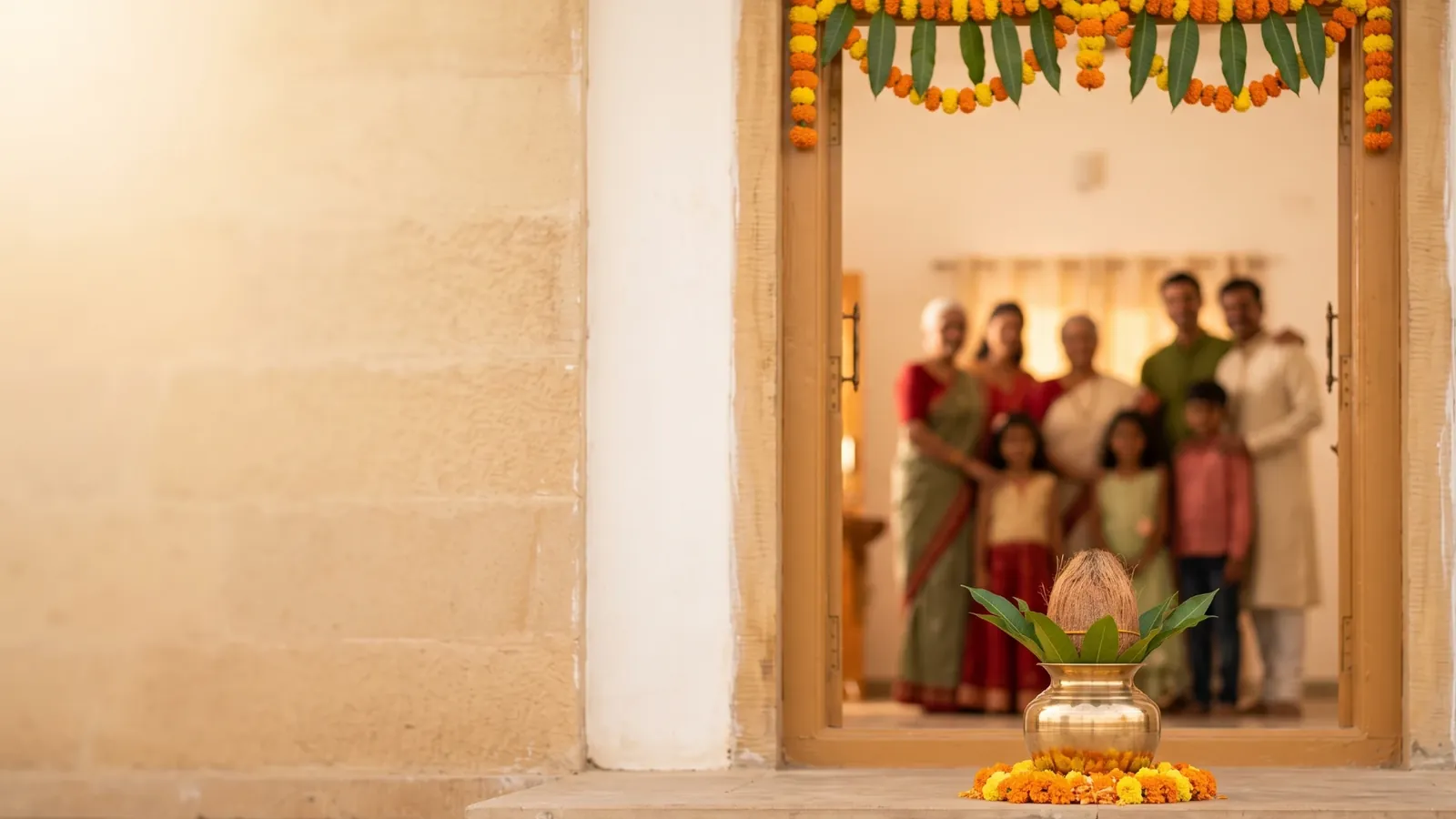
Many of the traditions people associate with Vastu at the entrance are cultural rather than architectural: a toran of mango leaves or marigolds over the door, rangoli or kolam at the threshold, auspicious symbols on the door frame, and the ritual first entry during a Griha Pravesh. They vary by region and community, and their meaning is devotional. They sit comfortably alongside Vastu without being part of its rules.
Keeping perspective
The entrance is where Vastu anxiety often starts. A property is rejected, or a family worries about a flat they already own, because its door "faces the wrong way". It's worth remembering that the traditional texts describe ideals, that practitioners disagree on the details, and that no reputable reading should leave you fearful about your home. If a change is practical and inexpensive, like better light or a clearer approach, it's worth making on its own merits. If it isn't, let it go.
Aroha Vastu, available on Android and the web in the Aroha Astrology app, shows where your own entrance sits among the eight directions and explains what the tradition says about it.