Moving into a new home is one of the bigger moments in a family's life. In Hindu tradition it's marked with Griha Pravesh, literally "entering the home": a ceremony held before, or at the start of, living in a new house or flat. It asks for blessings on the home and the people who will live in it.
Three kinds of Griha Pravesh
Traditional texts and priests commonly distinguish three situations:
| Type | When |
|---|---|
| Apoorva | Entering a newly built or newly bought home for the first time |
| Sapoorva | Returning to a home after a long absence, such as a long stay abroad |
| Dwandwah | Re-entering after major renovation or repairs, or after a disaster |
The ceremony for an Apoorva Griha Pravesh is usually the fullest; the others are often simpler.
Choosing a muhurat
Most families fix the date with a priest or astrologer using the Panchang. Traditions differ, but factors commonly considered include:
- The month. Magha, Phalguna, Vaishakha and Jyeshtha are frequently cited as favourable. Adhik Maas (the intercalary month) and Kharmas (when the Sun is in Sagittarius or Pisces) are commonly avoided, and some families avoid the Chaturmas period.
- The Tithi. Many avoid the "Rikta" Tithis (the 4th, 9th and 14th) and Amavasya.
- The Nakshatra. Nakshatras such as Rohini, Mrigashira, Chitra, Anuradha, Uttara Phalguni, Uttara Ashadha, Uttara Bhadrapada and Revati are often cited as favourable.
- The time of day. The chosen time avoids Rahu Kaal and aligns with a favourable ascendant (lagna) where the priest calculates one.
Treat these as the tradition's guidance. A priest from your own community may use somewhat different rules, and many families balance the ideal date with the practical realities of possession dates and work schedules.
The ceremony, step by step
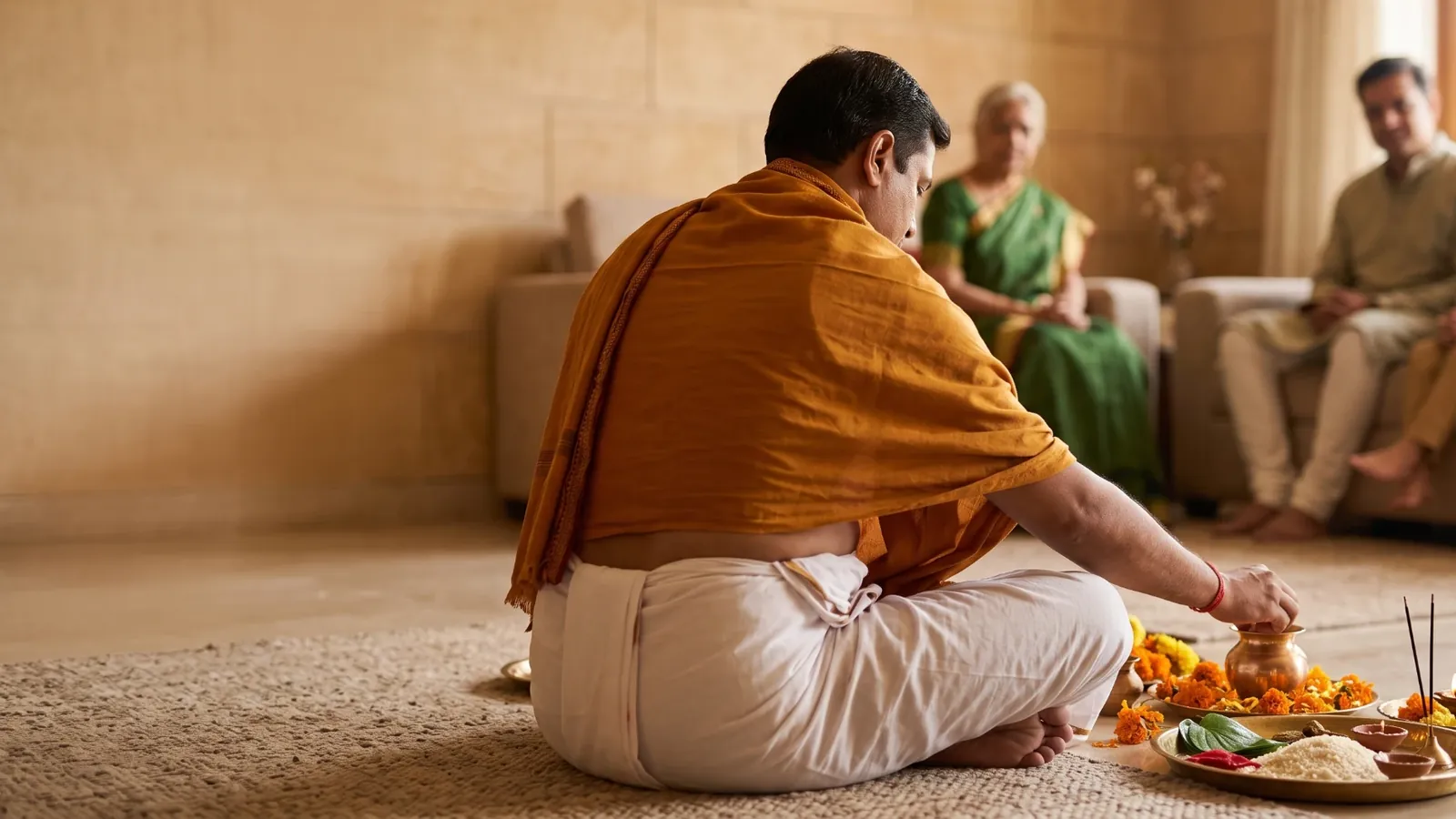
The exact sequence varies, but a common Griha Pravesh looks like this:
- 1
Preparation
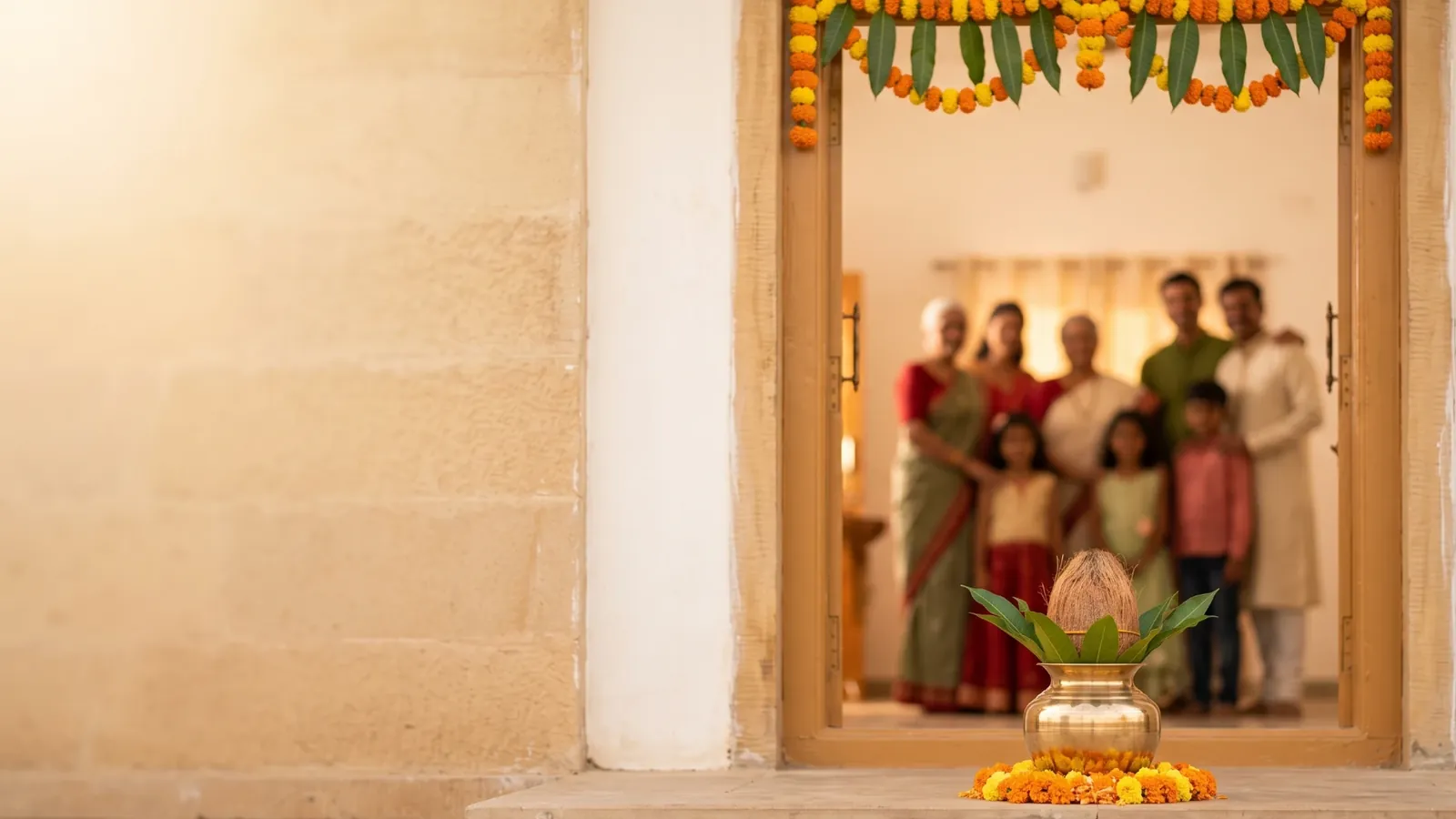
The home is cleaned, a toran of mango leaves and marigolds is hung over the door, and rangoli or kolam is drawn at the entrance.
- 2
Ganesh puja
The ceremony begins by worshipping Ganesha, often at the threshold, to remove obstacles.
- 3
Kalash sthapana
A kalash filled with water, topped with mango leaves and a coconut, is consecrated. In many families it is carried into the home as part of the entry.
- 4
First entry
The family enters together, often right foot first. In many communities the lady of the house leads, carrying the kalash; customs differ.
- 5
Vastu puja and Navagraha puja
Prayers are offered to the Vastu Purusha, the spirit of the site, and often to the nine planets. Some families perform a full Vastu Shanti.
- 6
Havan
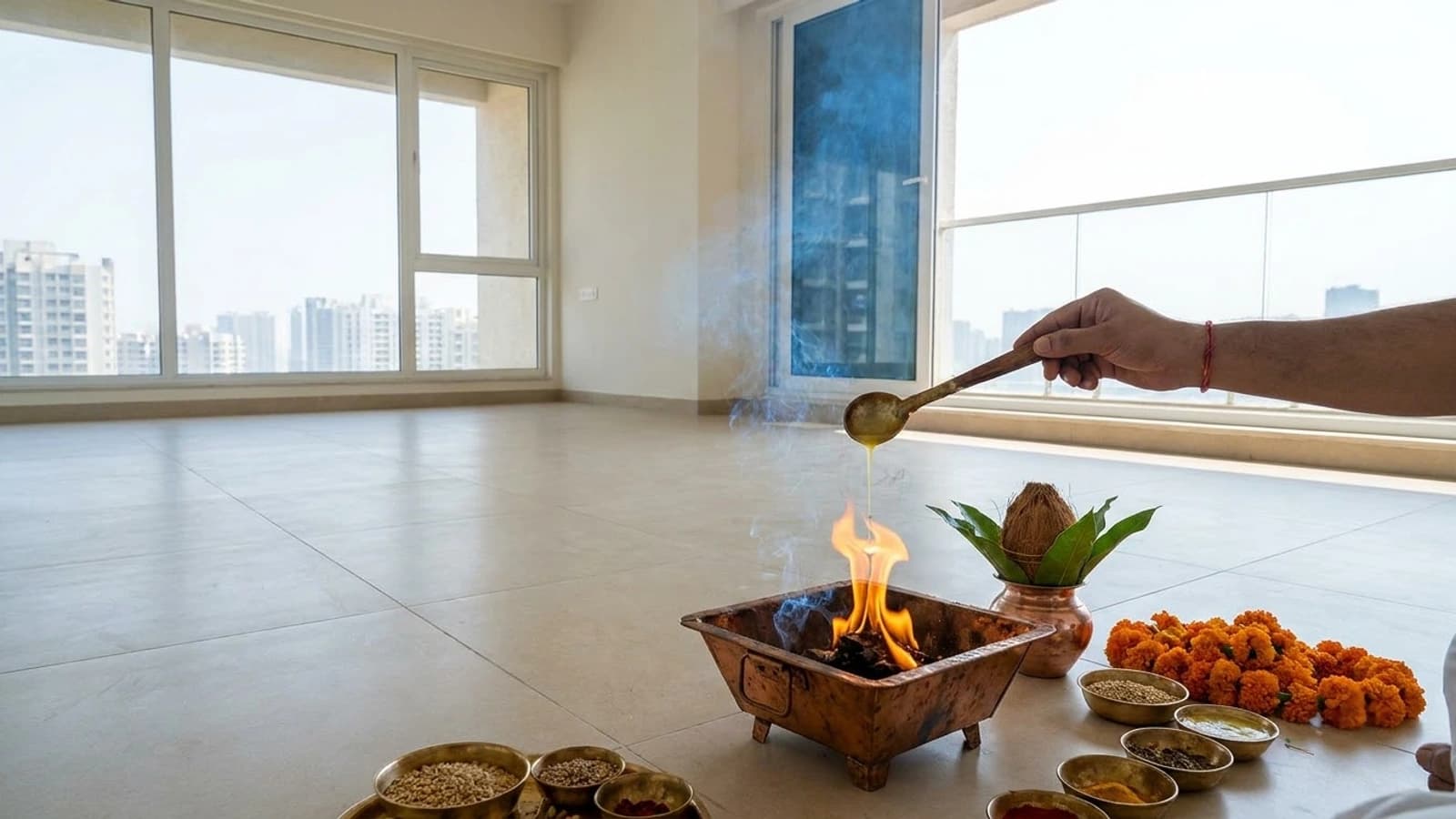
Where included, a fire ritual is performed with offerings of ghee and samagri to the accompaniment of mantras.
- 7
Milk in the kitchen
Milk is boiled in a new vessel on the new stove until it overflows, symbolising abundance. It is often used to make kheer or a sweet.
- 8
Aarti, prasad and blessings
The ceremony closes with aarti, prasad, and offering food and dakshina to the priest. Many families invite relatives and friends for a meal.
Some families also hold a Satyanarayan Katha on the day or soon after. For the Vastu part of the ceremony in more detail, see Vastu Shanti puja.
Preparation timeline
| When | What to do |
|---|---|
| 3 to 4 weeks before | Fix the muhurat; book the pandit; decide the scale of the ceremony and guest list |
| 2 weeks before | Confirm whether the pandit brings the samagri or you arrange it; get the list |
| 1 week before | Finish repairs and deep cleaning; make sure water, gas and electricity are working |
| 2 to 3 days before | Buy or confirm samagri, flowers and food; arrange seating and a safe space for the havan |
| The day before | Hang the toran, prepare the kalash items, set out the new vessel for milk |
| On the day | Rangoli at the entrance, family ready before the muhurat, phones on silent |
What you'll need
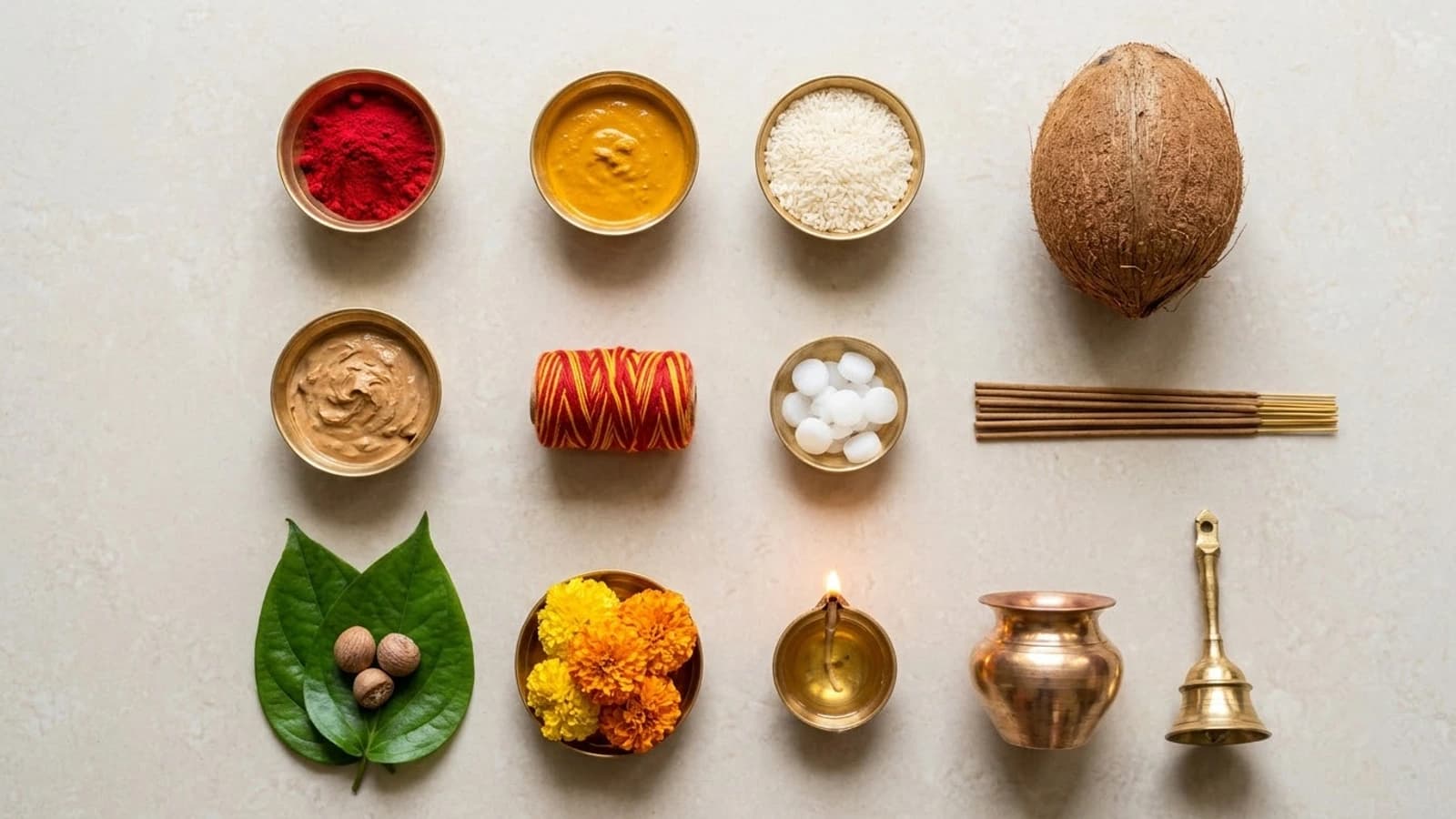
The pandit will give a precise list for your tradition. A typical Griha Pravesh needs a kalash, coconut, mango leaves, a toran, flowers and garlands, kumkum, haldi, rice, betel leaves and nuts, ghee, a lamp, camphor, incense, fruits and sweets, a new vessel and milk, and, for a havan, a havan kund, wood and havan samagri. Our puja samagri guide explains what these items traditionally signify.
In a flat
Griha Pravesh in an apartment works well with a little planning:
- Check with your society about havan smoke, the lift and parking for guests.
- Mind the smoke detectors. A havan in a small flat can set off alarms; a smaller havan kund, good ventilation, or holding the havan on a balcony helps.
- Keep fire safety in mind: a metal tray under the havan kund, a bucket of water nearby, and nothing flammable overhead.
- Tell your neighbours. It's courteous, and the mantras and bells can carry.
For what to check before you move in, see Vastu for flats and apartments.
Why families perform it
For many families Griha Pravesh is an act of faith: asking for the home to be blessed and protected. For others it's also about marking a beginning: gathering family, sharing food and turning a property into a home. Both are good reasons. How elaborate the ceremony is, and how strictly the muhurat is followed, is a family decision.
Aroha Puja, coming soon, is being built for ceremonies like this one: book a pandit for your Griha Pravesh, and choose whether they bring all the samagri or your family arranges it. Bookings are not open yet.