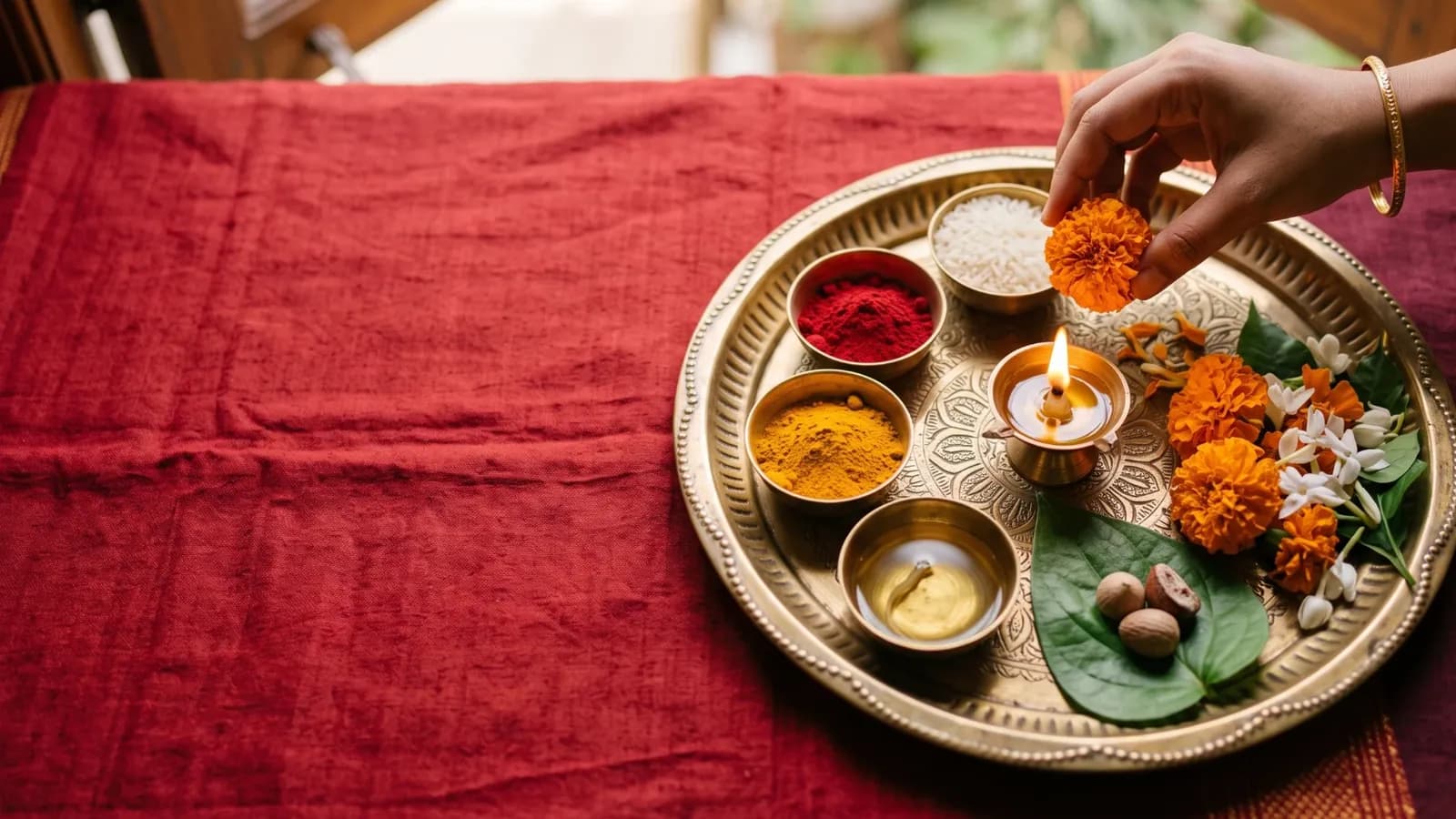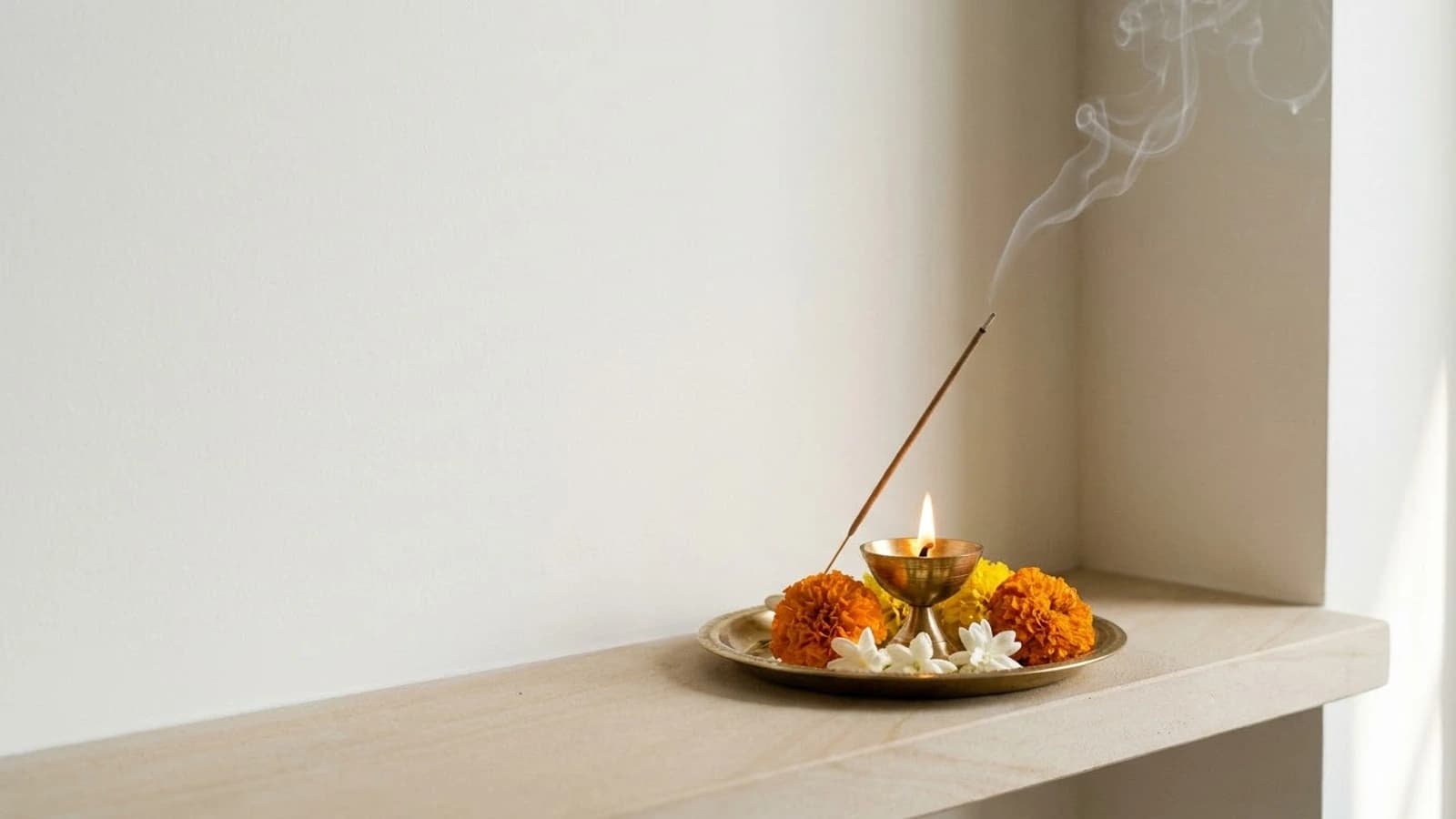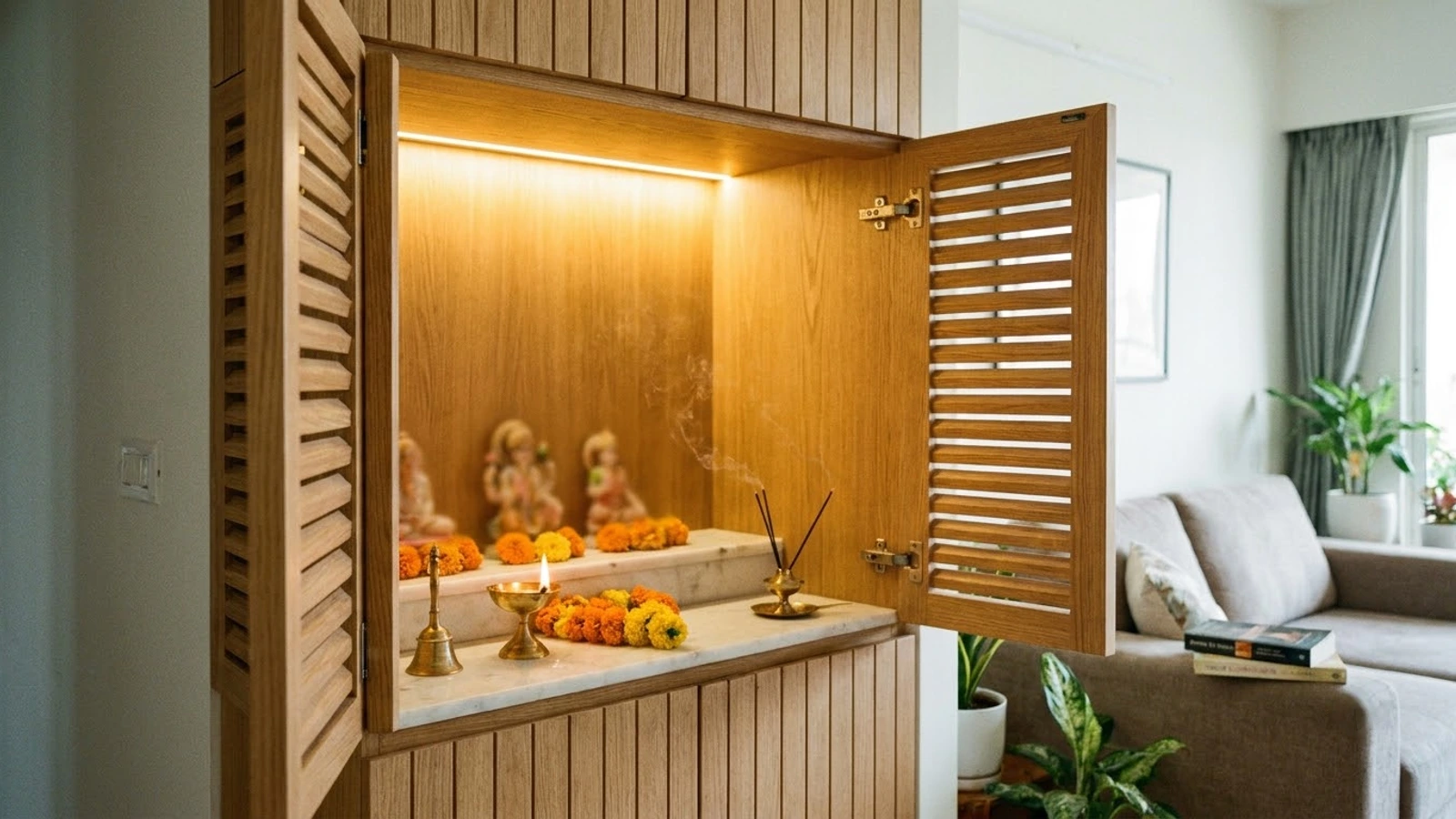
For many families the pooja room, or even a single shelf with a lamp and a few images, is the heart of the home. Vastu and household tradition overlap more here than anywhere else, and both point the same way: towards the north-east.
Why the north-east
Vastu treats the north-east, Ishanya, as the most sacred zone: it's the corner of Ishana, a form of Shiva, and the zone of water. It receives early light and is supposed to be kept the lightest, cleanest part of the home. A shrine is the natural use for it.
| Pooja room in the | Traditional view |
|---|---|
| North-east | Ideal |
| East | Good |
| North | Good |
| West | Acceptable in some guidance |
| South, south-west, south-east | Discouraged |
| Centre (Brahmasthan) | Some traditions favour an open shrine here in large homes; many modern practitioners prefer to keep the centre open |
Which way to face
The common instruction is that you should face east while praying, with north as the alternative. So idols and images are usually placed against the east wall, facing west, or against the north wall, facing south.
Families and regional traditions vary here, and some follow their own lineage's custom about which way a particular deity should face. Where your family has a custom, that should take priority over general Vastu advice.
Setting up the shrine
- Raise the idols. Keep them on a platform, shelf or low table rather than directly on the floor.
- Keep it modest. Many families keep idols fairly small in a home shrine, and damaged or broken idols are traditionally not kept for worship.
- Leave space around them. Idols shouldn't be pressed against the wall; a small gap is usual.
- Place the lamp in the south-east of the pooja space, the fire zone, in popular guidance.
- Choose light materials and colours. Wood or marble, and white, cream or light yellow walls are common.
- Give it a door or curtain if it's in a shared room, so it can be closed.
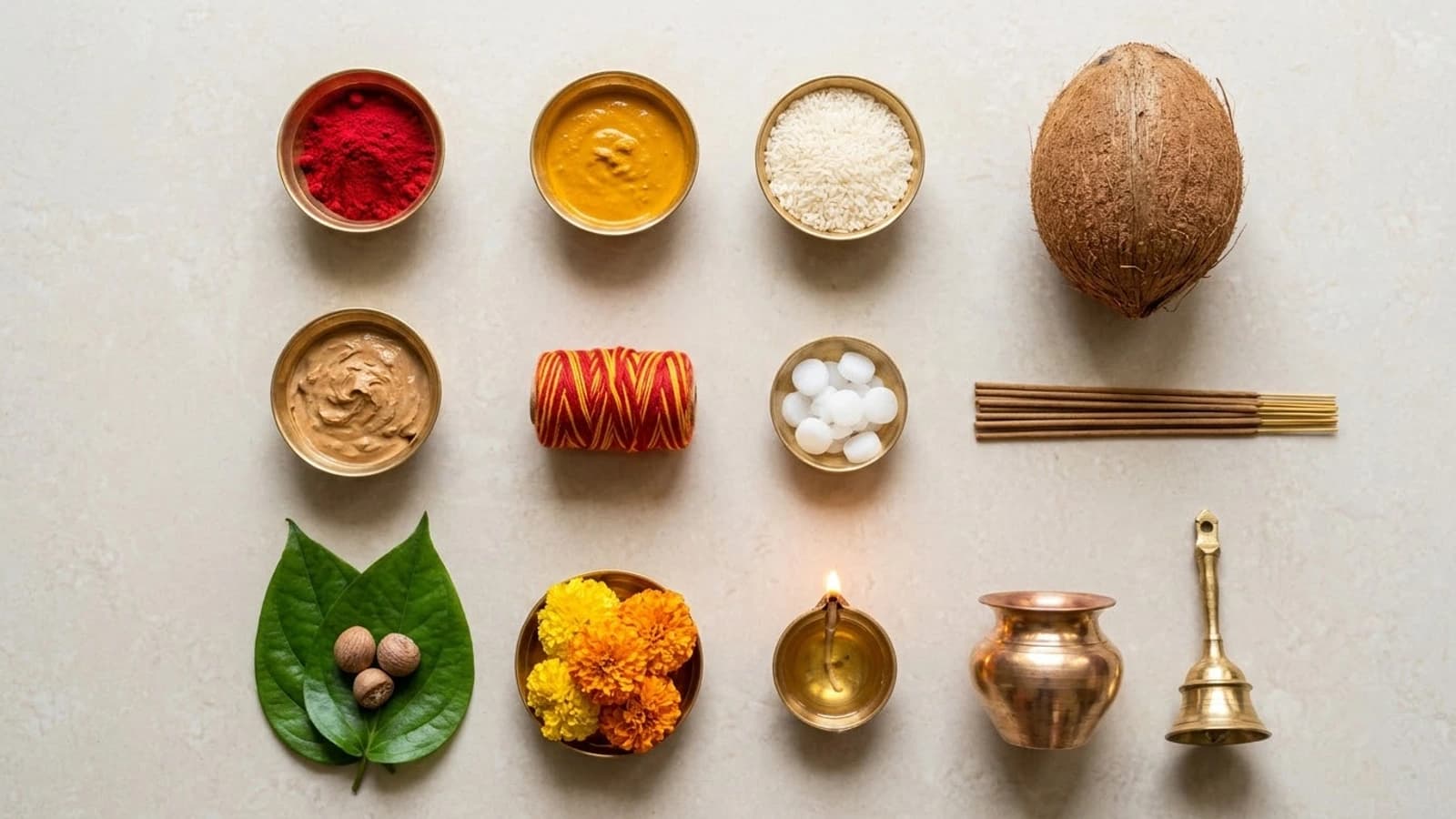
- Store only puja items here. Our puja samagri guide covers what a home shrine usually holds.
Some families also prefer to keep photographs of deceased relatives separate from the shrine; others keep them together. This is a matter of family custom.
In a flat without a separate room
Most urban homes don't have a spare room to dedicate. The principles translate well to a cabinet or shelf:
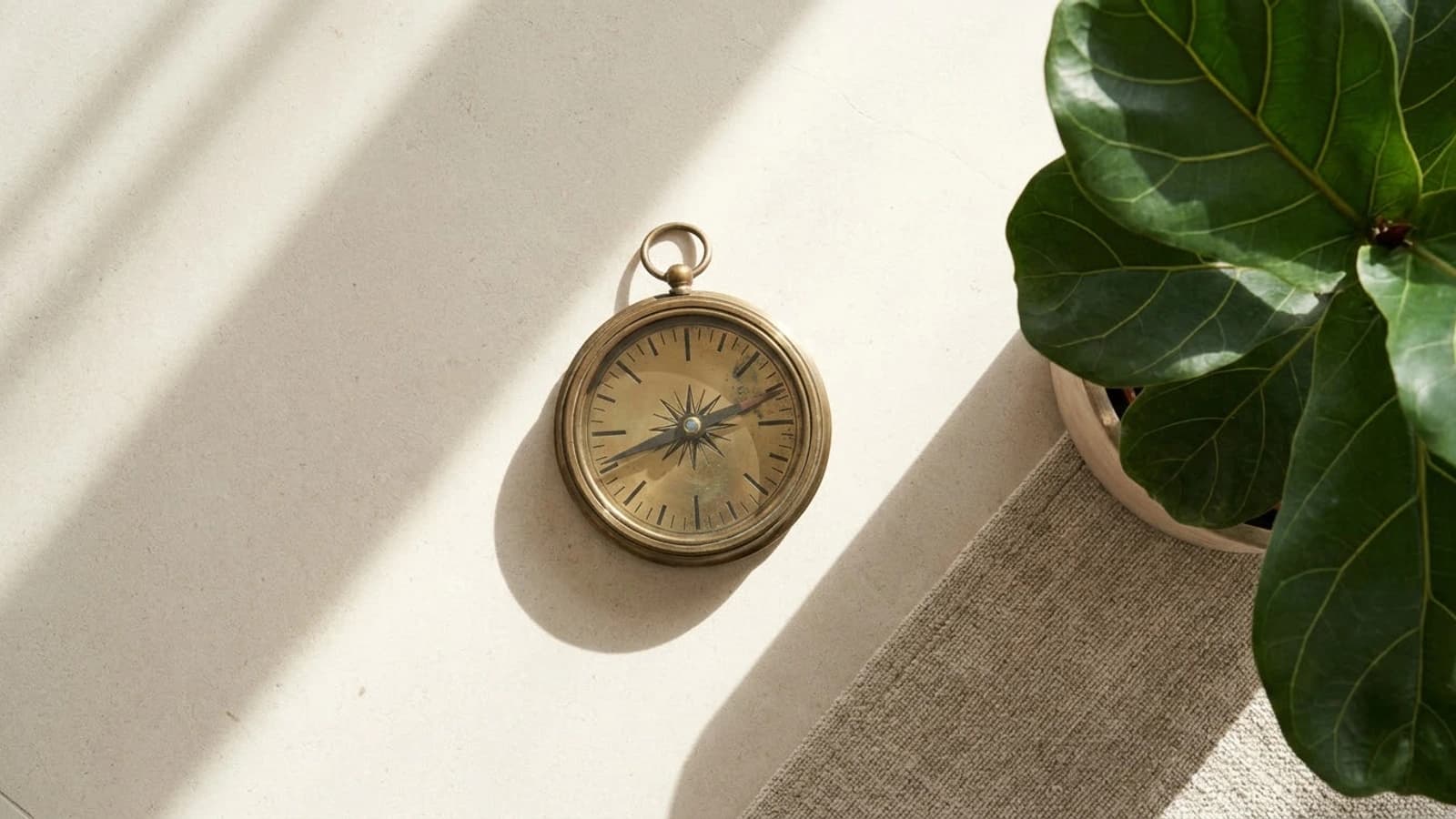
- Find the north-east of the living room (or of the home, if possible). Our guide to Vastu directions explains how.
- Use a closed mandir cabinet or a wall-mounted shelf at chest height or above.
- Arrange it so you face east (or north) while standing in front of it.
- Keep the area around it clear, with no shoe rack, dustbin or television beside it.
Some regions have their own practical traditions. In many South Indian homes, for example, a small shrine in the kitchen is common. If that is your family's way, it's a valid choice.
The shrine and the puja
A pooja room is where Vastu hands over to ritual. Once the space is set up, what happens there, from a daily lamp to a full festival puja, is covered in our guide to doing a simple puja at home and in What is puja?.
Both sides of this meet in Aroha. Aroha Vastu, available now on Android and the web, shows where your pooja space sits in your floor plan, and Aroha Puja, coming soon, will let you book a pandit to perform a puja at home.