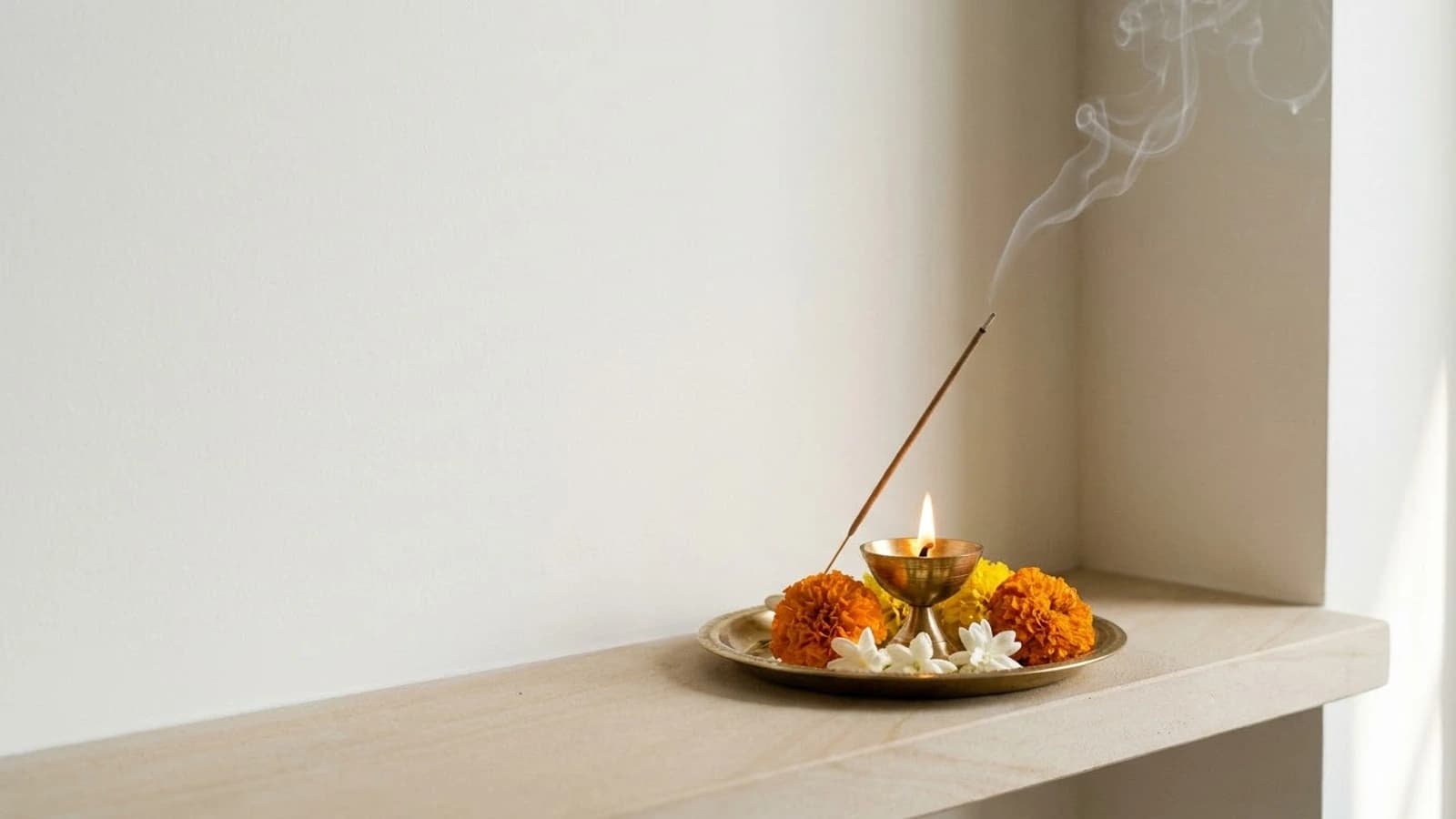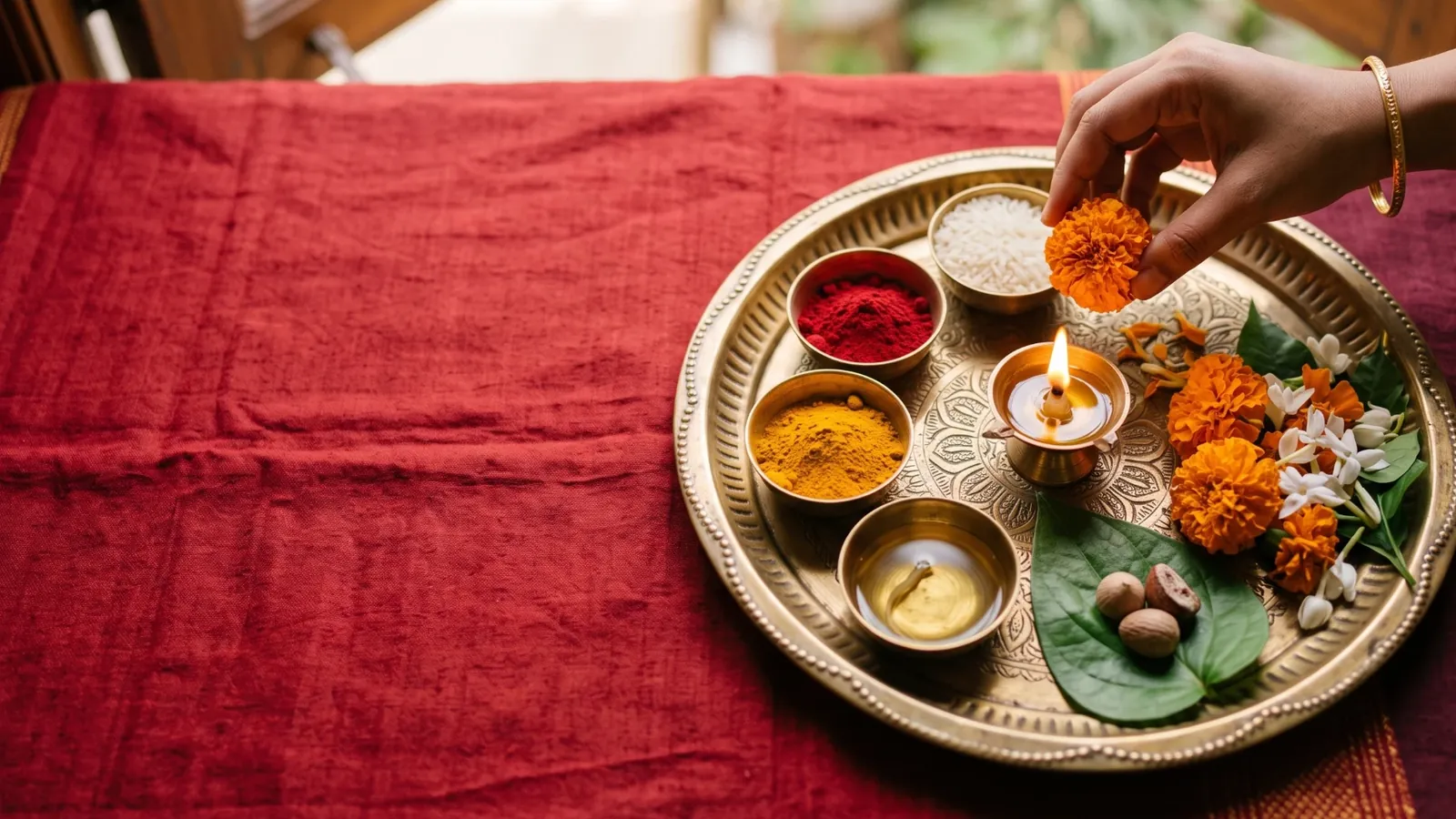
You don't need a priest, a special room or a long list of items to perform a puja at home. A lamp, a little water, a few flowers and a few quiet minutes are enough to begin. This guide walks through a simple puja step by step, then shows a shorter version for busy mornings.
Practices differ between regions and families. If your family has its own way, follow it; this is a general outline that most traditions would recognise.
Before you begin
- Choose a time. Morning after bathing is the most common; evening around sunset is the other. Some families also check the day's Panchang and avoid starting during Rahu Kaal.
- Prepare yourself. Bathe and wear clean clothes.
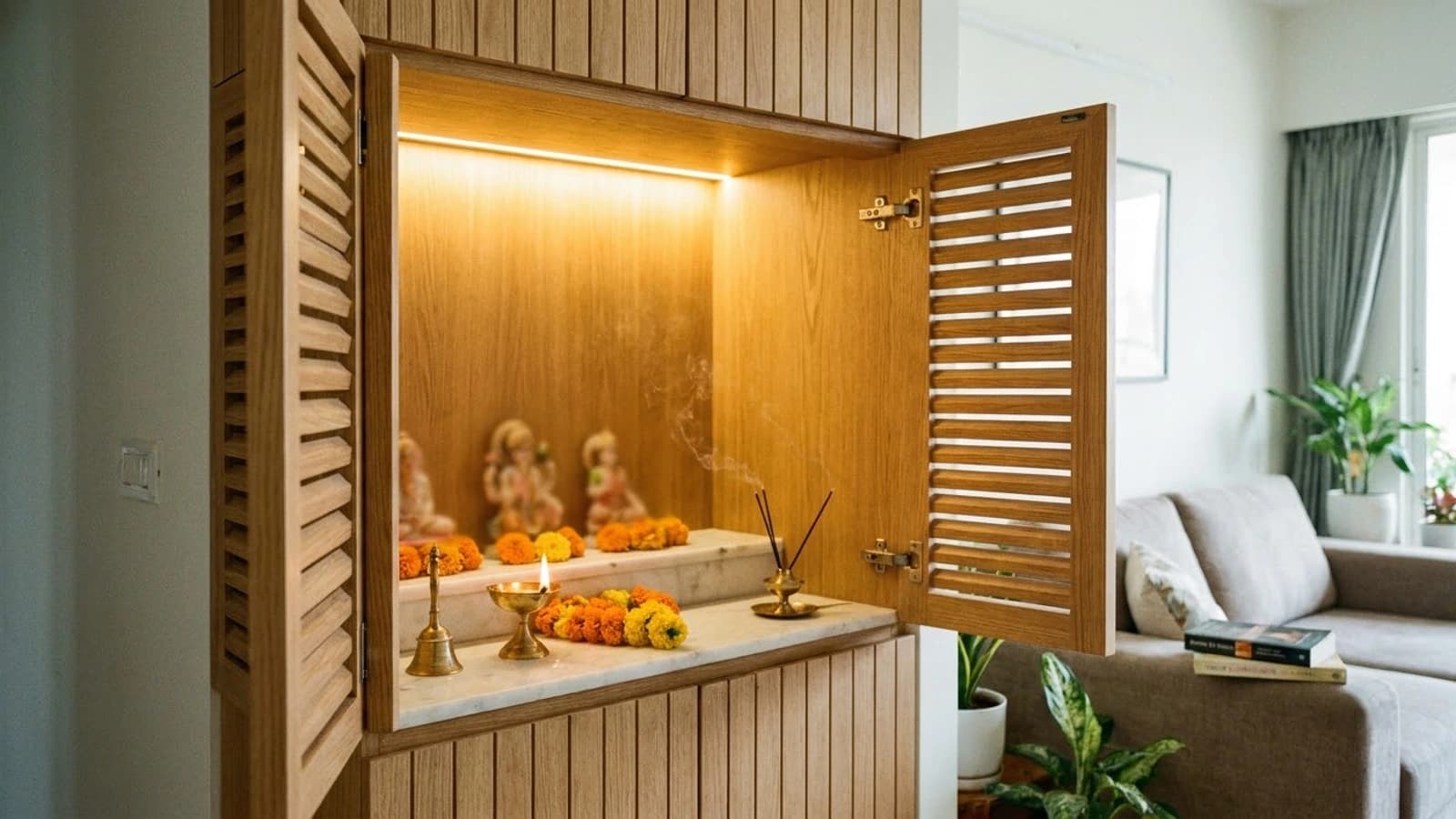
- Prepare the space. Clean the shrine or the spot you'll use. If you're setting one up, see pooja room Vastu; traditional guidance is to face east (or north) while you pray.
- Gather what you need on a plate (thali) within reach.
What you'll need
For a simple puja:
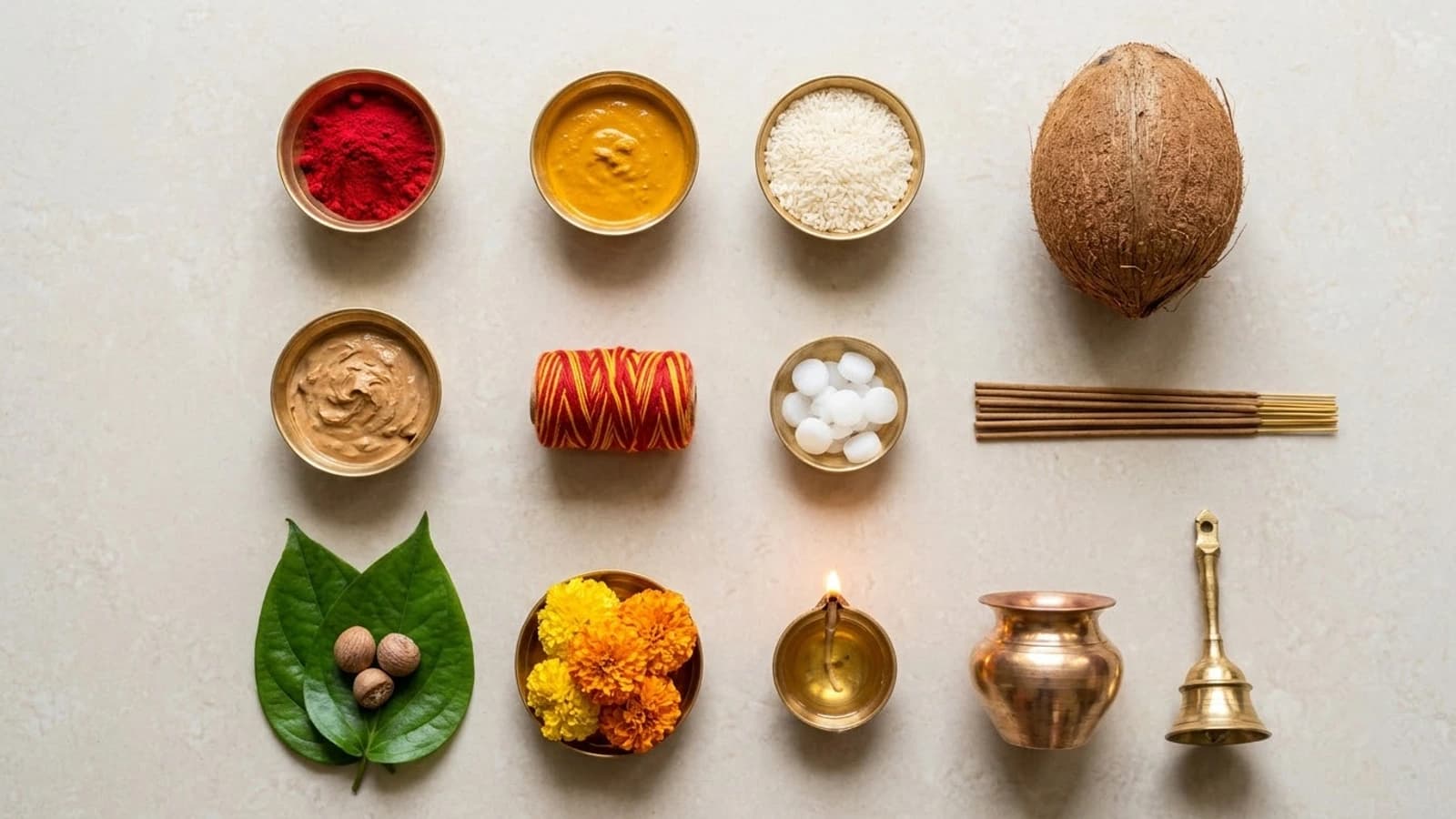
- A diya (lamp) with ghee or oil and a cotton wick, and matches
- Incense (agarbatti or dhoop), optional
- A small vessel of clean water and a spoon
- Kumkum (or roli), haldi (turmeric) and chandan (sandalwood paste), whatever your tradition uses
- Akshata: a few grains of unbroken rice, sometimes mixed with kumkum
- Flowers, and tulsi leaves if you worship Vishnu or Krishna
- Naivedya: fruit, sweets, sugar crystals or milk
- A bell, if you have one
Our puja samagri guide explains what each item traditionally signifies.
The steps
- 1
Purify and settle
Sit comfortably facing the shrine. Sprinkle a little water around the space and on yourself, and take a few calm breaths.
- 2
Light the lamp and incense
Light the diya first, then the incense. The lamp is traditionally the witness to the puja and is kept burning throughout.
- 3
Begin with Ganesha
Offer a short prayer to Ganesha, the remover of obstacles. Many people recite “Vakratunda Mahakaya” or simply ask in their own words for the puja to go well.
- 4
Make your sankalpa
State your intention: your name, the deity you are worshipping and why, in whichever language you think in. A pandit uses a formal Sanskrit sankalpa; at home, sincerity is what matters.
- 5
Welcome and offer water
Invite the deity’s presence, then offer a few drops of water, symbolically for washing the feet and hands and for sipping.
- 6
Offer kumkum, flowers and rice
Apply kumkum, haldi or chandan to the image, offer flowers and a few grains of akshata. Wave the incense gently before the deity.
- 7
Offer food
Place the naivedya before the deity, sprinkle a drop of water around it, and offer it with a short prayer.
- 8
Pray or chant
Recite a mantra or shloka you know, read a stotra, or pray quietly. There is no minimum; a single sincere line is a prayer.
- 9
Perform aarti
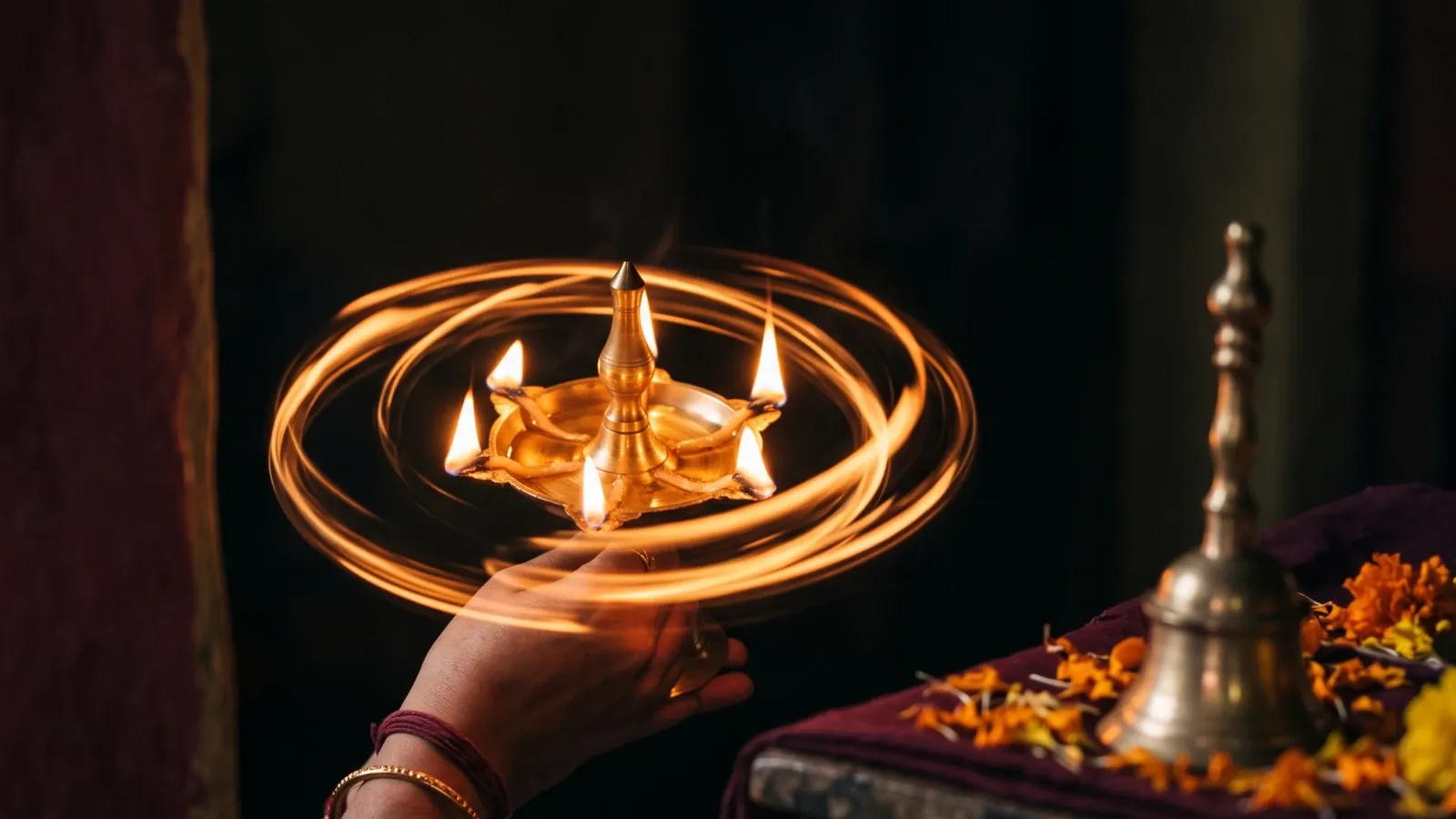
Wave the lit lamp in clockwise circles before the deity while ringing the bell or singing an aarti. Afterwards, family members pass their hands over the flame and touch them to their eyes and head.
- 10
Bow, share prasad and close
Bow or circle the shrine, ask forgiveness for any mistakes, and share the offered food as prasad with everyone present.
A five-minute daily puja
Most households don't do all ten steps every day. A short daily version might be:
| Step | Time |
|---|---|
| Light the lamp and incense | 1 minute |
| Offer water and a flower | 1 minute |
| Recite one prayer or mantra | 2 minutes |
| Wave the lamp (short aarti) and bow | 1 minute |
Keep the fuller version for weekends, festivals or a particular day of the week associated with your family's deity.
What to recite
If you don't know any mantras, begin with a simple one for your chosen deity, or a well-known prayer such as the Gayatri mantra, or just speak from the heart. Our guide to mantras, shlokas, stotras and aartis explains the differences and where each fits in a puja. The Aroha Astrology app also has a shlokas library with audio.
Practical tips
- Fire safety first. Keep the diya on a plate or stand, away from curtains and within sight, and never leave it burning unattended near children.
- Ventilate. Incense and camphor produce smoke; open a window, especially in small flats.
- Fresh offerings. Replace water and flowers daily; don't leave food out to spoil.
- Used flowers. Many families now compost them or bury them in a garden instead of putting them in rivers or lakes.
- Be consistent rather than elaborate. Most traditions value a regular, sincere practice over an occasional grand one.
When to invite a pandit
Some ceremonies are traditionally led by a priest: a Griha Pravesh, Vastu Shanti, Satyanarayan Katha, life-event ceremonies and anything that includes a havan. Our guide on booking a pandit covers what to ask.
Aroha Puja, now in development, is being built for exactly those occasions: book a pandit for any puja at home, and choose whether they bring the samagri or you arrange it.