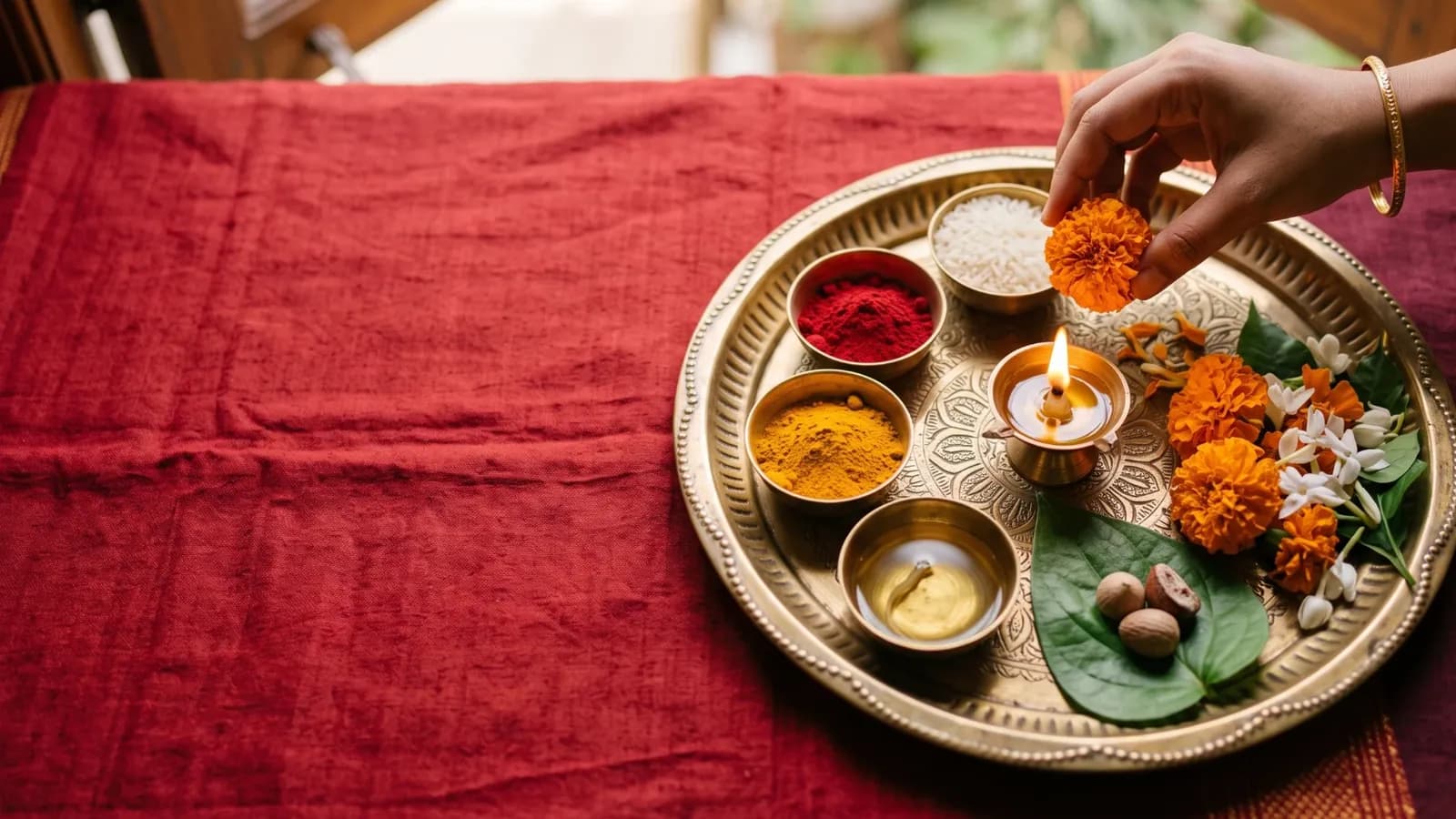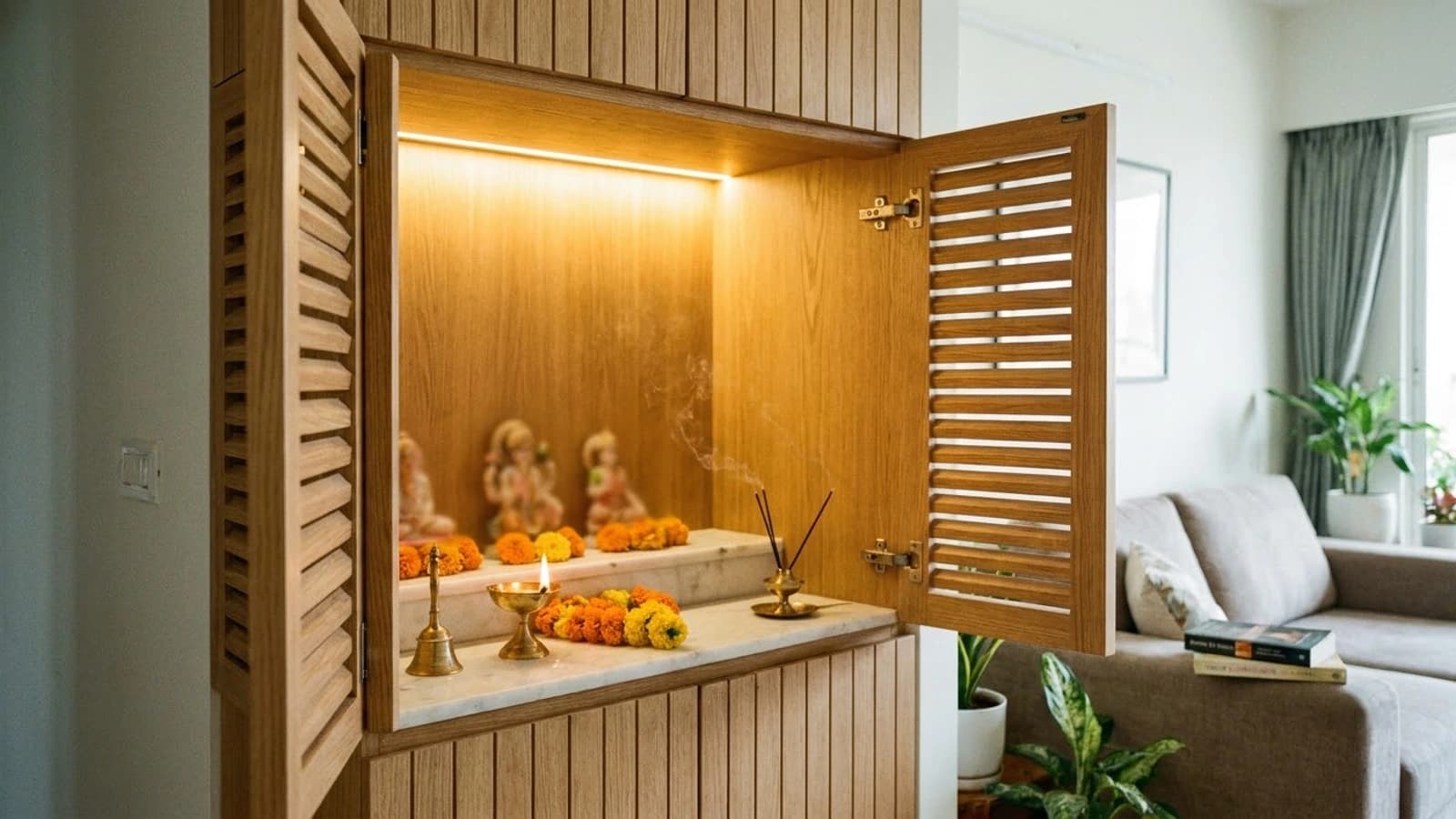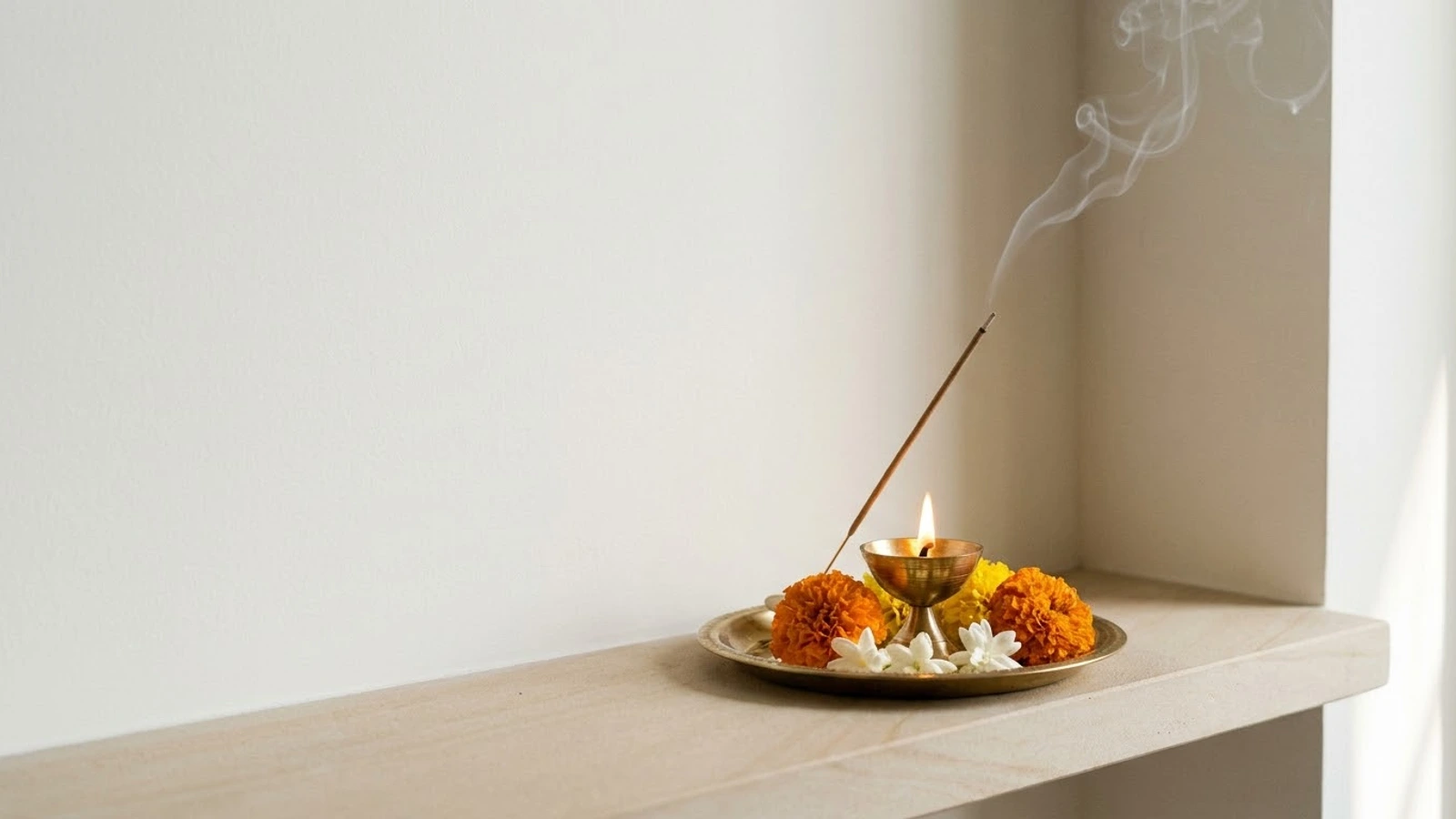
In millions of Indian homes, the day begins the same way: someone lights a lamp before a small shrine, offers a flower, rings a bell, and says a prayer. That is a puja, the everyday heart of Hindu worship. The same word also describes a festival celebration that draws a whole neighbourhood, a housewarming led by a priest and a temple ritual performed several times a day.
What the word means
Pūjā means honour, reverence or worship. The ritual it names is about relationship: the worshipper approaches the divine with care, offers what they can, and receives blessing in return. That blessing is often symbolised by prasad, the offered food shared afterwards.
The deity as honoured guest
One helpful way to understand puja is through Indian hospitality. Many of the offerings follow what you would do for a revered guest arriving at your home. You'd welcome them and offer a seat, water to wash their feet and hands, a drink, a bath, fresh clothes, fragrance, flowers, light, and a meal, and then see them off with respect.
A traditional puja follows much the same sequence. Each step is called an upachara, an offering or act of service.
The steps of a puja
Two sequences are common. The short one, Panchopachara (five offerings), is enough for daily worship:
| Offering | What it is |
|---|---|
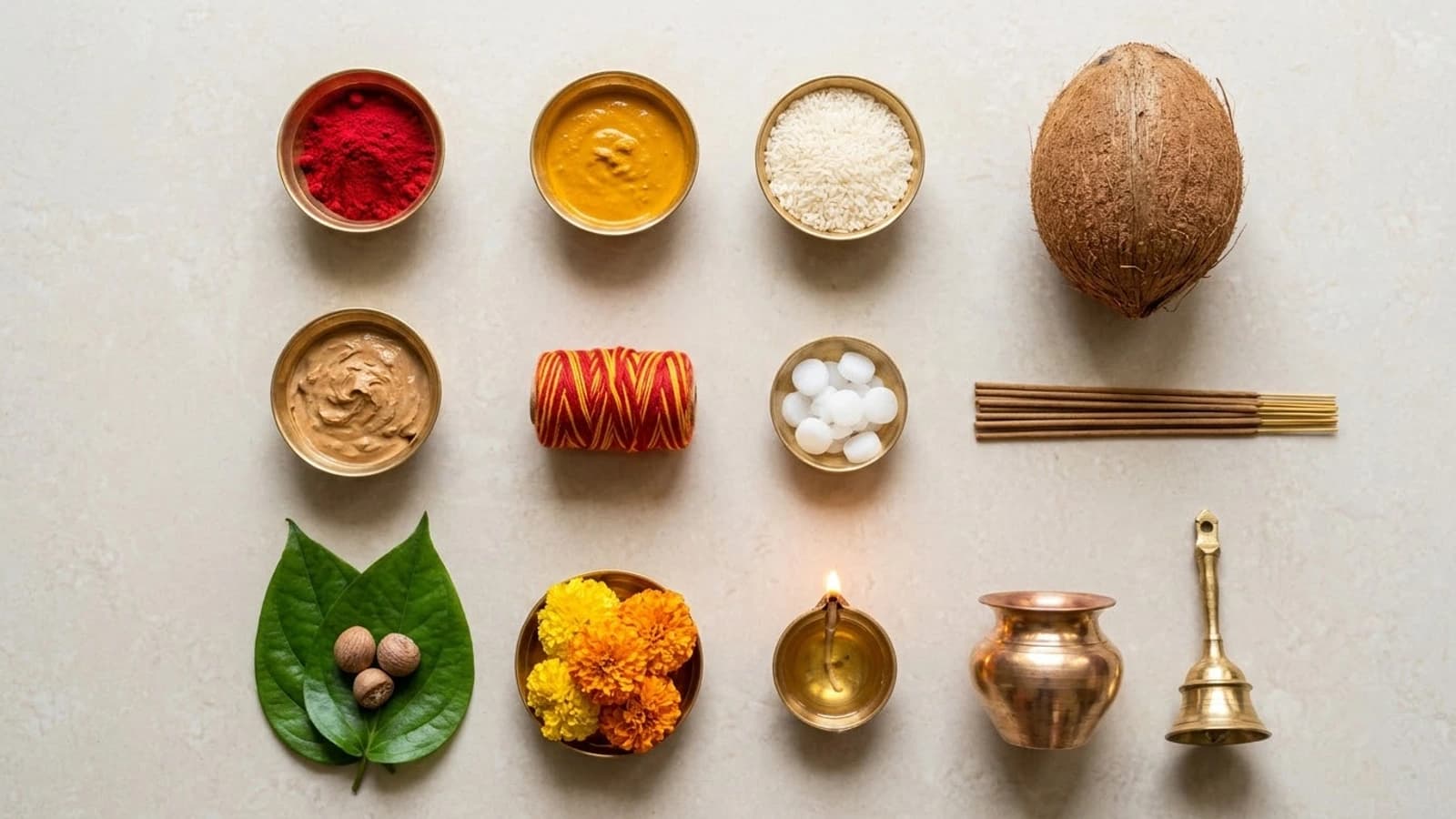
| Gandha | Sandalwood paste or kumkum |
| Pushpa | Flowers |
| Dhupa | Incense |
| Deepa | A lit lamp |
| Naivedya | Food offered to the deity |
The fuller Shodashopachara has sixteen steps. Lists differ slightly between traditions, but a common version is:
| # | Upachara | Meaning |
|---|---|---|
| 1 | Avahana | Inviting the deity's presence |
| 2 | Asana | Offering a seat |
| 3 | Padya | Water to wash the feet |
| 4 | Arghya | Water for the hands |
| 5 | Achamana | Water to sip |
| 6 | Snana | Bathing the image |
| 7 | Vastra | Offering clothing |
| 8 | Yajnopavita | Sacred thread, or ornaments |
| 9 | Gandha | Sandalwood paste |
| 10 | Pushpa | Flowers |
| 11 | Dhupa | Incense |
| 12 | Deepa | Lamp |
| 13 | Naivedya | Food |
| 14 | Tambula | Betel leaf and nut |
| 15 | Pradakshina and namaskara | Circling and bowing |
| 16 | Pushpanjali or visarjana | A final offering of flowers, or bidding farewell |
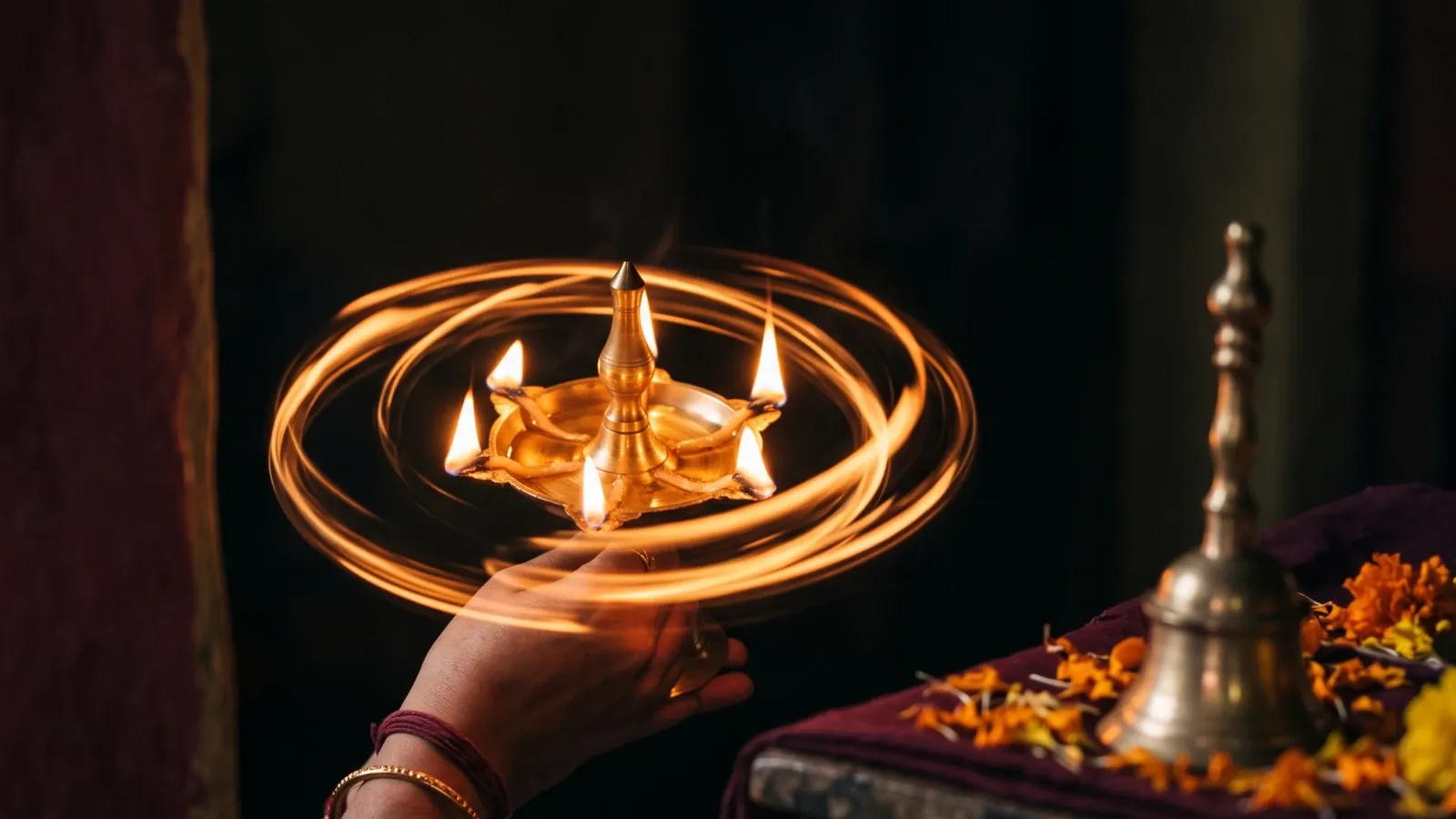
Most ceremonies also open with a sankalpa, a formal statement of who is performing the puja, where, when and why, and begin by worshipping Ganesha, the remover of obstacles. Many end with aarti, the waving of a lamp with song, and a prayer asking forgiveness for any mistakes made. Our guide to mantras, shlokas and aartis explains what is recited along the way.
The main kinds of puja
| Kind | When | Example |
|---|---|---|
| Daily (nitya) | Every day, often morning and evening | Lighting a lamp at the home shrine |
| Occasional (naimittika) | Festivals and life events | Diwali Lakshmi Puja, a Griha Pravesh, a child's naming ceremony |
| Vow-based (kamya, vrata) | Undertaken for a purpose or a vow | Satyanarayan Katha, a fast with puja |
| Temple | Performed by temple priests on a fixed schedule | Morning and evening worship in a temple |
| Community (sarvajanik) | Public celebrations | Durga Puja pandals, Ganeshotsav |
Life's milestones have their own ceremonies, the samskaras; see pujas for life milestones. New beginnings, from a new home to a new vehicle, have theirs too: see Vahan puja and business opening pujas.
Puja, havan and yajna
- A puja centres on an image, idol or symbol of the deity.
- A havan or homa centres on a consecrated fire, into which offerings of ghee, grains and herbs are made with mantras.
- A yajna is the broader Vedic term for sacrifice or offering, of which the fire ritual is the classic form.
Larger ceremonies often combine puja and havan. Vastu Shanti is a typical example.
Who performs a puja
Anyone can perform a simple puja at home, and in many families it's done by whoever is up first. Larger ceremonies, particularly those with Vedic mantras, a fire ritual or a precise muhurat (auspicious time), are usually led by a pandit or purohit, a priest trained in the procedure. Families often have a priest they have known for years; others find one through a temple or a service. Our guide on booking a pandit for a puja at home covers what to ask.
How practice varies
There is no single correct way to perform puja. Practice differs by:
- Region: Bengal's Durga Puja, Maharashtra's Ganeshotsav, Tamil and Kerala temple traditions and Gujarat's Navratri each have their own forms.
- Tradition: Vaishnava, Shaiva, Shakta and Smarta households emphasise different deities and procedures.
- Family: many families worship a kuladevata (family deity) with customs handed down for generations.
When general guidance and your family's custom differ, most priests would advise following your family.
What puja means to people
Puja is a devotional practice, and what it brings is a matter of faith. Many people also describe more universal things: a quiet moment at the start of the day, a sense of gratitude, a way to mark important moments, and a thread connecting generations of a family. Those are reasons enough for many households, whatever their degree of belief.
Where to go next
- To start at home: how to do a simple puja at home.
- To gather what you need: puja samagri and its significance.
- To set up a shrine: pooja room Vastu.
Aroha Puja, now in development, will offer a premium way to have any puja performed at your home by a pandit, with the samagri included or arranged by you. Bookings are not open yet.