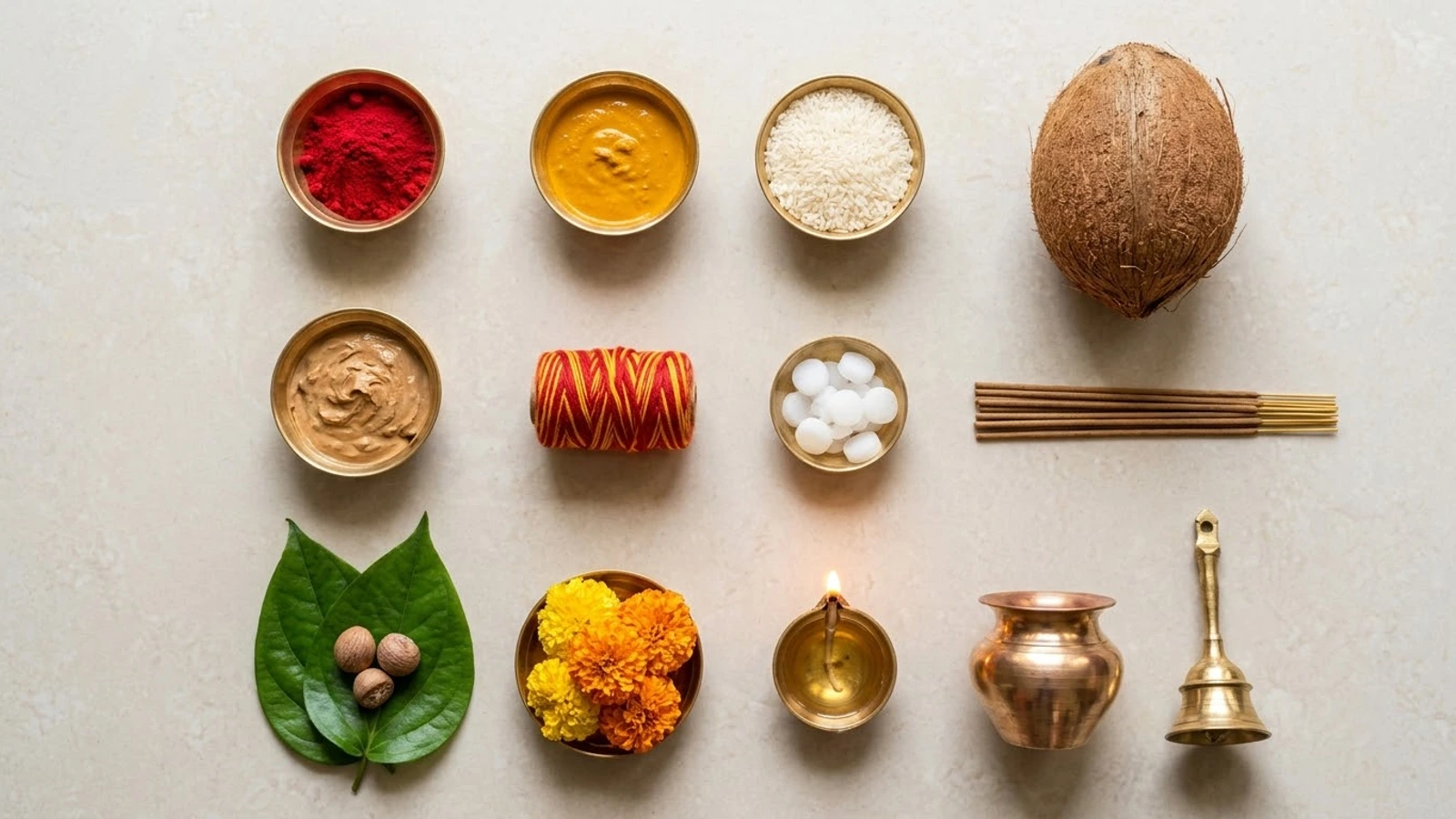
Samagri simply means materials, the things you gather before a puja. A daily puja needs only a handful of them; a Griha Pravesh or a havan needs dozens. Each item has a traditional meaning, and knowing it makes the ritual more than a shopping list.
Practices vary by region, community and deity, so treat this as a general guide and follow your family's or pandit's list where it differs.
The everyday essentials
| Item | What it is | Traditional significance |
|---|---|---|
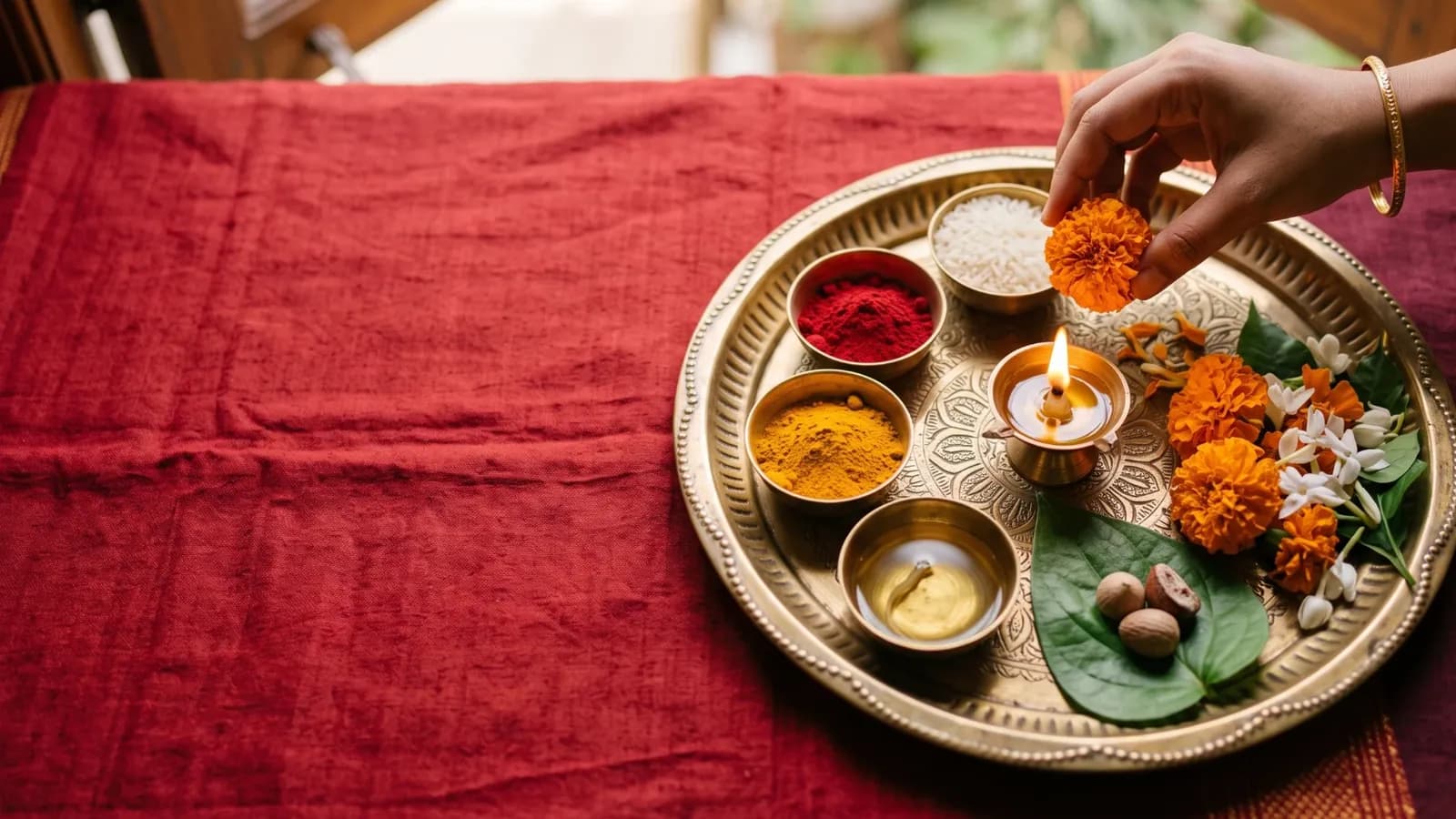
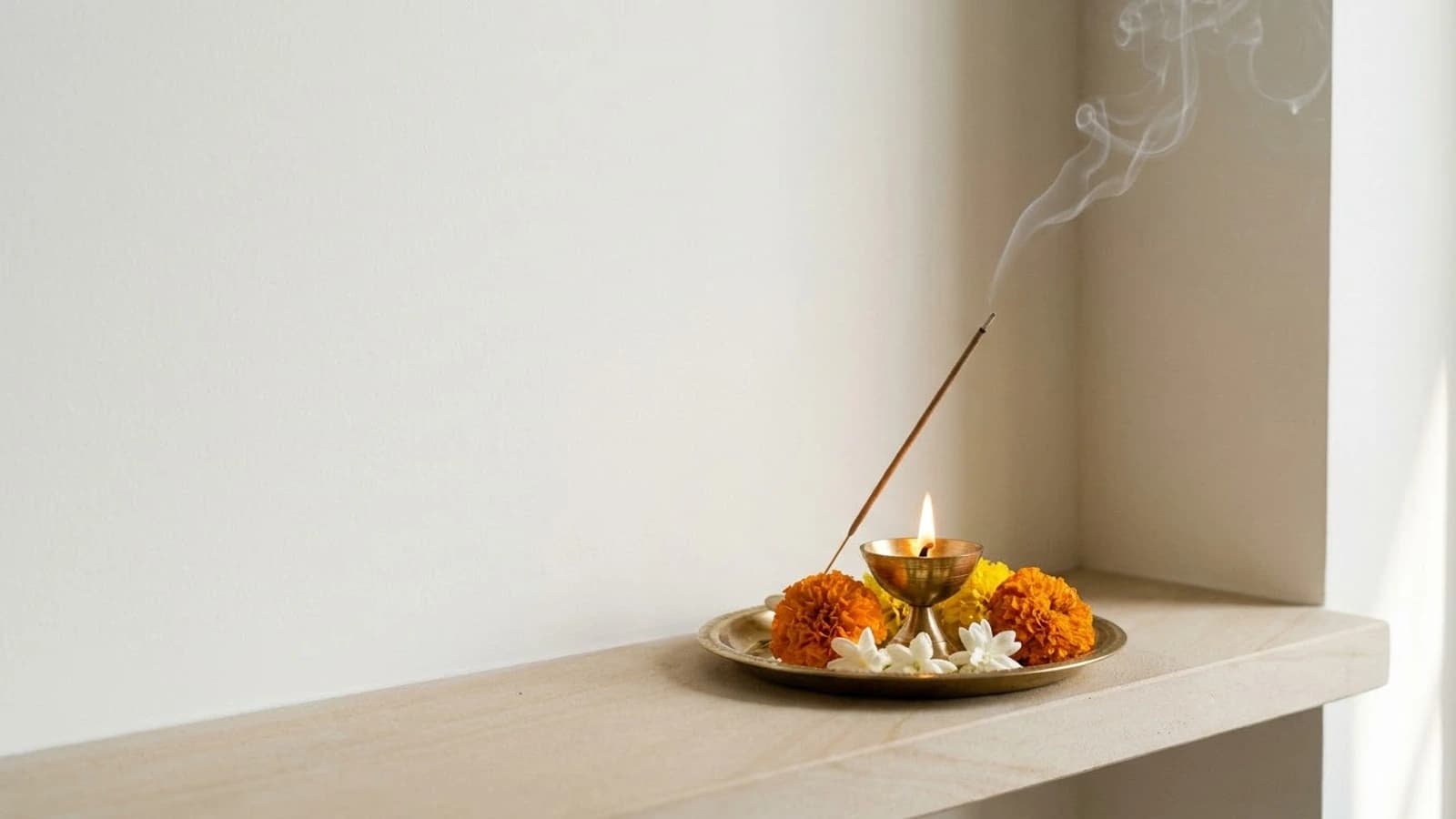
| Diya | A lamp of clay or brass with a cotton wick in ghee or oil | Light dispelling darkness; the flame is treated as a witness to the puja |
| Agarbatti / dhoop | Incense sticks or cones | Fragrance offered to the deity; one of the five basic offerings |
| Water (jal) | Clean water in a small vessel (lota) | Purification; offered for washing and sipping in the upacharas |
| Kumkum / roli | Red powder | Auspiciousness; applied to the deity and as a tilak |
| Haldi | Turmeric | Purity and auspiciousness |
| Chandan | Sandalwood paste | A cooling, fragrant offering (gandha) |
| Akshata | Whole, unbroken rice, often mixed with kumkum | Completeness and prosperity |
| Flowers | Fresh flowers and garlands | Beauty and devotion; certain flowers are associated with certain deities |
| Naivedya | Fruit, sweets, milk or cooked food | Food offered to the deity, then shared as prasad |
| Bell (ghanti) | A small hand bell | Rung to begin worship and during aarti |
| Thali | A plate, often brass or steel | Holds the items; used for aarti |
| Camphor (karpur) | White camphor tablets | Burned during aarti; it leaves no residue, often read as a symbol of the ego dissolving |
Items for larger pujas
| Item | Traditional significance |
|---|---|
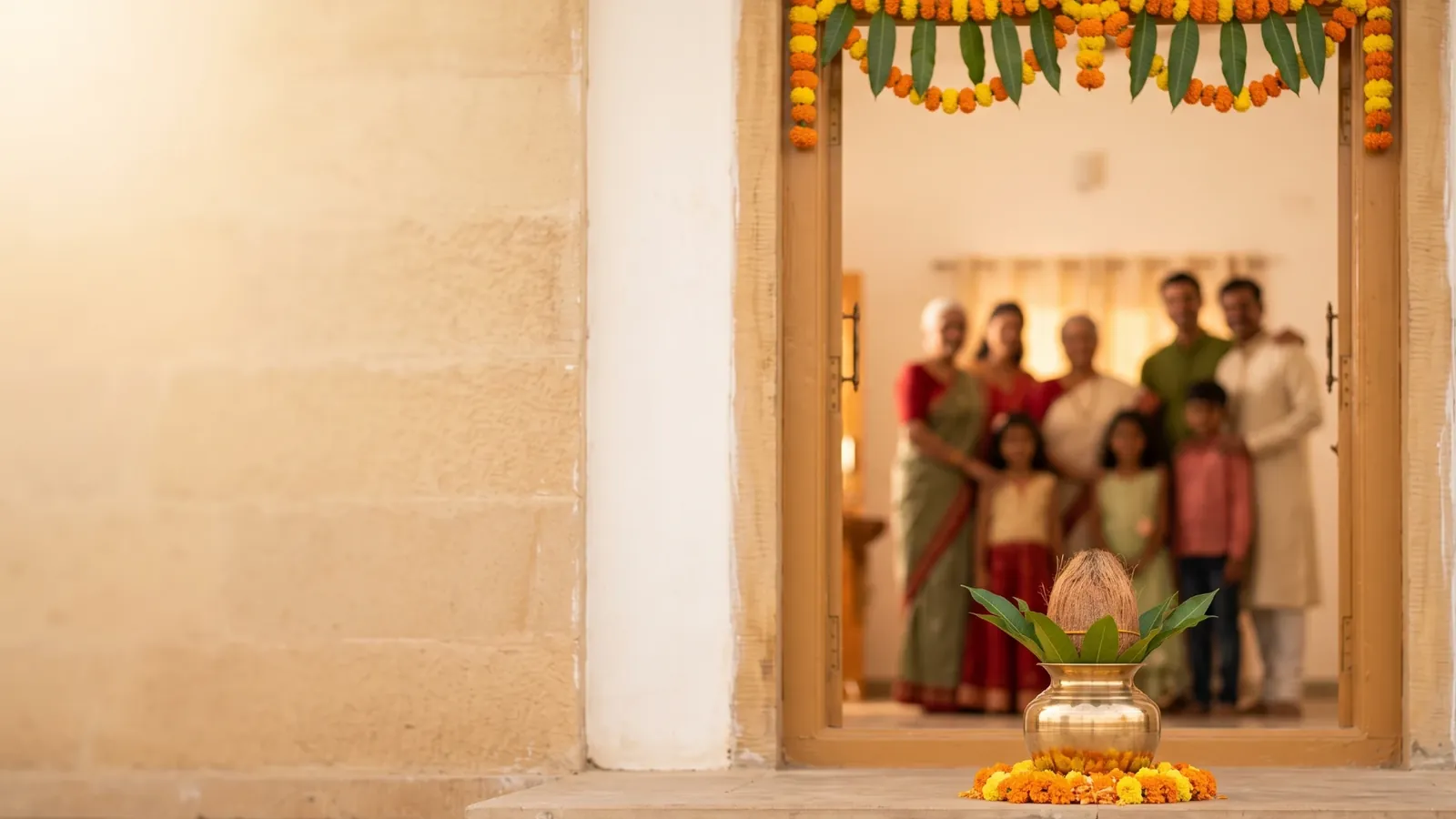
| Kalash | A pot of water representing fullness and the presence of the divine; central to many ceremonies |
| Mango leaves | Placed at the kalash's mouth and in the door toran; auspicious and associated with new beginnings |
| Coconut (shriphal) | A pure offering; placed on the kalash or broken as an offering |
| Betel leaves and nuts (paan, supari) | Offered as tambula, a mark of respect; a supari is sometimes worshipped as Ganesha |
| Mauli / kalava | Red and yellow sacred thread tied on the wrist and around the kalash, for protection and as a sign of a vow |
| Panchamrit | A mix of milk, curd, ghee, honey and sugar, used to bathe images and shared as prasad |
| Gangajal | Water from the Ganga, used for purification in many homes |
| Janeu | Sacred thread offered to the deity in some pujas |
| Cloth (vastra) | A piece of new cloth, usually red or yellow, offered to the deity or used to cover the altar |
| Tulsi leaves | Offered to Vishnu and Krishna; traditionally not offered to Ganesha |
| Bel (bilva) leaves | Offered to Shiva |
| Durva grass | Offered to Ganesha |
| Dakshina | An offering of money, traditionally given to the priest |
For a havan
A havan (fire ritual) adds its own set:
- Havan kund: a copper or iron container, often stepped, for the fire
- Samidha: dried sticks of wood, commonly mango
- Havan samagri: a prepared mix of herbs, grains, sugar and resins
- Ghee: offered into the fire with a spoon
- Navadhanya: nine grains associated with the nine planets, used in some pujas
Occasion-specific lists
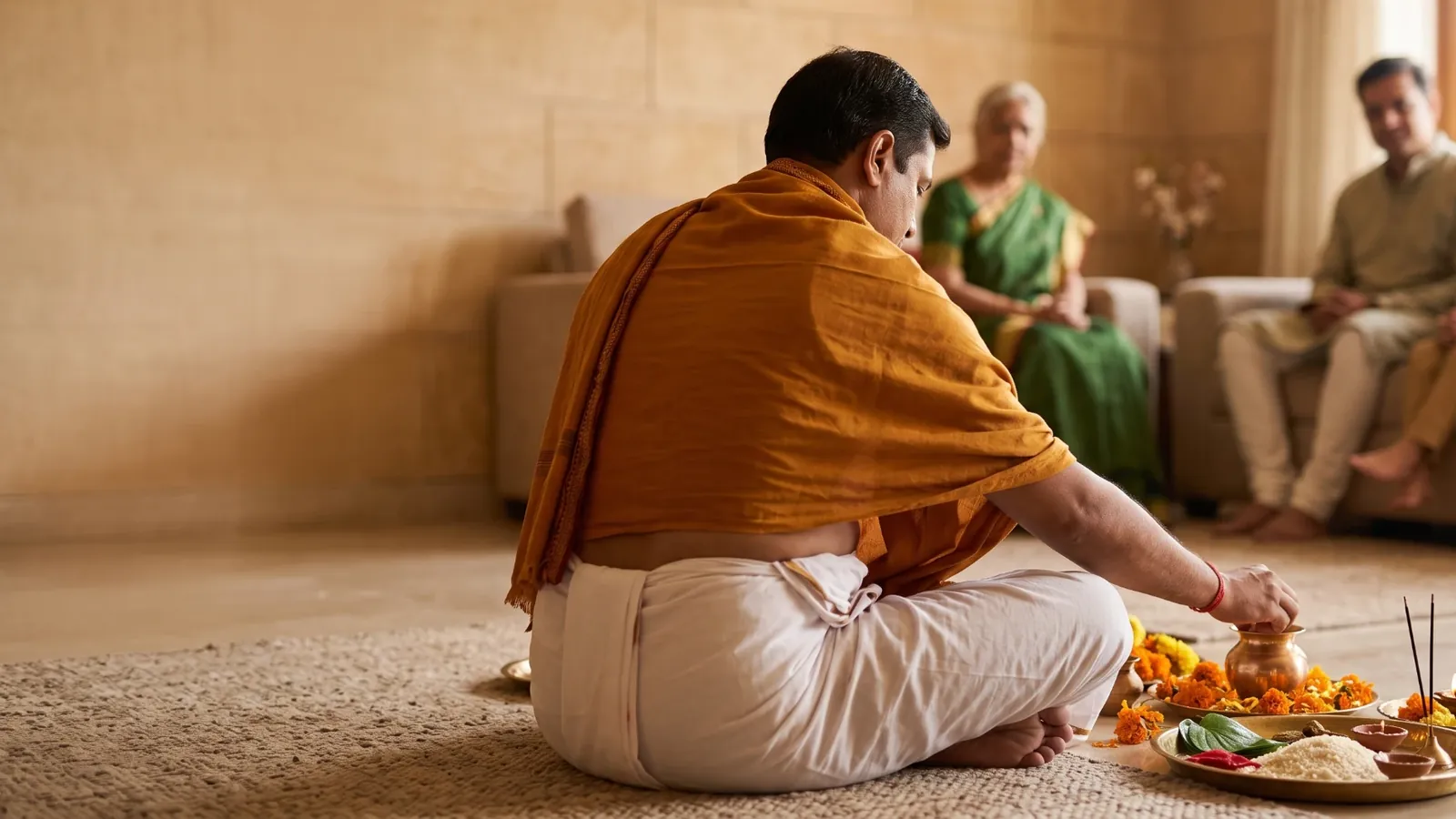
For a Griha Pravesh or Vastu Shanti, expect the larger-puja list above plus a toran, a new vessel for boiling milk, and havan items. For a vehicle puja, a coconut, garland, lemons and mauli are usual additions. Your pandit will usually give the definitive list for your tradition.
Buying and storing
- Buy consumables fresh: flowers, fruit and betel leaves close to the day.
- Check powders for artificial colours; many families prefer natural kumkum and haldi.
- Keep durable items together, clean and dry, in the pooja space; see pooja room Vastu.
- Ask who supplies what. For larger ceremonies, confirm whether the pandit brings the samagri or you arrange it; our guide on booking a pandit covers this.
Afterwards
Used flowers, leaves and rice are traditionally treated with respect rather than thrown in the bin. Many families now compost them or bury them in a garden rather than putting them in rivers and lakes, which avoids pollution while keeping the spirit of the custom. Ash from a havan is often scattered in a garden or plant pot.
Aroha Puja, coming soon, will let you choose for every booking: the pandit brings all the samagri, or your family arranges it from the list, with the price reflecting your choice.