Most people meet Vastu Shastra the same way: someone looks at a floor plan and says, "the kitchen shouldn't be there." Then comes the harder question: so where should it be, and does it actually matter for my home?
This guide answers the first part room by room, using the widely followed traditional directions. At the end, we show how to check your own home in a few minutes without holding a rulebook in your head.
Vastu is a traditional system, and traditions differ on the details. The directions below follow the rule set used in Aroha Vastu Studio (named aroha-traditional-v1) and note where other schools commonly differ. Treat them as guidance for how to use your space, not as predictions.
The idea behind Vastu directions
Vastu divides a home into eight directions around a calm centre called the Brahmasthan. Each direction is associated with an element and a kind of energy:
- North-East (Ishanya): water and clarity; kept the lightest, cleanest and most open.
- East: the rising sun; light, health and new beginnings.
- South-East (Agneya): fire; the natural place for cooking.
- South: stability and rest.
- South-West (Nairutya): earth; the heaviest, most grounded corner.
- West: gains and continuity.
- North-West (Vayavya): air and movement; suits things that come and go.
- North: wealth and opportunity; kept open and uncluttered.
The centre is ideally left open: no heavy walls, pillars or a toilet at the heart of the home.
Everything that follows is simply this map applied room by room: rooms that need fire go where fire lives, rooms that need stillness go where the home is heaviest, and the purest corner is kept for prayer.
Room-by-room Vastu directions
Main entrance
- Best: North, North-East or East
- Acceptable: North-West
- Avoid: South, South-West, South-East and West
The entrance is where energy (and people) come in, so it is one of the most important placements in the home. A bright, clean, clutter-free entrance in the northern or eastern side is the traditional ideal.
Puja room (prayer room)
- Best: North-East
- Acceptable: East or North
- Avoid: South, South-West and South-East
The North-East is the purest zone of the home. Even if you don't have a separate puja room, a small shelf or corner here, kept clean and uncluttered, follows the same principle.
Kitchen
- Best: South-East
- Acceptable: North-West or East
- Avoid: North-East, South-West and North
Fire belongs in the fire corner. Many traditions also suggest the cook faces east while cooking, often easier to change than the room itself.
Master bedroom
- Best: South-West
- Acceptable: South or West
- Avoid: North-East, South-East and North
The heaviest, most stable corner suits the head of the household. Sleeping with the head towards the south is the most common traditional recommendation.
Second bedroom and guest room
- Best: North-West or West
- Acceptable: South or North
- Avoid: North-East and South-East
The airy North-West is traditionally linked with movement, which is why it suits guests, and, in many homes, grown children who will one day move out.
Children's room
- Best: West or North-West
- Acceptable: North or East
- Avoid: South-West and South-East
For a study corner, facing north or east while studying is the usual advice.
Living room
- Best: North or North-East
- Acceptable: East or North-West
- Avoid: South-West and South-East
A living room on the northern or eastern side stays lighter and more welcoming through the day.
Dining area
- Best: West or East
- Acceptable: North or North-West
- Avoid: South and South-East
Bathroom and toilet
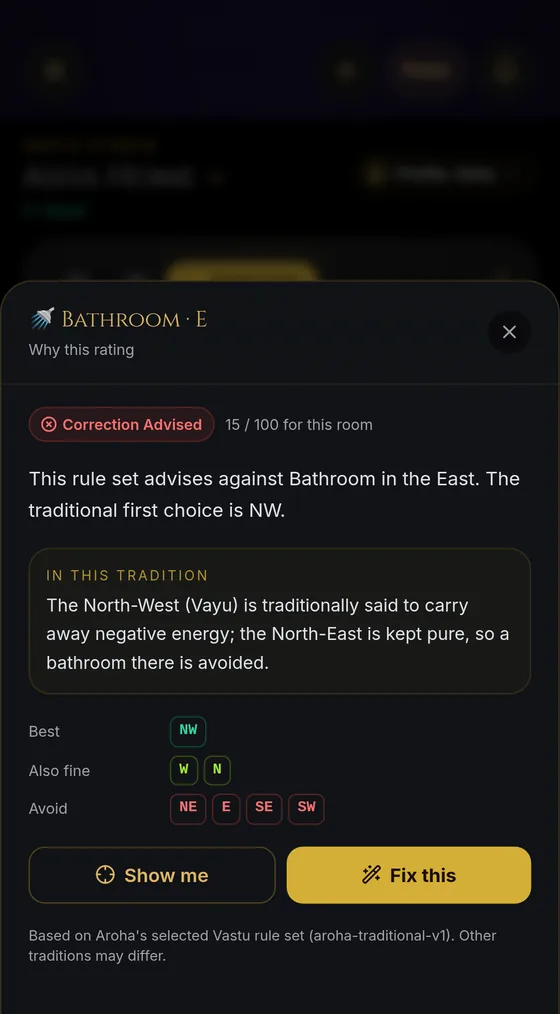
- Best: North-West
- Acceptable: West or North
- Avoid: North-East, East, South-East and South-West
A toilet in the North-East is one of the most commonly flagged Vastu issues. If yours is there, don't panic. See the remedies below.
Store room
- Best: South-West
- Acceptable: South, West or North-West
- Avoid: North-East and East
Heavy storage belongs in the heavy corner; keep the North-East light.
Staircase
- Best: South, South-West or West
- Acceptable: South-East
- Avoid: North-East, North and East
Balcony
- Best: North, North-East or East
- Acceptable: North-West
- Avoid: South-West and South
Open spaces are traditionally placed where you want more light and air to come in: the north and east.
Parking
- Best: North-West or South-East
- Acceptable: West or South
- Avoid: North-East and East
Water storage
- Best: North-East or North
- Acceptable: East or North-West
- Avoid: South-East, South and South-West
Schools differ here: the North-East placement is usually given for underground water (a sump or borewell). Many traditions place an overhead tank in the South-West instead, because it is heavy. If you are planning construction, check which kind of tank the guidance you're following refers to.
If a room is in the "wrong" place
Very few homes follow every rule, especially apartments, where you rarely choose the layout. Traditional guidance is gentle about this. The usual order of steps is:
- Use the room differently where you can. A spare room in the North-East can become a study or prayer corner; a heavy cupboard can move to the South-West.
- Keep problem areas clean, dry, bright and uncluttered. This is the most common advice for a North-East toilet or a cramped entrance.
- Small, non-structural remedies. Many traditions suggest things like a bowl of sea salt in a bathroom, a tulsi plant in the North-East, or good lighting in a dark corner.
- Structural changes only when you renovate. Moving a kitchen or bathroom is a big decision: worth considering when you are rebuilding anyway, not as an emergency.
Vastu is a traditional framework for arranging space, not a guarantee of outcomes. Don't make costly or unsafe structural changes on the strength of a direction chart alone.
How to check your own home in minutes
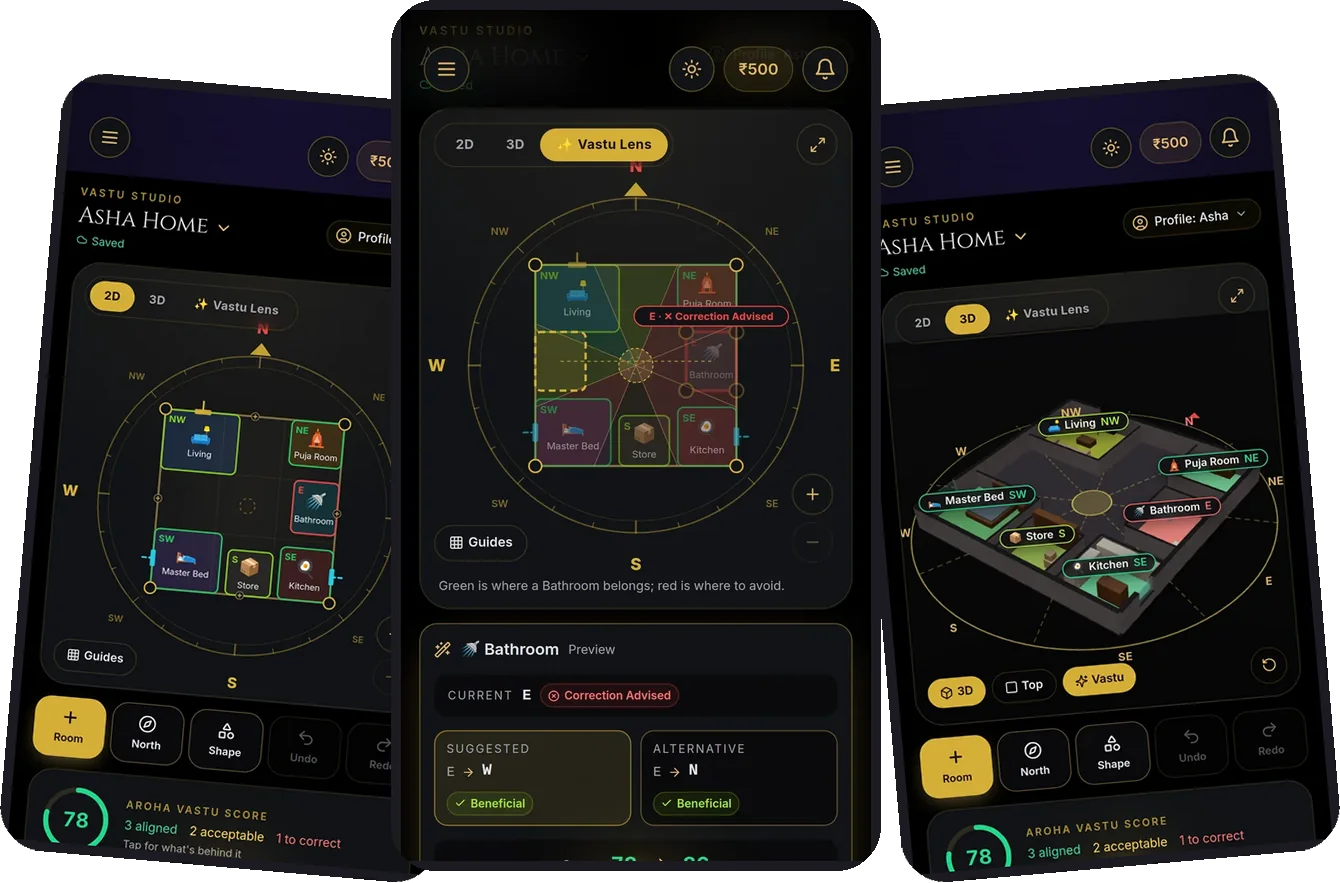
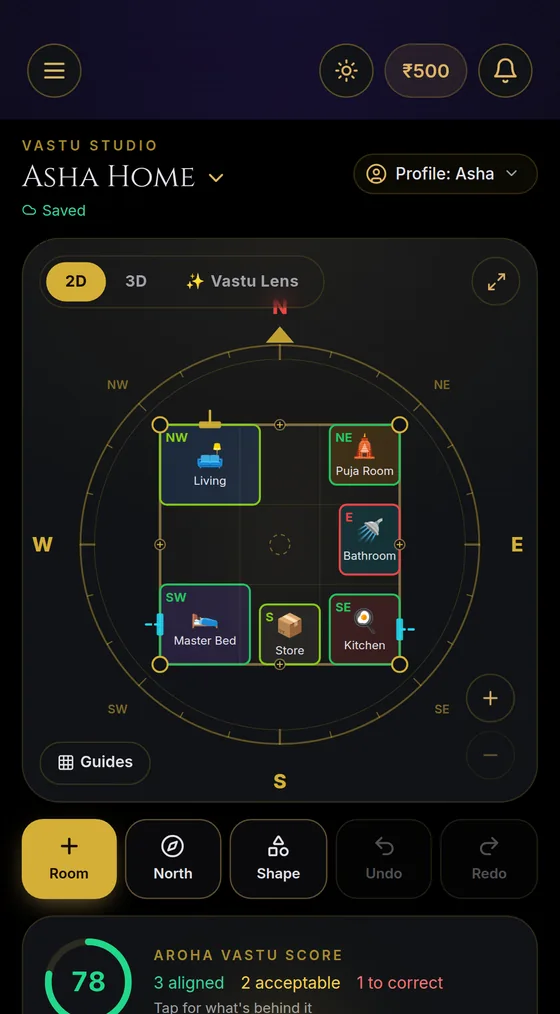
Checking a plan by hand means finding north, drawing eight slices over the plan, and looking up each room in a list like the one above. Aroha Vastu Studio does that part for you:
- Draw your home: start from a 1, 2 or 3 BHK template, a blank plot, or trace over a photo of your floor plan (the photo stays on your phone).
- Point it north: use your phone's compass inside the home, or turn the plan by hand.
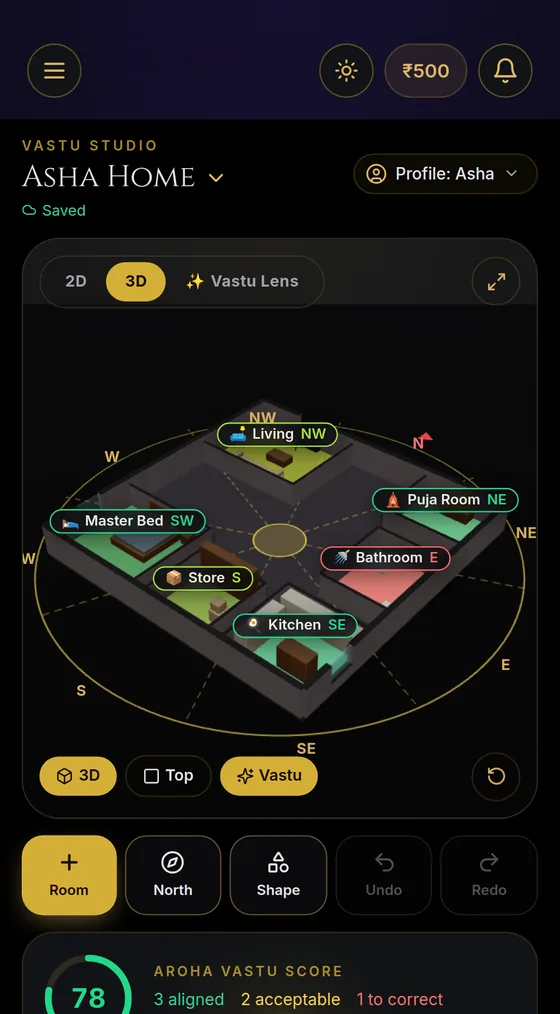
- Read the ratings: every room shows its direction and rating, and the Aroha Vastu score updates as you move things. Tap Why? for the reasoning behind any rating.
- Try a fix: Fix this previews a better spot for one room and how the score would change; Fix my plan suggests a few moves for the whole home, which you can apply one at a time or skip.
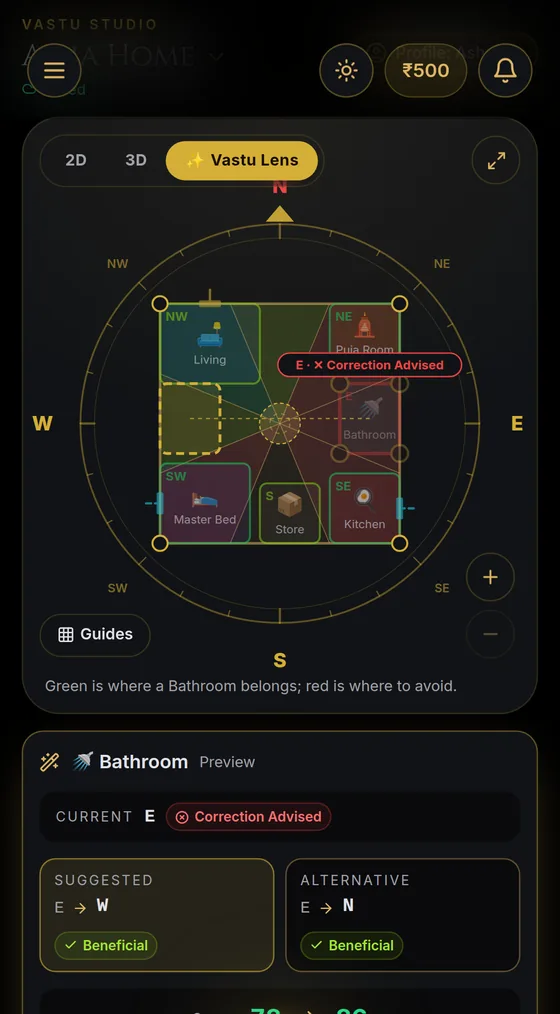
You can also see the home in 3D with each room coloured by its rating, overlay the finer 16-zone compass or the 9×9 Vastu Purusha Mandala, save versions of your plan, and, if you want the full picture, get a personalised written Vastu report with remedies, element balance and best directions for sleeping, working and cooking.
Explore Vastu Studio. It's part of the free Aroha Astrology app, in English and six Indian languages.