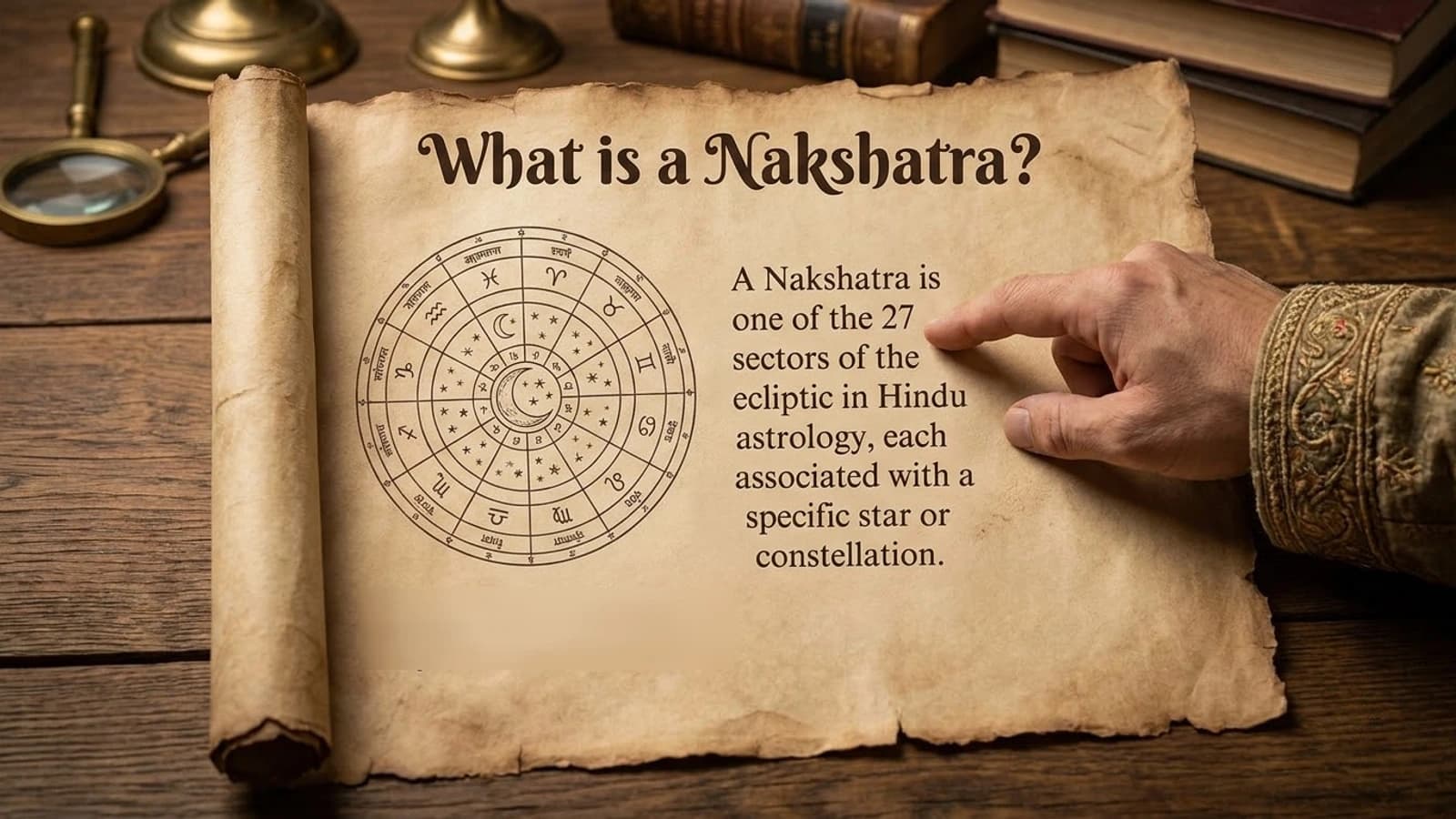
The Moon crosses the whole zodiac in about 27⅓ days. Vedic astrology divides that path into 27 Nakshatras, or lunar mansions, each covering 13°20′ of the sky: roughly one for every day of the Moon's journey. This page lists all 27 with the details astrologers use most, then explains what each column means.
If you're new to the idea, start with what a Nakshatra is; this page is the reference you'll come back to.
All 27 Nakshatras at a glance
| # | Nakshatra | Span (sidereal) | Ruling planet | Deity | Symbol |
|---|---|---|---|---|---|
| 1 | Ashwini | 0°00′ Aries to 13°20′ Aries | Ketu | Ashwini Kumaras | Horse's head |
| 2 | Bharani | 13°20′ Aries to 26°40′ Aries | Venus | Yama | Yoni (womb) |
| 3 | Krittika | 26°40′ Aries to 10°00′ Taurus | Sun | Agni | Razor or flame |
| 4 | Rohini | 10°00′ Taurus to 23°20′ Taurus | Moon | Prajapati (Brahma) | Ox-cart |
| 5 | Mrigashira | 23°20′ Taurus to 6°40′ Gemini | Mars | Soma | Deer's head |
| 6 | Ardra | 6°40′ Gemini to 20°00′ Gemini | Rahu | Rudra | Teardrop |
| 7 | Punarvasu | 20°00′ Gemini to 3°20′ Cancer | Jupiter | Aditi | Quiver of arrows |
| 8 | Pushya | 3°20′ Cancer to 16°40′ Cancer | Saturn | Brihaspati | Cow's udder or lotus |
| 9 | Ashlesha | 16°40′ Cancer to 30°00′ Cancer | Mercury | Nagas (Sarpas) | Coiled serpent |
| 10 | Magha | 0°00′ Leo to 13°20′ Leo | Ketu | Pitris (ancestors) | Royal throne |
| 11 | Purva Phalguni | 13°20′ Leo to 26°40′ Leo | Venus | Bhaga | Front legs of a bed |
| 12 | Uttara Phalguni | 26°40′ Leo to 10°00′ Virgo | Sun | Aryaman | Back legs of a bed |
| 13 | Hasta | 10°00′ Virgo to 23°20′ Virgo | Moon | Savitr | Hand |
| 14 | Chitra | 23°20′ Virgo to 6°40′ Libra | Mars | Tvashtr (Vishvakarma) | Bright jewel |
| 15 | Swati | 6°40′ Libra to 20°00′ Libra | Rahu | Vayu | Young shoot in the wind |
| 16 | Vishakha | 20°00′ Libra to 3°20′ Scorpio | Jupiter | Indra and Agni | Triumphal arch |
| 17 | Anuradha | 3°20′ Scorpio to 16°40′ Scorpio | Saturn | Mitra | Lotus |
| 18 | Jyeshtha | 16°40′ Scorpio to 30°00′ Scorpio | Mercury | Indra | Circular amulet |
| 19 | Mula | 0°00′ Sagittarius to 13°20′ Sagittarius | Ketu | Nirriti | Bunch of roots |
| 20 | Purva Ashadha | 13°20′ Sagittarius to 26°40′ Sagittarius | Venus | Apas (waters) | Elephant tusk or fan |
| 21 | Uttara Ashadha | 26°40′ Sagittarius to 10°00′ Capricorn | Sun | Vishvedevas | Planks of a bed |
| 22 | Shravana | 10°00′ Capricorn to 23°20′ Capricorn | Moon | Vishnu | Ear or three footprints |
| 23 | Dhanishta | 23°20′ Capricorn to 6°40′ Aquarius | Mars | Eight Vasus | Drum |
| 24 | Shatabhisha | 6°40′ Aquarius to 20°00′ Aquarius | Rahu | Varuna | Empty circle |
| 25 | Purva Bhadrapada | 20°00′ Aquarius to 3°20′ Pisces | Jupiter | Aja Ekapada | Front of a funeral cot |
| 26 | Uttara Bhadrapada | 3°20′ Pisces to 16°40′ Pisces | Saturn | Ahir Budhnya | Back of a funeral cot |
| 27 | Revati | 16°40′ Pisces to 30°00′ Pisces | Mercury | Pushan | Fish |
Deities and symbols are those most commonly given; a few differ between texts and regional traditions.
Reading the columns
Span
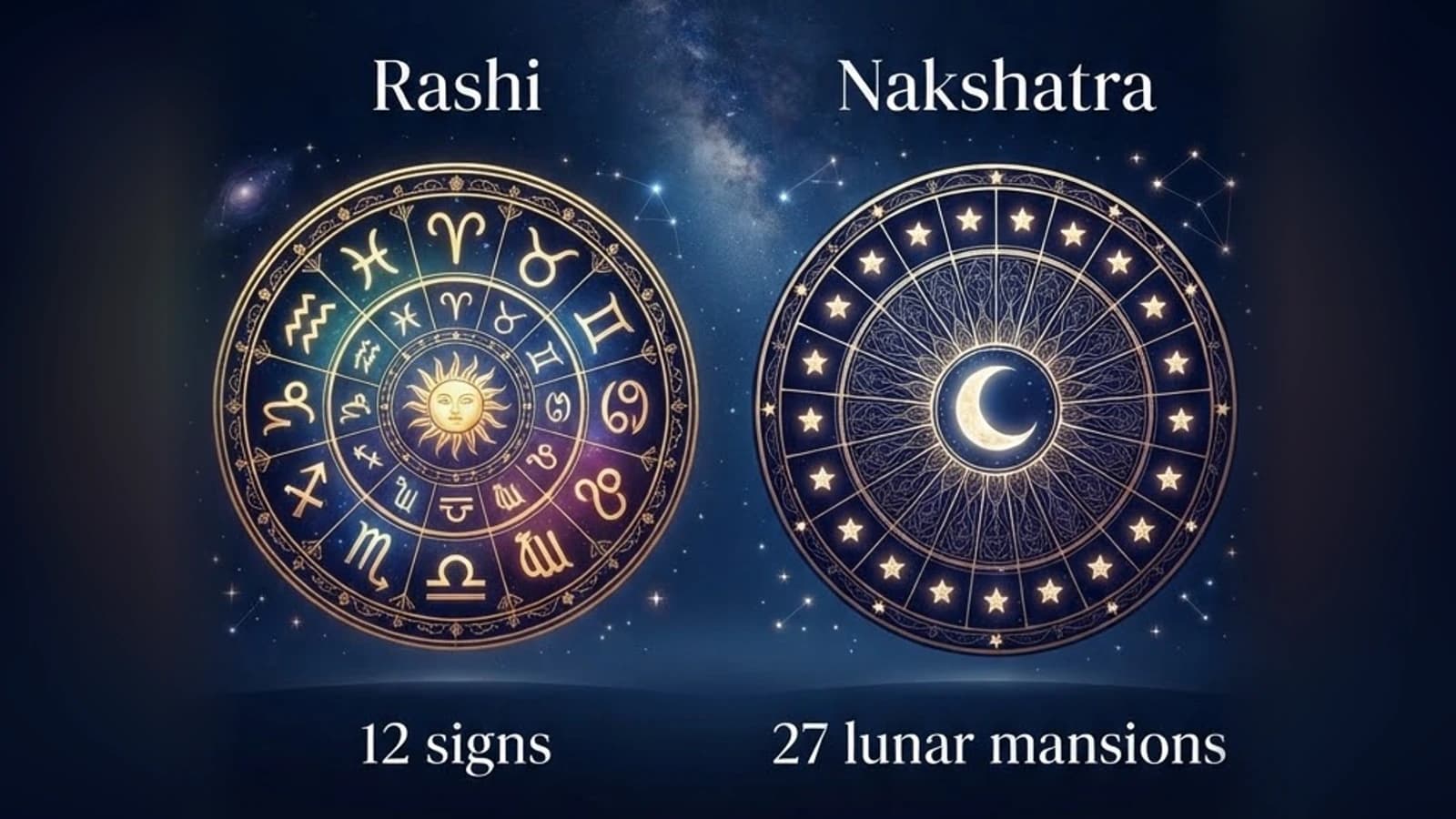
The span is measured in the sidereal zodiac that Vedic astrology uses. If you compare against a Western (tropical) chart, positions will be roughly 24° further along; see Rashi vs Sun sign. Nine Nakshatras cross from one sign into the next, which is why the span of Krittika, for example, starts in Aries and ends in Taurus. For how the signs and Nakshatras interlock, see Rashi vs Nakshatra.
Ruling planet
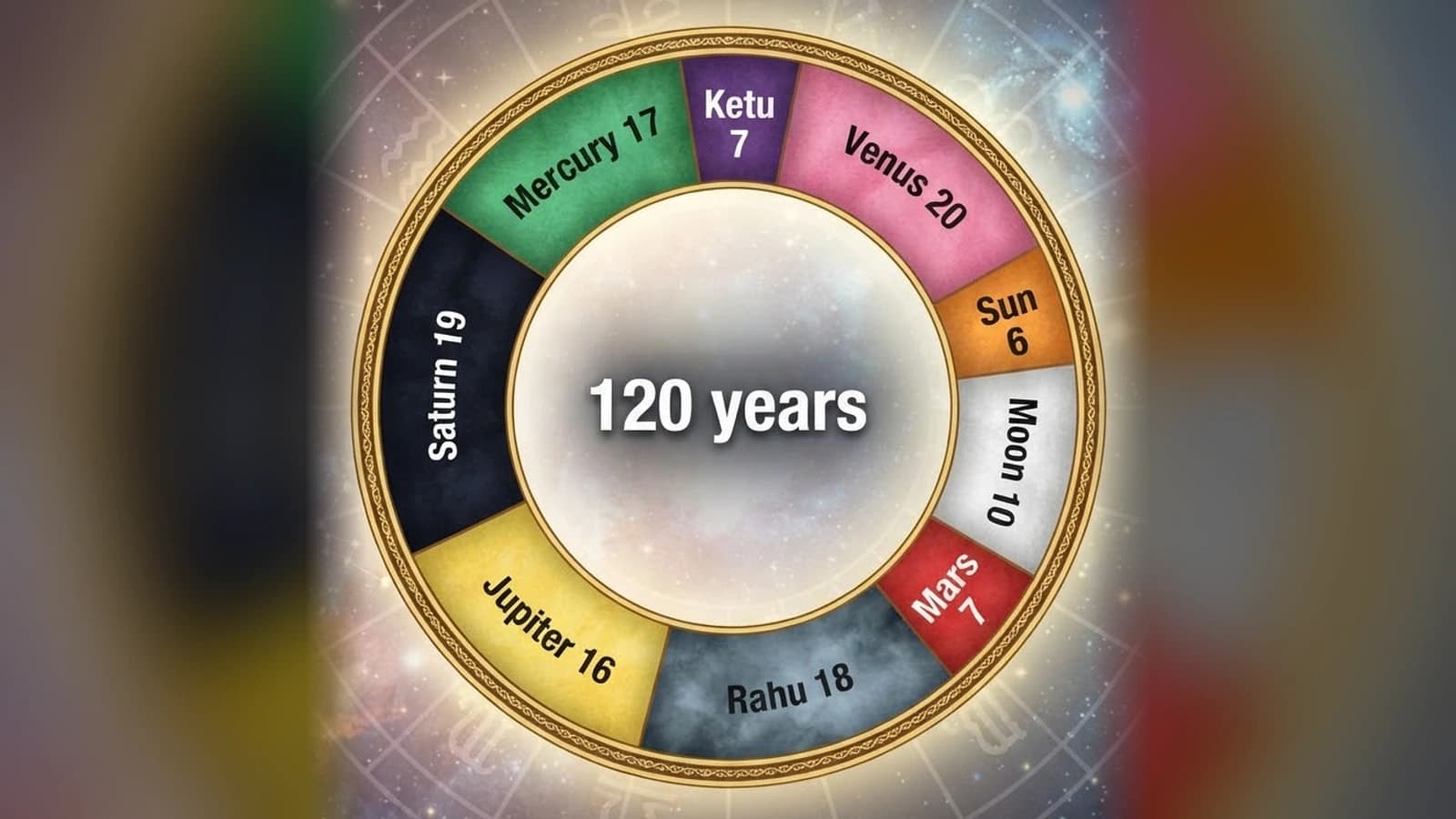
Notice the pattern: Ketu, Venus, Sun, Moon, Mars, Rahu, Jupiter, Saturn, Mercury, repeated three times. That sequence is the order of the Vimshottari Dasha. The lord of the Nakshatra your Moon sat in at birth is the planet whose period your life begins with, and how far the Moon had travelled through that Nakshatra decides how much of the period remained.
Deity
Each Nakshatra has a presiding deity drawn from the Vedic pantheon: Agni (fire) for Krittika, Rudra for Ardra, Vishnu for Shravana and so on. Astrologers use the deity to describe the Nakshatra's traditional character. Ardra, ruled by the storm-god Rudra, is associated with upheaval and renewal, for instance. Treat these as symbolic descriptions from the tradition rather than predictions.
Symbol
The symbols are old mnemonic images, often tied to the shape of the star group. Several come in pairs: the front and back legs of a bed for the two Phalgunis, and the front and back of a cot for the two Bhadrapadas.
The three Ganas
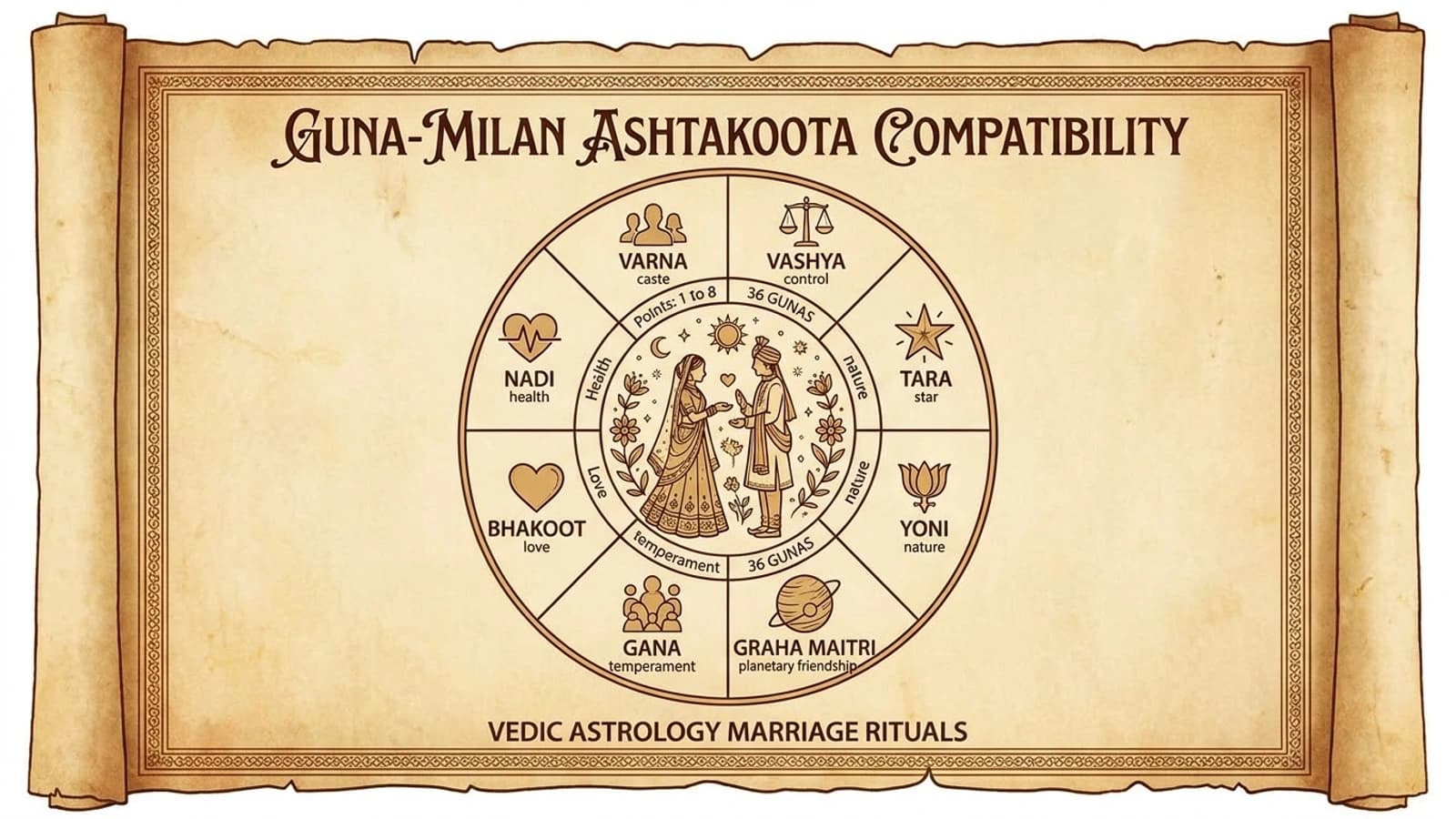
Nakshatras are also grouped by temperament, or Gana. The grouping is used mainly in Guna Milan compatibility matching.
| Gana | Nakshatras |
|---|---|
| Deva (divine) | Ashwini, Mrigashira, Punarvasu, Pushya, Hasta, Swati, Anuradha, Shravana, Revati |
| Manushya (human) | Bharani, Rohini, Ardra, Purva Phalguni, Uttara Phalguni, Purva Ashadha, Uttara Ashadha, Purva Bhadrapada, Uttara Bhadrapada |
| Rakshasa (fierce) | Krittika, Ashlesha, Magha, Chitra, Vishakha, Jyeshtha, Mula, Dhanishta, Shatabhisha |
"Rakshasa" can sound alarming, but it describes an intense, independent temperament in the tradition, not a bad person or a bad chart.
The stars behind the names
Nakshatras are named after real star groups, and several are easy to find in the night sky:
| Nakshatra | Commonly identified star(s) |
|---|---|
| Krittika | The Pleiades |
| Rohini | Aldebaran |
| Ardra | Betelgeuse |
| Punarvasu | Castor and Pollux |
| Magha | Regulus |
| Chitra | Spica |
| Swati | Arcturus |
| Jyeshtha | Antares |
| Shravana | Altair |
The zodiac divisions are equal 13°20′ segments, so a Nakshatra's span and its namesake star don't always coincide exactly. The segment is what astrology uses.
Padas and naming syllables
Each Nakshatra divides into four padas of 3°20′. Each pada carries a traditional starting syllable used in naming. A child with the Moon in Ashwini's four padas, for example, would traditionally be given a name beginning with Chu, Che, Cho or La. Families that follow this custom usually ask for the pada, not just the Nakshatra.
How to find your Nakshatra
You need your date, time and place of birth, because the Moon moves about a Nakshatra a day. Aroha's Moon sign calculator gives your Moon's Rashi and Nakshatra, and the Aroha Astrology app shows the Dasha timeline that starts from it.