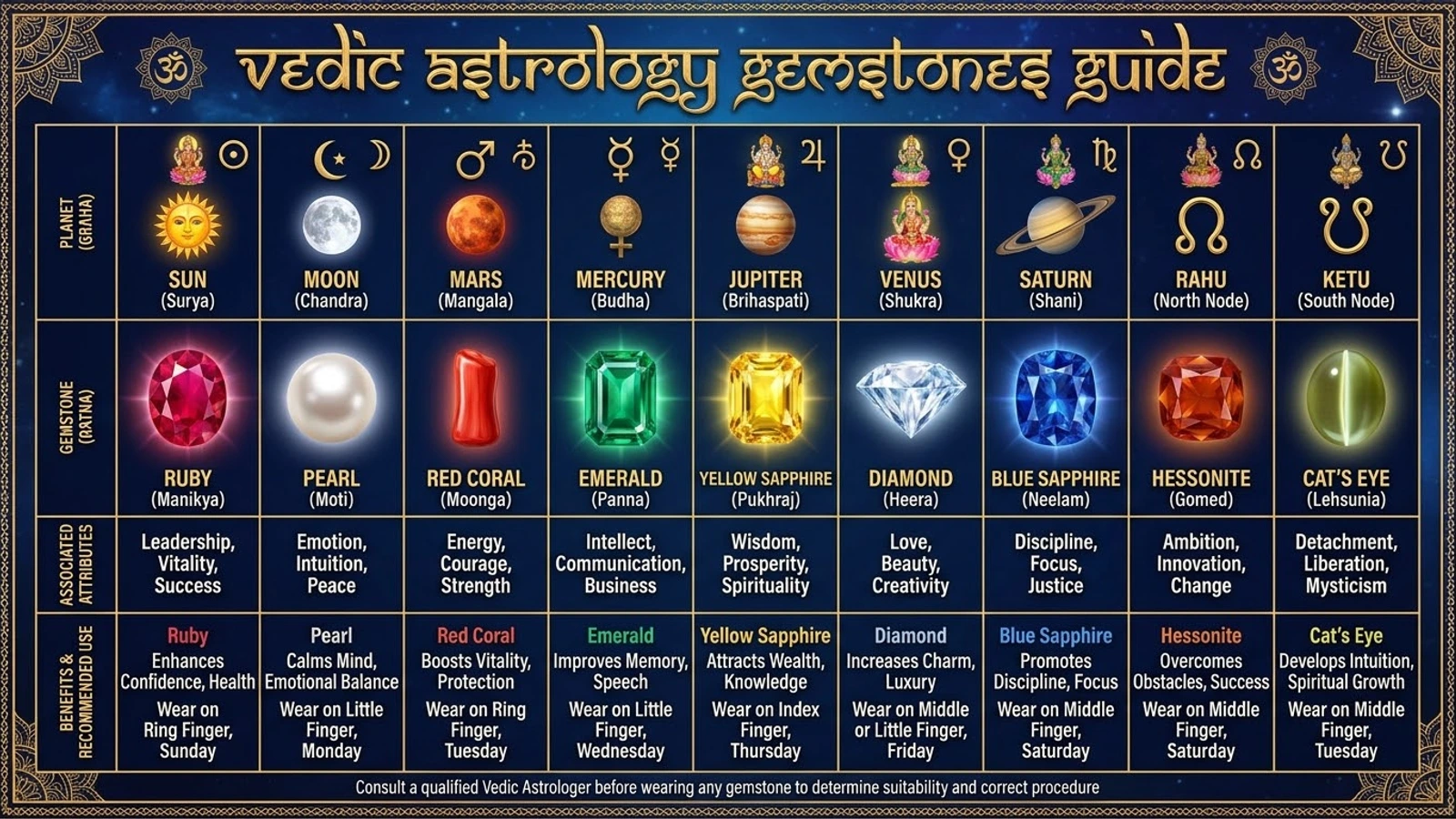
A gemstone in Vedic astrology is meant to be matched to a planet in your own birth chart, not to your birth month or Sun sign. The tradition is old and the recommendations are interpretation, not something science has tested. This guide sets out how the system works, then how to check what you are buying.
The Navaratna: nine gems for nine planets
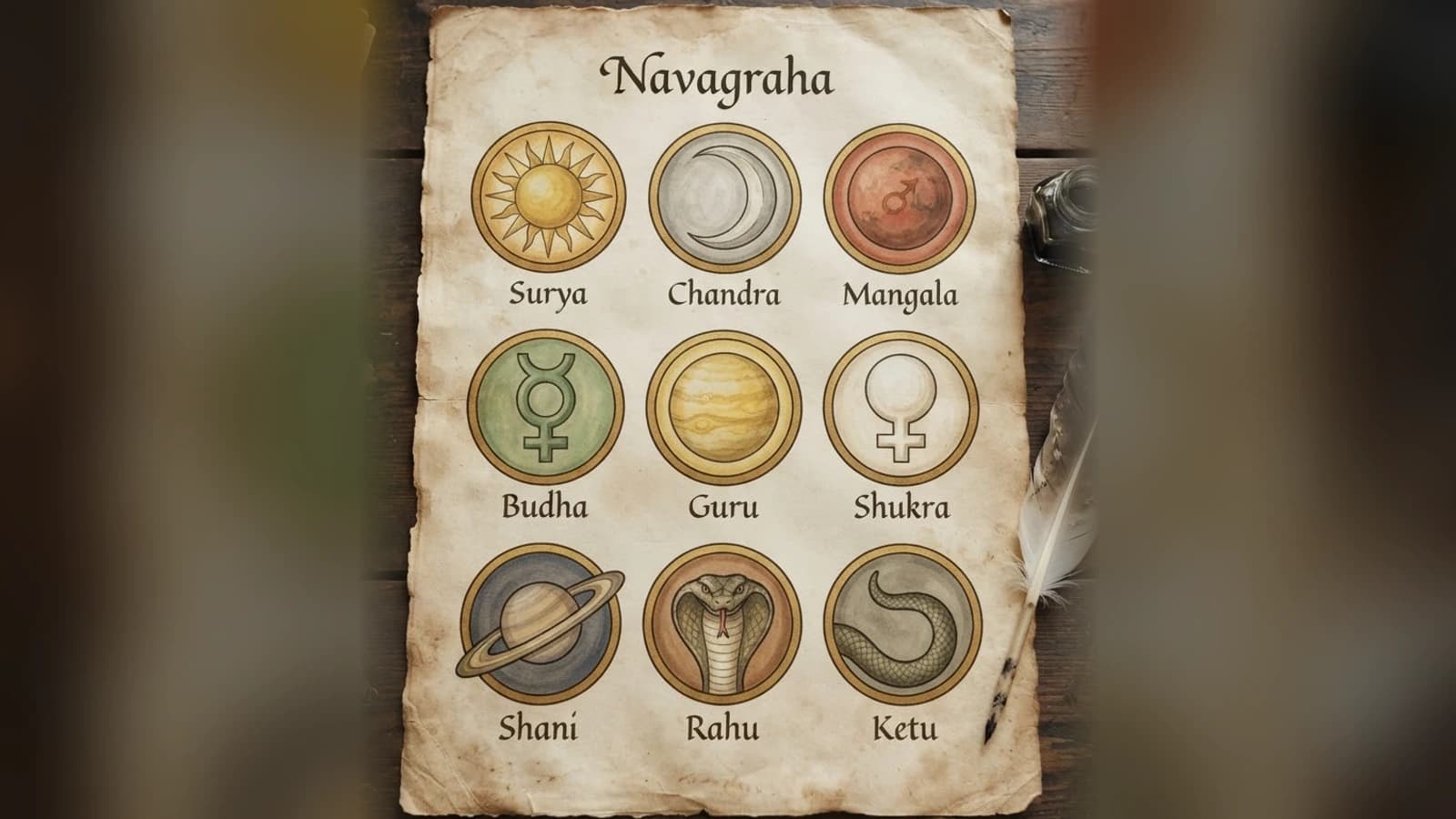
Classical Jyotish pairs each of the nine grahas with one primary gemstone, and the set is called the Navaratna. Ruby goes with the Sun and pearl with the Moon. Red coral is for Mars, emerald for Mercury and yellow sapphire for Jupiter. Diamond, or white sapphire as a cheaper alternative, is for Venus, and blue sapphire for Saturn. Hessonite (gomed) goes with Rahu and cat's eye (lehsunia) with Ketu. Each of these planets has its own role in a chart, covered in the nine grahas guide. Some traditions also list substitute stones, called uparatna, which are lower in price.
Why the answer comes from the chart
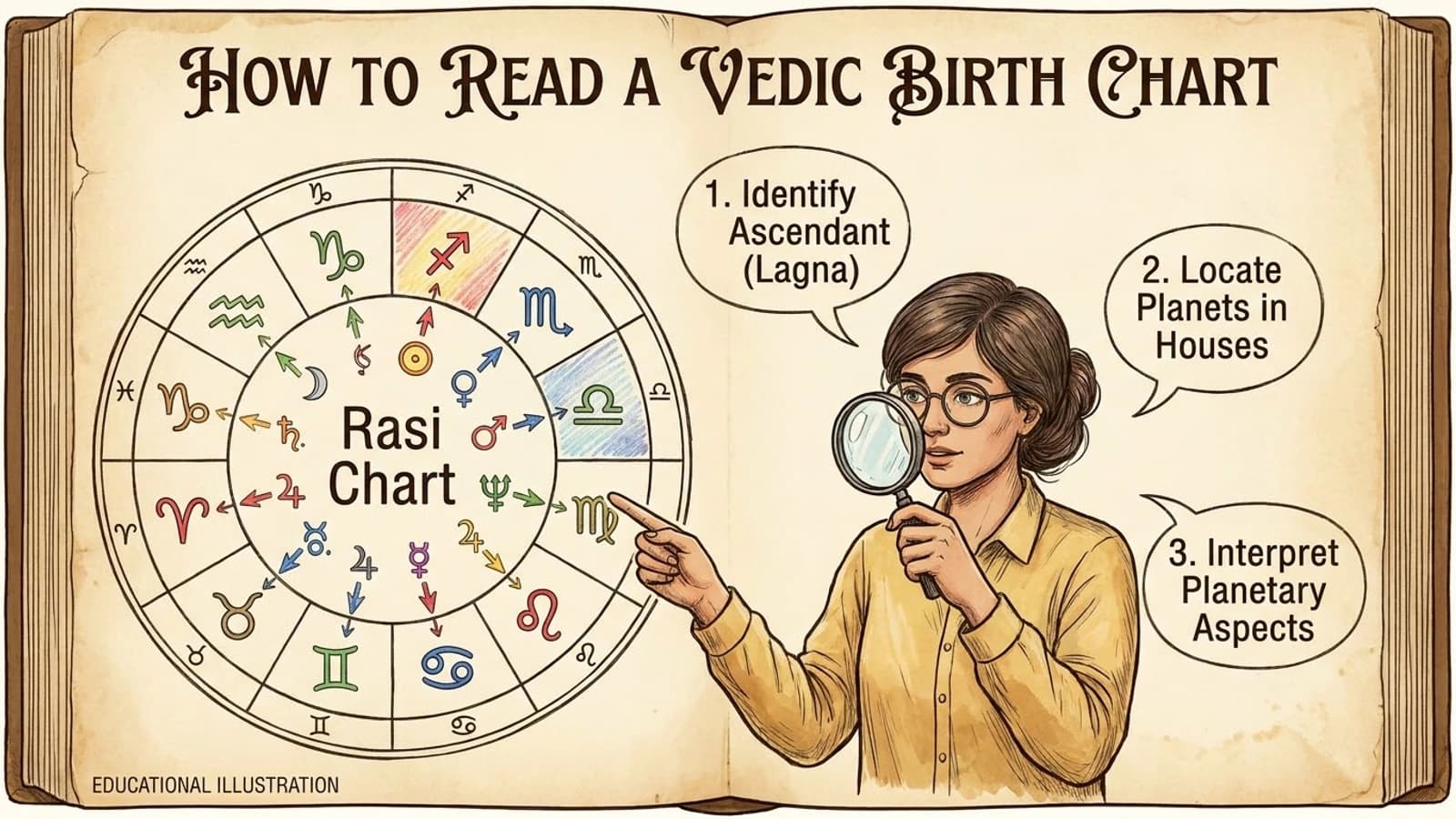
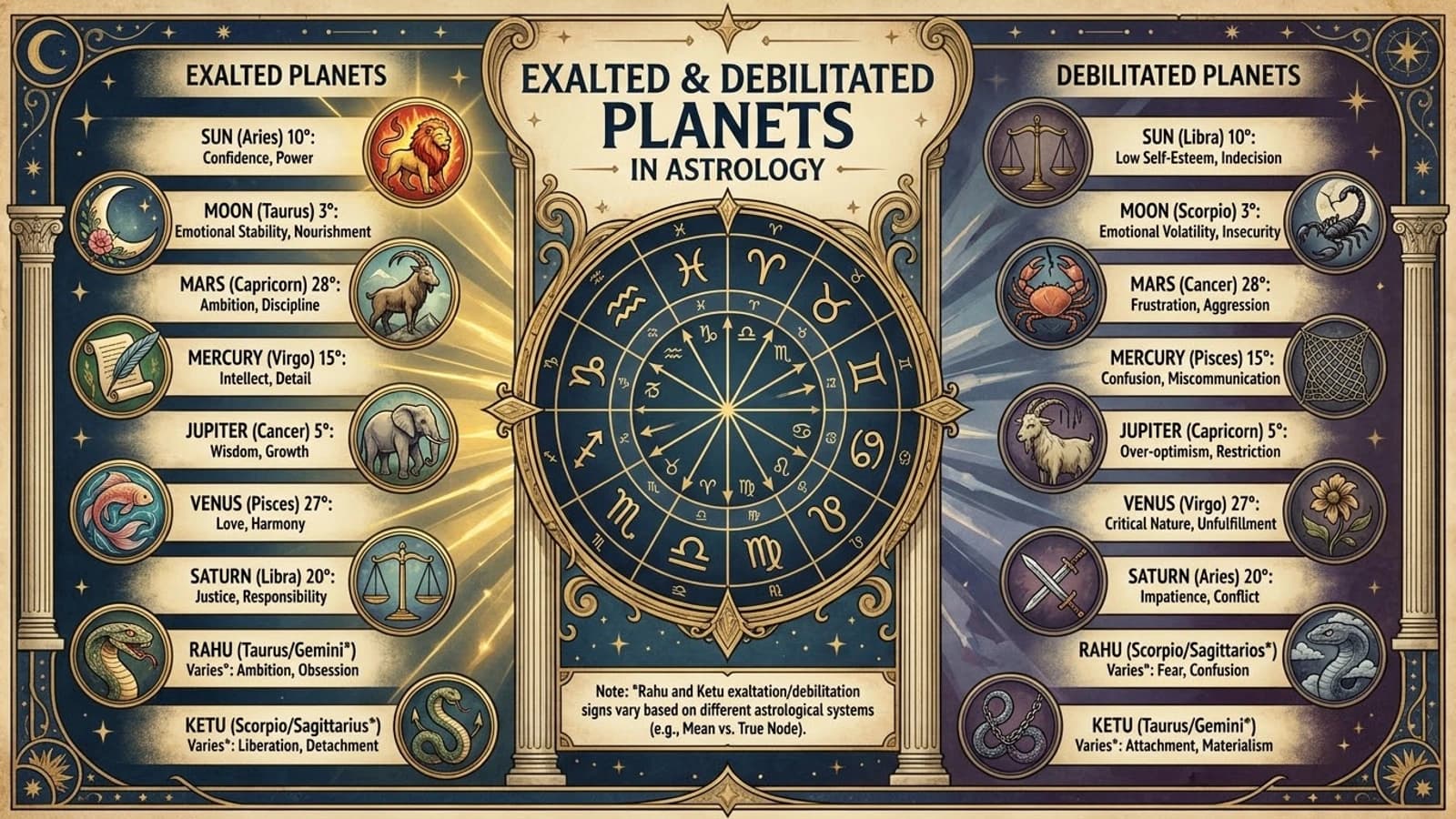
The tradition treats a stone as a way to strengthen a planet, so the first question is which planet. Astrologers usually look at the lord of the Ascendant, the lords of the trinal houses (1st, 5th and 9th), and a planet that is placed well but needs support. They are also careful about stones for planets that are weak or poorly placed for that chart, since strengthening a difficult planet is said to strengthen its difficulties as well. That is the main reason a generic "your sign, your stone" list does not match real practice. Reading a chart this way takes the steps in how to read your birth chart and the strength ideas in exalted and debilitated planets. Experienced astrologers often disagree with one another on which stone suits a chart, which is worth knowing before you spend money.
What the evidence says
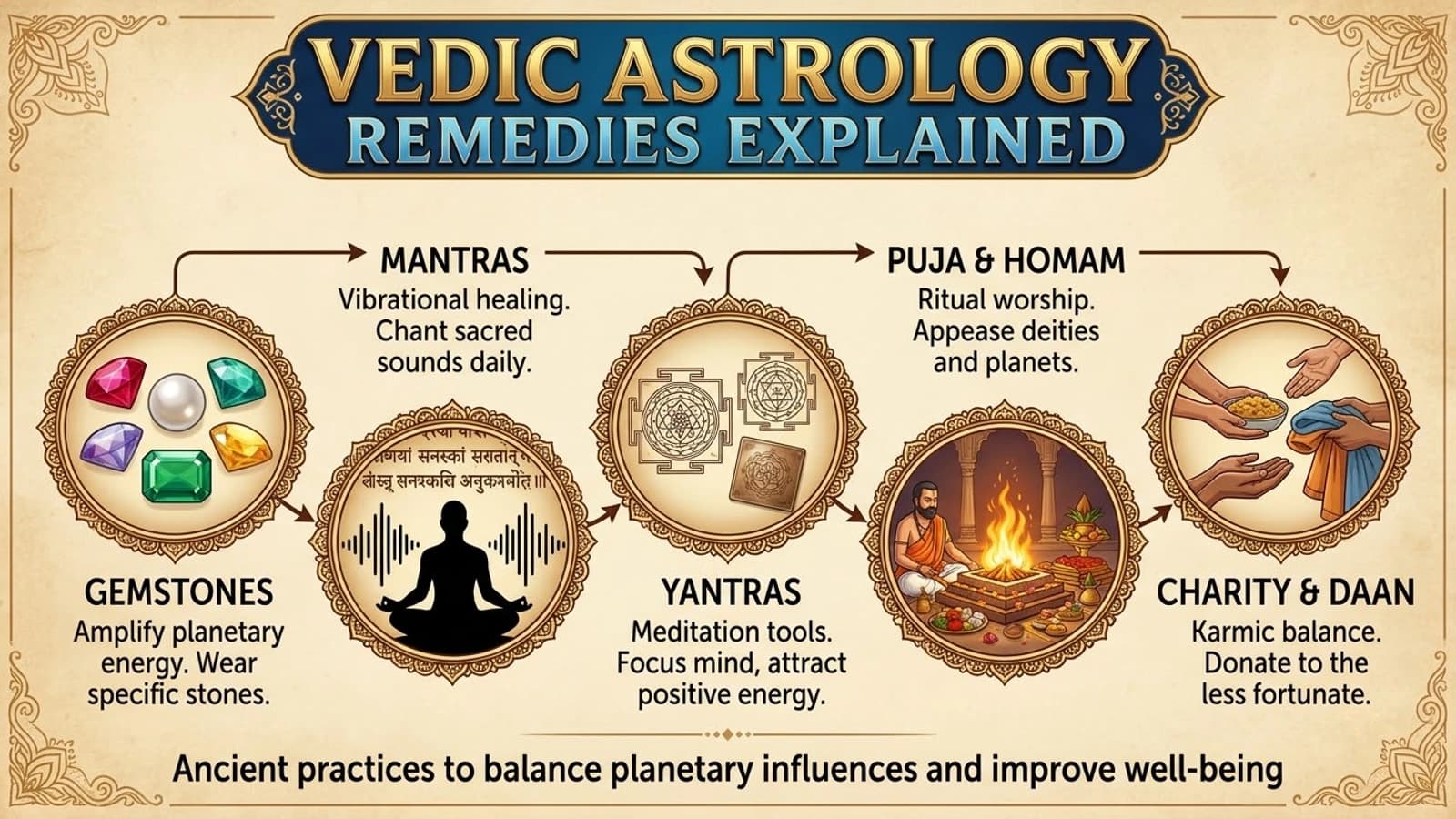
Nobody has shown that wearing a gemstone changes events, health or relationships. People wear them as devotion, as habit or as a reminder, and some find comfort in the practice. That is a fair reason, and it should be a choice you make with open eyes and a budget you can afford. Do not delay medical care, legal action or financial decisions because of a stone. The remedies guide puts gemstones next to mantra, charity and fasting so you can compare them.
Blue sapphire and caution
Blue sapphire for Saturn has the reputation of acting quickly and unpredictably, in either direction, according to many astrologers. Because of that reputation, practitioners often suggest a short trial wearing, and a few advise against it unless the chart clearly supports it. That is an opinion within the tradition and not a measured effect. If a seller or astrologer pushes an expensive stone urgently, step back, compare advice and take your time.
How to verify what you are buying
Traditional texts assume a natural stone of adequate weight, worn in a particular metal and touching the skin. Whether a stone meets that description is something you can check. Ask for a report from an independent gemmological laboratory that names the stone, its weight and any treatment. Heat treatment of ruby and sapphire and oil filling of emerald are common and legal if disclosed. Ask also whether the stone is natural, lab-grown or glass, since all three can look alike to a buyer. Hessonite is a variety of garnet and cat's eye is a chrysoberyl, so knowing the mineral name helps you compare prices. Get the receipt and the report in writing, and note the seller's return policy before you pay.
Look at your chart first
Before buying anything, see the planets in your own chart. Generate your free Kundli with Aroha Astrology to see each graha's sign and house, or ask Yogi Baba in the about your chart.