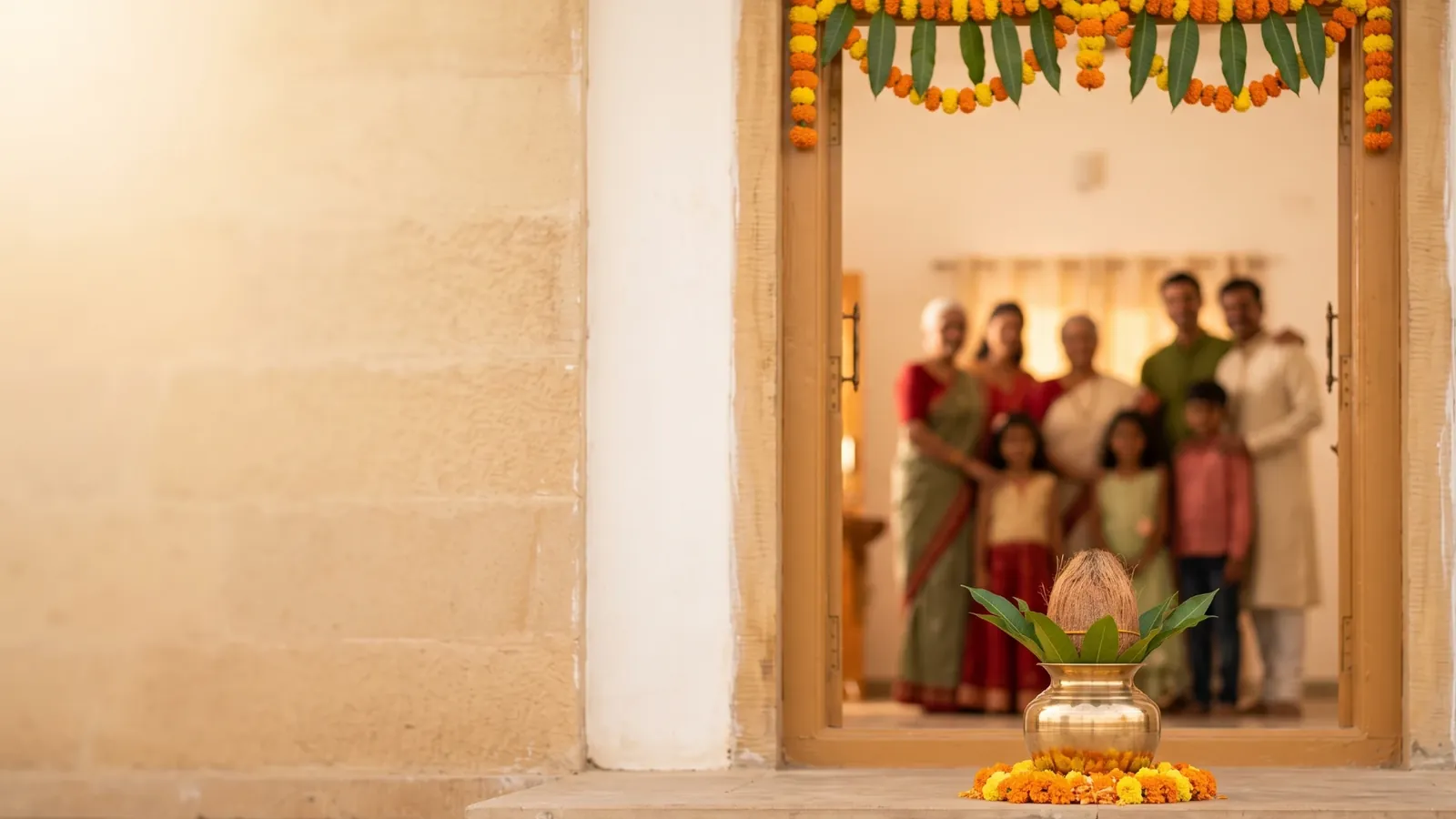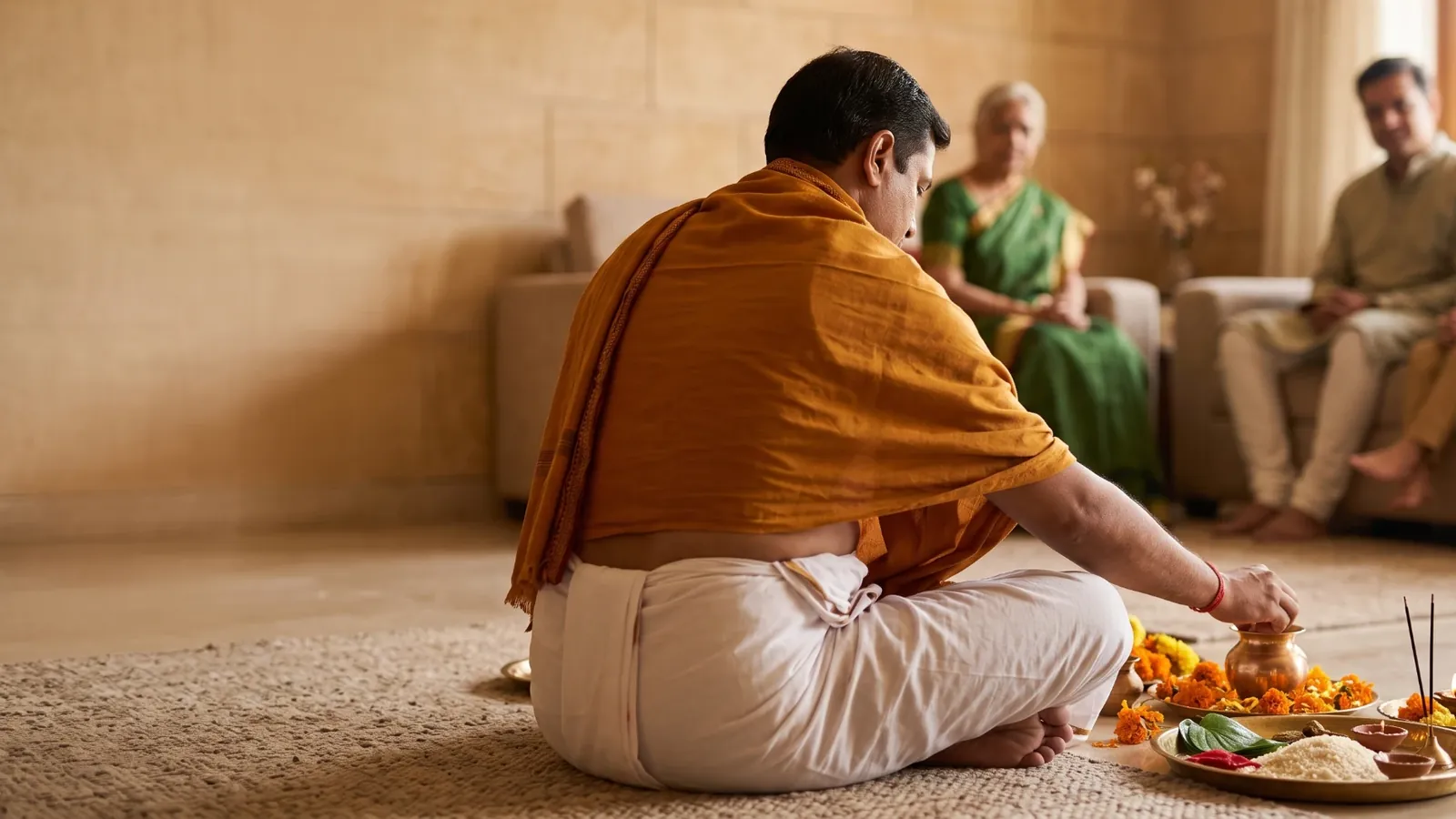
Most families don't need a priest for a daily puja. But for a Griha Pravesh, a Vastu Shanti, a Satyanarayan Katha, a naming ceremony or anything with a havan, they usually invite a pandit (also called a purohit or pujari) to the home. Finding the right one, and agreeing everything clearly beforehand, makes the day calmer.
Where families find a pandit
- The family priest. Many families have a purohit who has served them for years or generations, often the best choice when available.
- A local temple. Temples often have priests who perform home ceremonies, or can recommend one.
- Community associations. Regional and community groups in most cities maintain contacts for priests of their tradition.
- Referrals from relatives, friends and neighbours.
- Booking services that match families with priests and handle scheduling.
The questions to ask
| Ask | Why it matters |
|---|---|
| Which tradition do you follow, and in which language will you explain? | Procedures differ between regional and priestly traditions. Mantras will usually be in Sanskrit, but you'll want explanations in a language the family understands. |
| What does the puja involve, and how long will it take? | So you can plan guests, food and the day around it. |
| Who will fix the muhurat? | Some priests calculate it themselves from the Panchang; others work to a time you give them. |
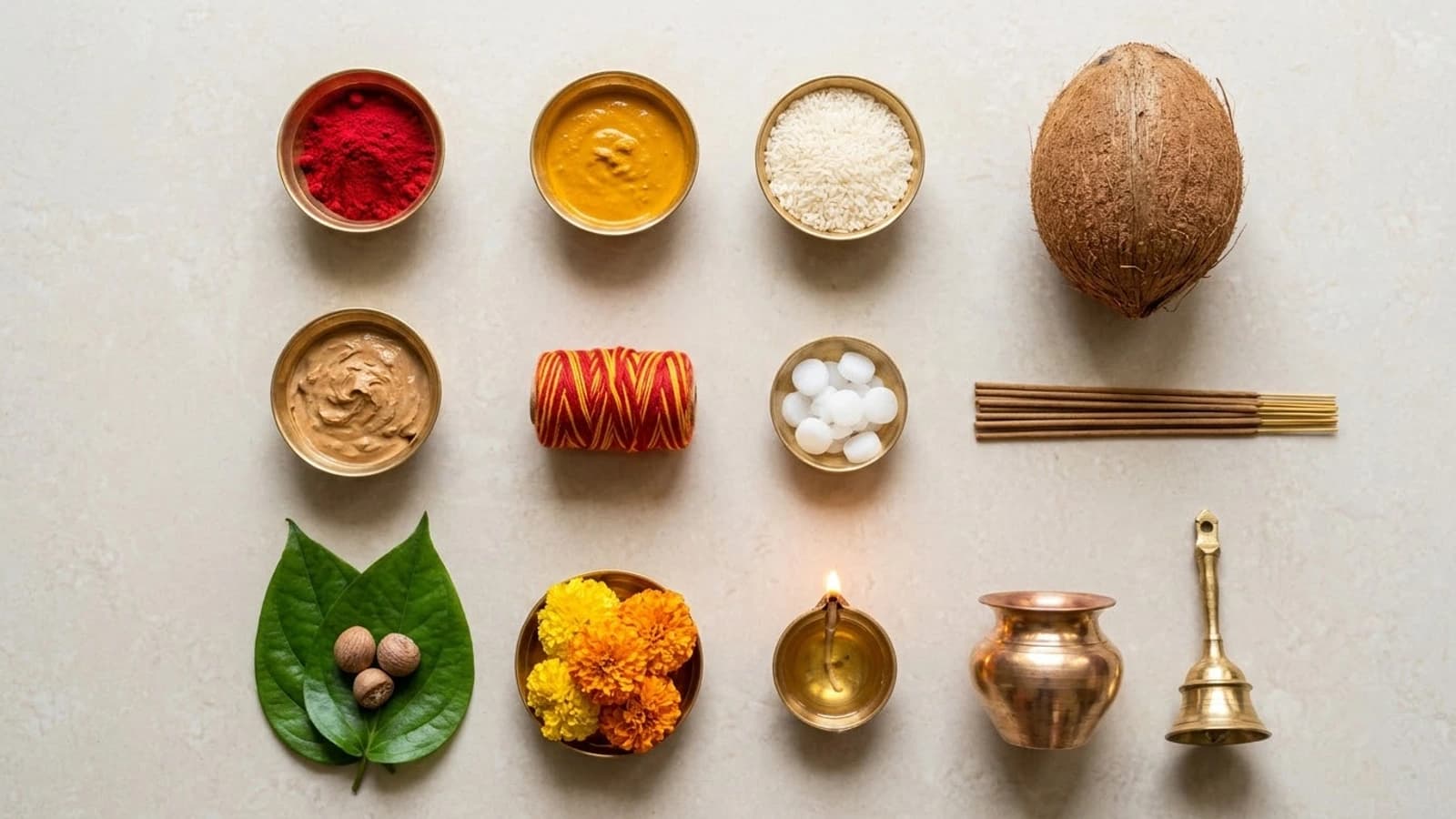
| Will you bring the samagri, or should we arrange it? | The single biggest source of last-minute stress. If you're arranging it, ask for the full list. |
| What exactly does the fee cover? | Dakshina, assistant priests, travel and samagri may or may not be included. |
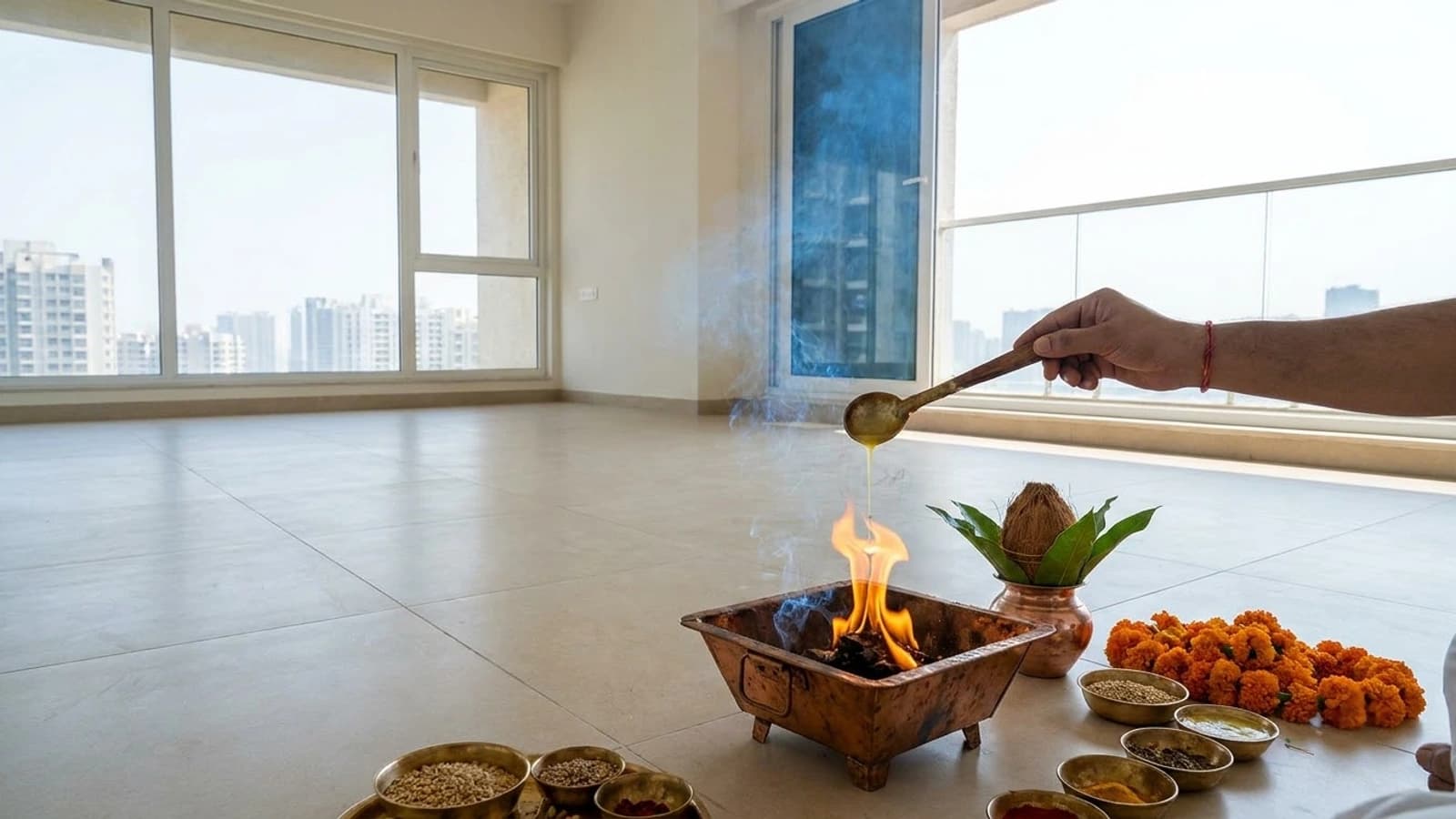
| Will there be a havan? | In a flat you'll need to plan for smoke, ventilation and smoke detectors. |
| What should we prepare? | Space, seating, clothes, any fasting, items only the family can provide. |
| When will you arrive? | Early enough to set up before the muhurat. |
| What if we need to reschedule? | Especially important when the date depends on possession or travel. |
Samagri: included, or arrange it yourself?
This choice shapes both the price and the preparation.
| Samagri included | Arrange it yourself | |
|---|---|---|
| Convenience | High: the pandit brings everything | You shop from a list |
| Control | Less say over brands and quality | Full control, e.g. natural kumkum, particular flowers |
| Freshness | Depends on the pandit | You buy flowers and fruit on the day |
| Risk of missing items | Low | Higher, unless the list is complete |
| Price | Higher quote, one payment | Lower quote, plus your purchases |
Neither is better; it depends on your time and preferences. What matters is that the choice is explicit. Our puja samagri guide explains what the common items are for.
What affects the cost
Prices vary a great deal, so it's more useful to understand what drives them than to rely on a single number:
- The ceremony: a simple Ganesh puja takes an hour; a Griha Pravesh with Vastu Shanti and havan can take half a day.
- Havan or not: fire rituals need more time and materials.
- Number of priests: larger ceremonies often need assistants.
- Samagri included or not.
- City and travel distance.
- Season: festival days and popular muhurats are in high demand.
Some priests leave dakshina to the family's discretion; many now quote a fixed amount. Either way, it's reasonable, and respectful to both sides, to agree the full amount in advance.
On the day
- Be ready before the muhurat: space cleared, family dressed, phones silent.
- Seat the pandit comfortably, offer water, and have the samagri laid out if you arranged it.
- Follow their guidance; it's fine to ask what a step means.
- Offer dakshina respectfully, traditionally with both hands, often with fruit or a piece of cloth. Many families also serve the priest a meal.
Warning signs
Be cautious if a priest or service adds expensive extra pujas by warning of doshas or misfortune, won't give a clear price or samagri list in advance, or pressures you to decide on the spot. A good pandit makes the ceremony calmer, not more frightening.
How Aroha Puja will work
This is the experience Aroha Puja is being built around. When it opens, you'll be able to:
- Choose the puja for your occasion.
- Choose your samagri option: the pandit brings everything, or your family arranges it.
- See the price for that choice before you book.
- Have a pandit perform the puja at your home.
Aroha Puja is in development and not open for bookings yet. In the meantime, the questions above will serve you well with any priest.