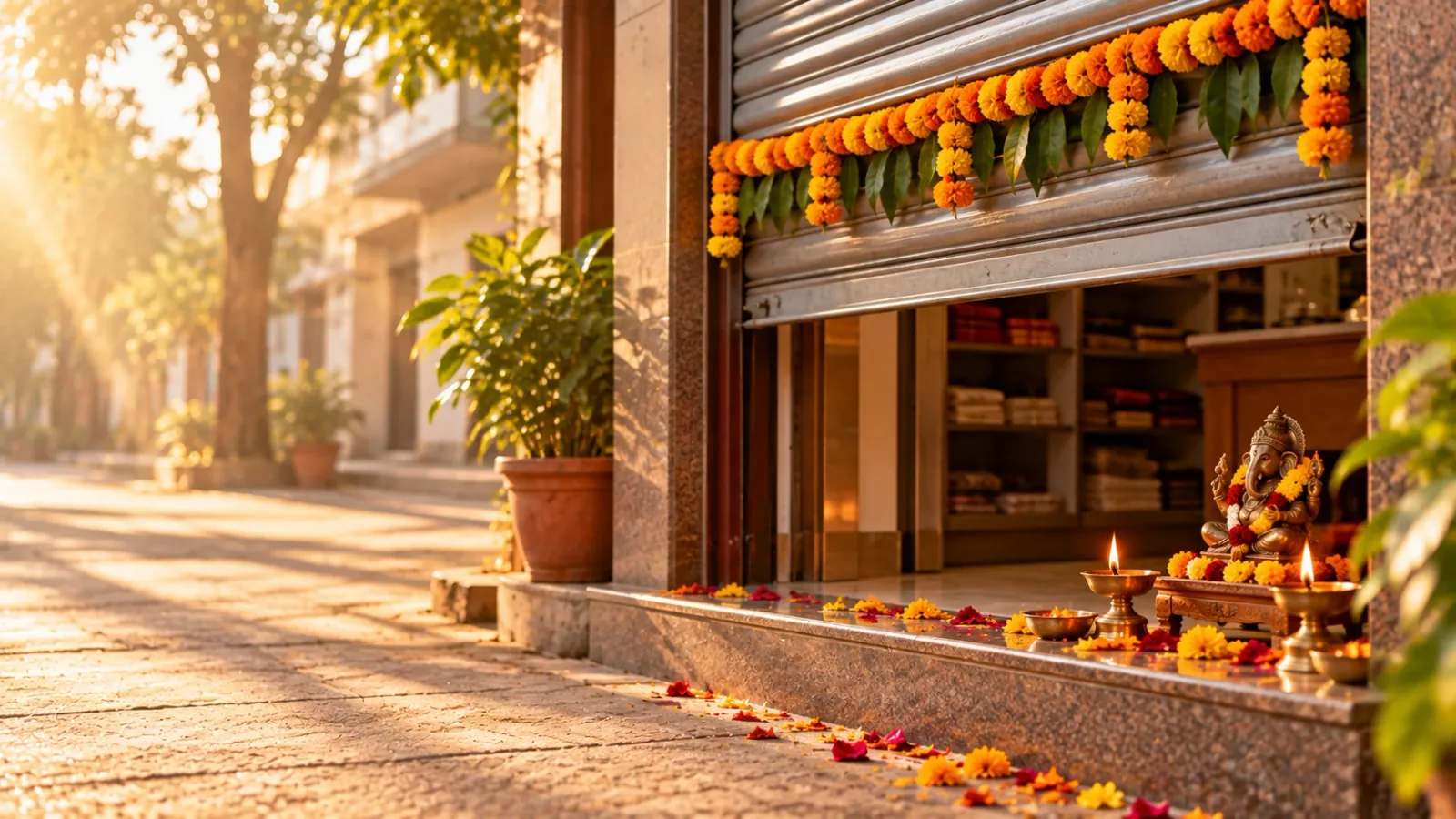
For many Indian families, a new vehicle isn't driven anywhere important until it has been blessed. Vahan puja (vahana means vehicle) is that blessing: a short puja asking for safe journeys, performed when a car, scooter, bike or commercial vehicle first comes home.
When families perform it
- On delivery day, before the first proper drive.
- On an auspicious day from the Panchang, if the family prefers to wait for one.
- At festivals. Vehicles are traditionally worshipped along with tools and instruments during Ayudha Puja, on the ninth day of Navratri, especially in South India; during Vishwakarma Puja in eastern India; and on Dussehra in many regions.
Many people also time the purchase itself for days considered auspicious for buying, such as Dhanteras or Akshaya Tritiya.
Where to do it
| Place | What it's like |
|---|---|
| Temple | Very common. Many temples have a spot where priests bless vehicles daily. |
| At home | A simple family puja in the driveway or parking area. |
| Showroom | Some dealers arrange a quick puja at delivery. |
The steps
Customs vary, but a typical vahan puja looks like this:
- 1
Clean the vehicle
Wash or wipe the vehicle and park it facing east if you can.
- 2
Ganesh puja
Offer a short prayer to Ganesha, often with a small idol or image kept on the dashboard or seat during the puja.
- 3
Mark the vehicle
Apply kumkum and haldi to the bonnet or front. Many families draw an auspicious symbol such as the swastika or Om, and tie a sacred red thread (mauli) to the mirror or handlebar.
- 4
Flowers and garland
Offer flowers and place a marigold garland on the front of the vehicle, clear of the lights and windscreen.
- 5
Break a coconut
A coconut is broken in front of the vehicle, or its water sprinkled on the wheels, as an offering. The pieces are shared as prasad.
- 6
Aarti
Camphor or a lamp is lit and waved in front of the vehicle, and sometimes carried around it, with a prayer for safe travel.
- 7
Lemons under the wheels
In many regions, four lemons are placed under the tyres and crushed as the vehicle is driven forward for the first time.
- 8
The first drive
Many families make the first journey to a temple.
Our guide to doing a simple puja at home explains the general steps in more detail.
What you'll need
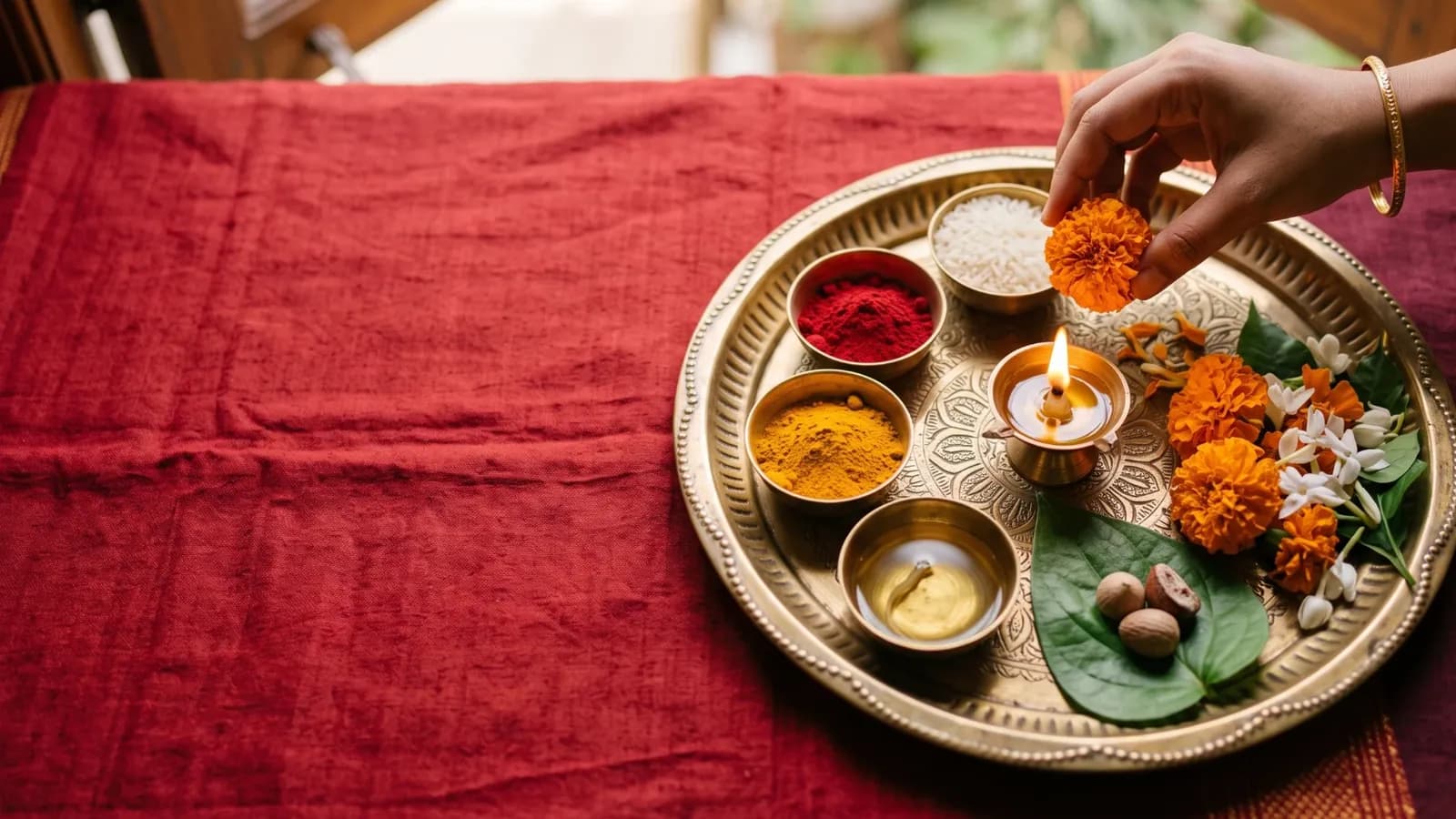
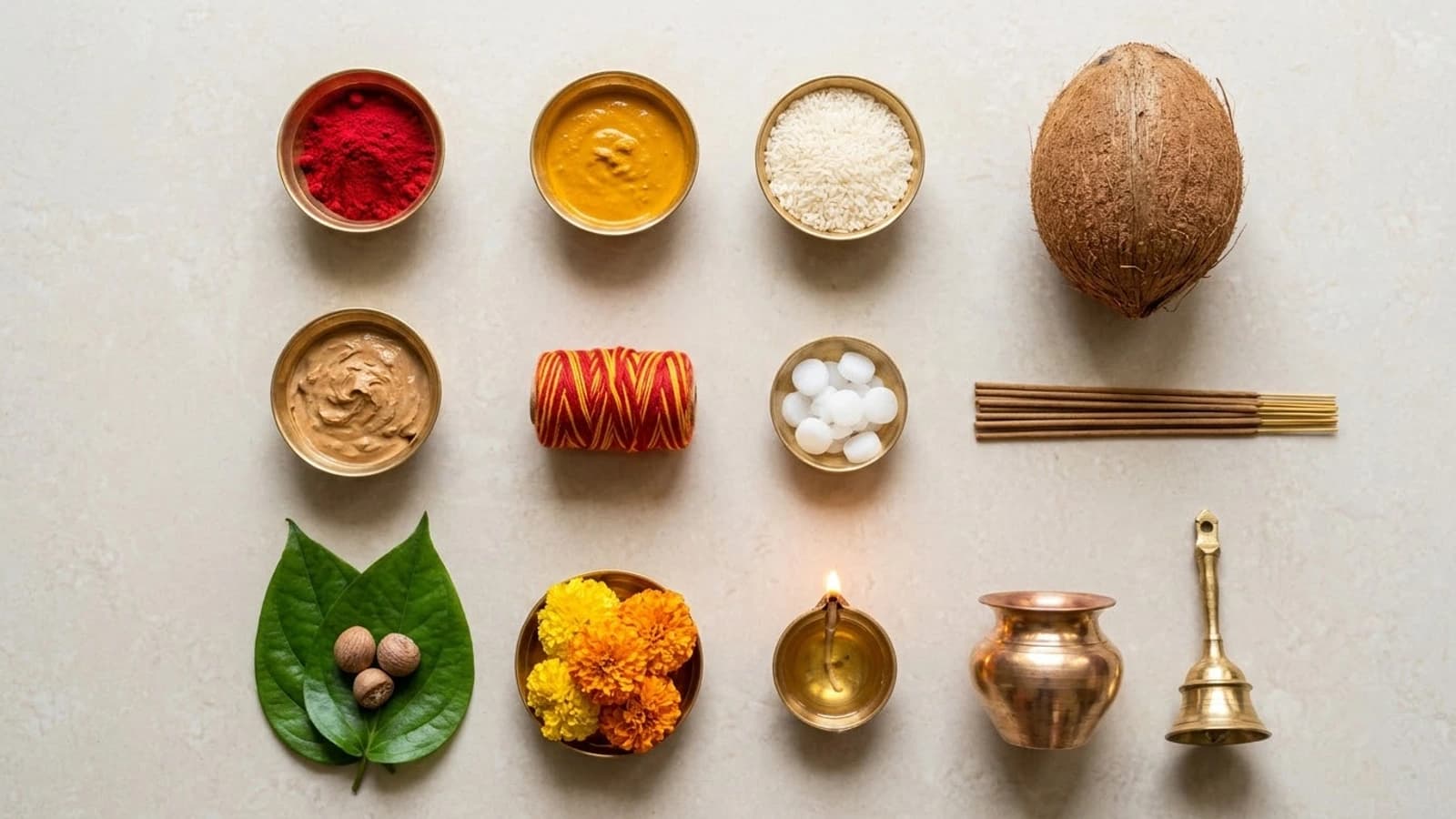
- Kumkum, haldi and rice (akshata)
- A marigold garland and loose flowers
- A coconut
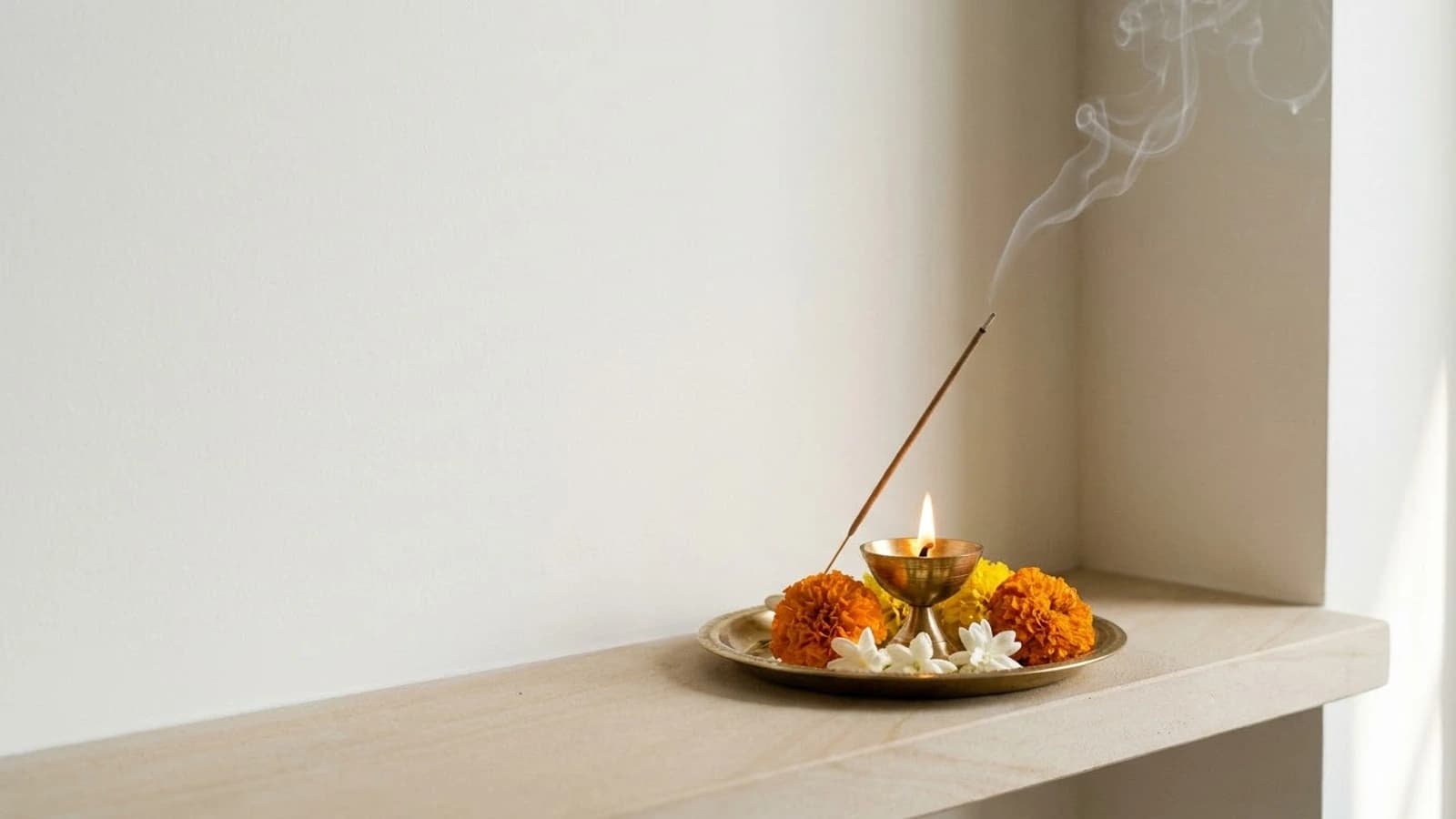
- Camphor or a small lamp, and matches
- Incense sticks
- Red thread (mauli / kalava)
- Four lemons, if your family follows that custom
- Sweets or fruit for prasad
- A small image or idol of Ganesha, optional
See the puja samagri guide for what each item traditionally signifies.
Regional customs
Vahan puja is widely practised but not uniform. You'll see differences in:
- Which symbols are drawn, and where.
- Whether lemons are used, and whether green chillies are hung with a lemon on the vehicle afterwards, a common folk custom against the evil eye.
- Which deity is invoked beyond Ganesha. Some families pray to their family deity, others to Hanuman or Durga for protection on the road.
- Commercial vehicles, which are often decorated more elaborately and blessed again each year at Ayudha or Vishwakarma Puja.
If you're following a family custom, that's the one to use.
Doing it safely
Faith and the road
A vahan puja is a prayer for safe journeys, and for many families it's an important way of beginning. It sits alongside, not instead of, the ordinary protections: seatbelts and helmets, sober and rested driving, and a well-maintained vehicle.
If you'd rather have a priest perform the puja at home, Aroha Puja, coming soon, is being built for that: book a pandit, and choose whether they bring the samagri or you arrange it.