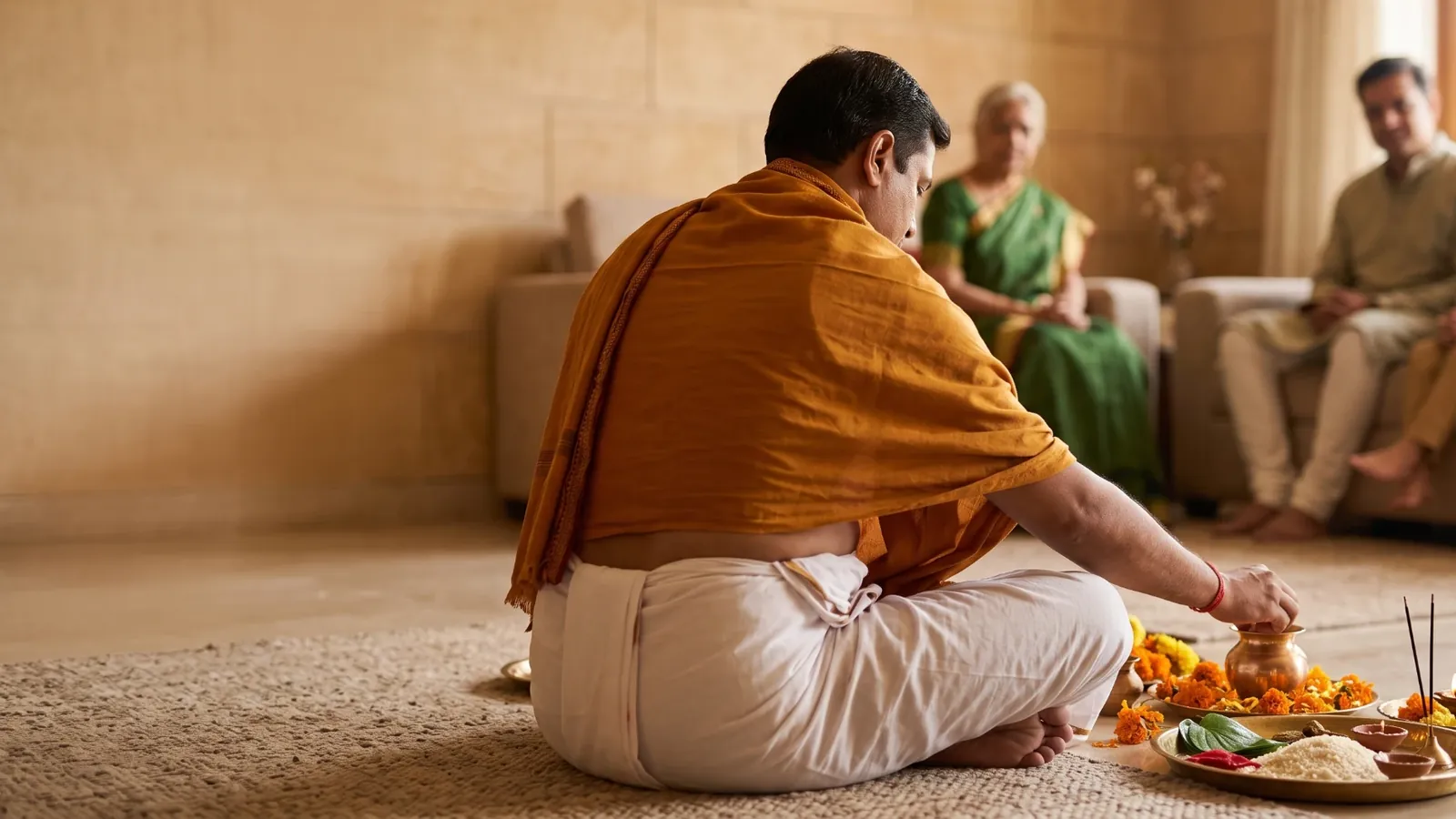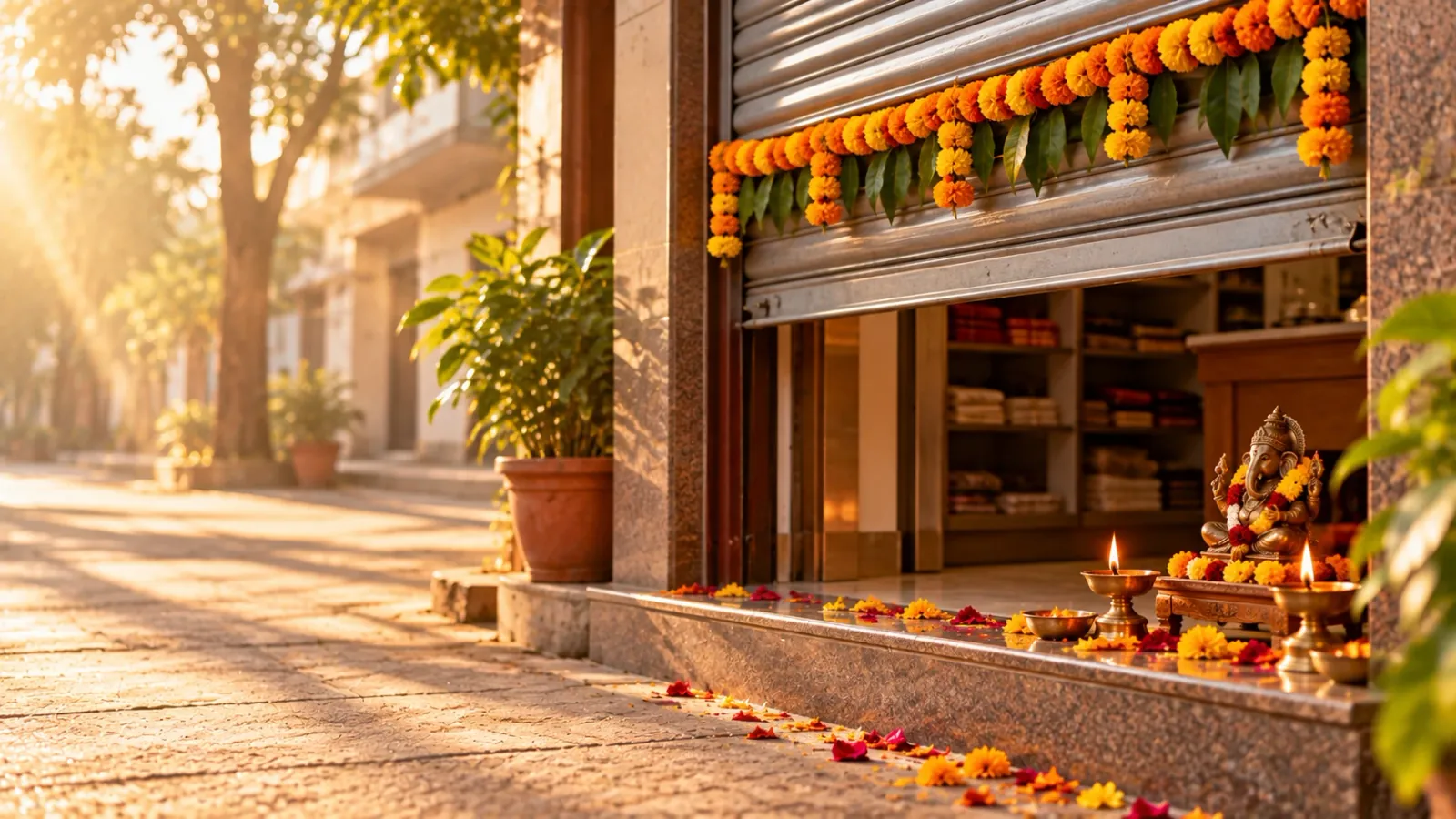
A new shop shutter going up, the first day in a new office, a factory's machines switched on for the first time: across India, beginnings like these are often marked with a puja. It's a way of asking for the venture's success and of gathering the people who'll make it work.
Which puja, for which beginning
| Occasion | Pujas commonly performed |
|---|---|
| Opening a shop | Ganesh puja, Lakshmi puja; puja of the cash counter and first stock |
| Opening an office | Ganesh puja, Lakshmi puja; sometimes Saraswati puja; Satyanarayan Katha |
| New premises, bought or built | Vastu Shanti, often with a havan |
| Factory or workshop | Ganesh puja; Vishwakarma Puja; puja of machines and tools |
| New account books | Chopda Pujan / Sharda Pujan at Diwali |
| New company vehicle | Vahan puja |
Why Ganesha and Lakshmi
Ganesha is worshipped at the start of any undertaking as the remover of obstacles; almost every puja begins with him. Lakshmi is the goddess of prosperity and fortune, so she's central to anything involving commerce. Many businesses also honour Saraswati, goddess of knowledge, particularly where books, learning or creative work are involved, and some traders worship Kubera, the guardian of wealth, alongside Lakshmi.
Choosing a date
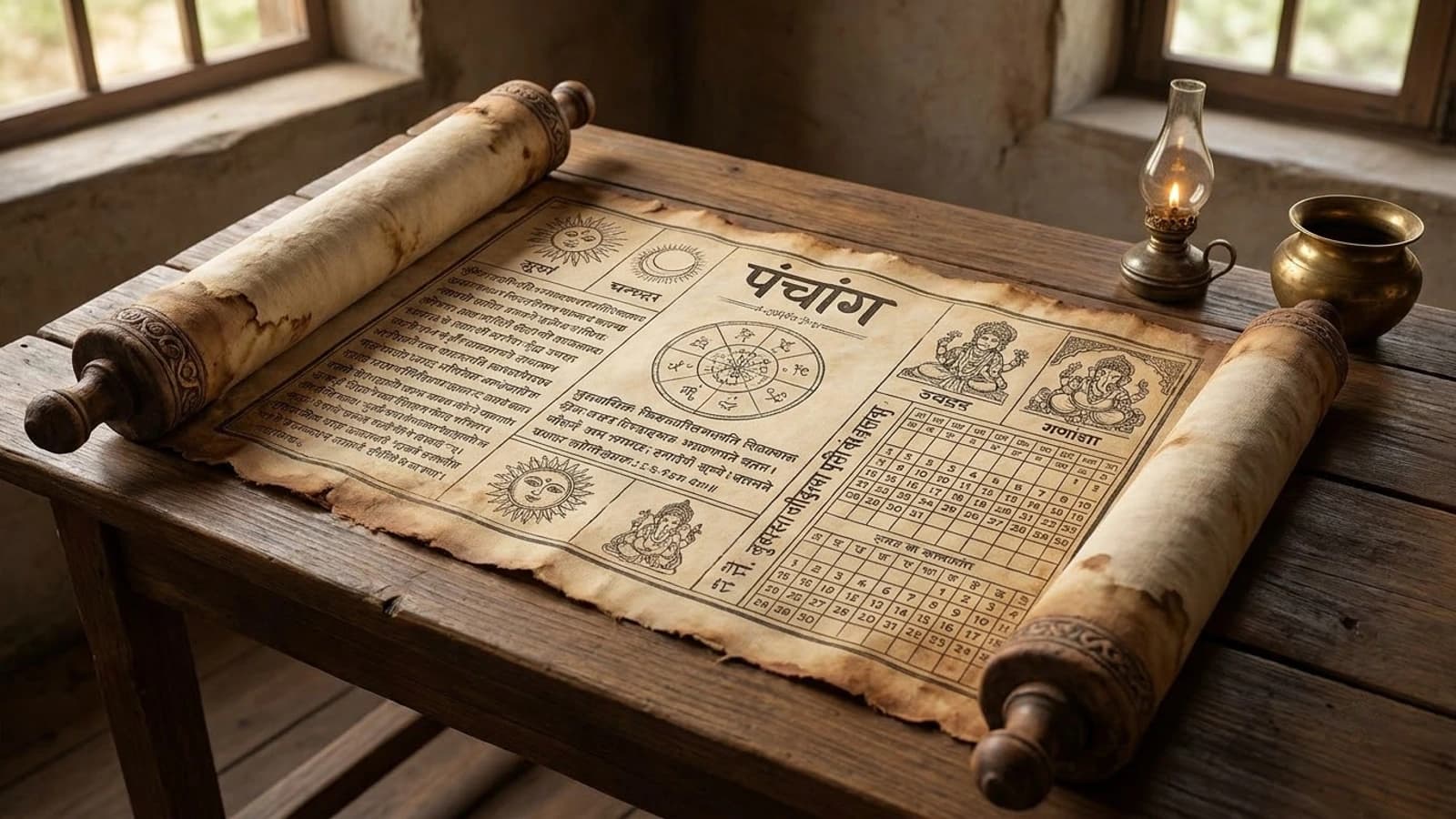
Most families consult a priest or the Panchang for a muhurat. Some days are widely regarded as good for beginnings:
- Akshaya Tritiya, traditionally considered auspicious for starting ventures and for purchases.
- Dhanteras and Diwali, especially for trading businesses.
- Vijayadashami (Dussehra), a traditional day for new beginnings.
- Regional new years: Gudi Padwa, Ugadi, Puthandu, Vishu, Baisakhi and others.
Many businesses simply choose a good muhurat close to their practical opening date.
A typical opening puja
- 1
Prepare the premises
Clean thoroughly, hang a toran of mango leaves or marigolds at the entrance and draw rangoli at the threshold.
- 2
Set up the altar
Place images of Ganesha and Lakshmi on a clean cloth, with a kalash, lamp and the samagri, facing east or north where possible.
- 3
Ganesh puja
The pandit or the owner begins with Ganesha and a sankalpa naming the business and its purpose.
- 4
Lakshmi puja
Lakshmi is worshipped with flowers, kumkum, sweets and a lamp. Many place the cash box, account books, keys or laptops before the altar to be blessed.
- 5
Havan, if appropriate
A small havan may be performed where the building allows it.
- 6
Aarti and prasad
Everyone gathers for aarti; sweets are distributed to staff, neighbours and the first customers.
- 7
The first sale
In many trading communities the first transaction of the day, the bohni, is considered especially auspicious, and some owners make a point of it on opening day.
Chopda Pujan: worshipping the account books
In Gujarati, Marwari and many other trading communities, Diwali marks the start of the traditional business year. New account books, the chopda or bahi khata, are worshipped with kumkum, flowers and a swastika or other auspicious marks on the first page, and the first entries are made at a chosen muhurat. Many businesses now do the same with a new ledger, a laptop or simply the year's first invoice. On Diwali, Indian stock exchanges hold a short Muhurat Trading session in the evening, a modern echo of the same custom.
Vishwakarma and Ayudha Puja: tools and machines
Vishwakarma, the divine architect and craftsman, is honoured in workshops, factories and garages, especially in eastern India, where Vishwakarma Puja falls in September. In South India, Ayudha Puja on the ninth day of Navratri honours tools, machines, instruments and vehicles; work pauses for the day and everything is cleaned and decorated.
Practical points for workplaces
The last point matters in shared workplaces. A puja can be a warm, inclusive start when colleagues are invited rather than expected, and when everyone is welcome to share the sweets.
Vastu for new premises
If you're setting up a space from scratch, Vastu guidance for commercial premises follows the same principles as for homes: a welcoming entrance, an open centre, heavier furniture towards the south-west, and a clear north-east. Our guides to Vastu directions and reading a floor plan apply to shops and offices as well.
Aroha Puja, coming soon, is being built to bring a pandit to your home for any puja. Bookings are not open yet; we'll share what's supported at launch.